

If you have started reading the Bible, you have already started interpreting it. Every time you read a verse and think, “This means…,” you are interpreting. Everyone does it. The real question is whether we do it well.
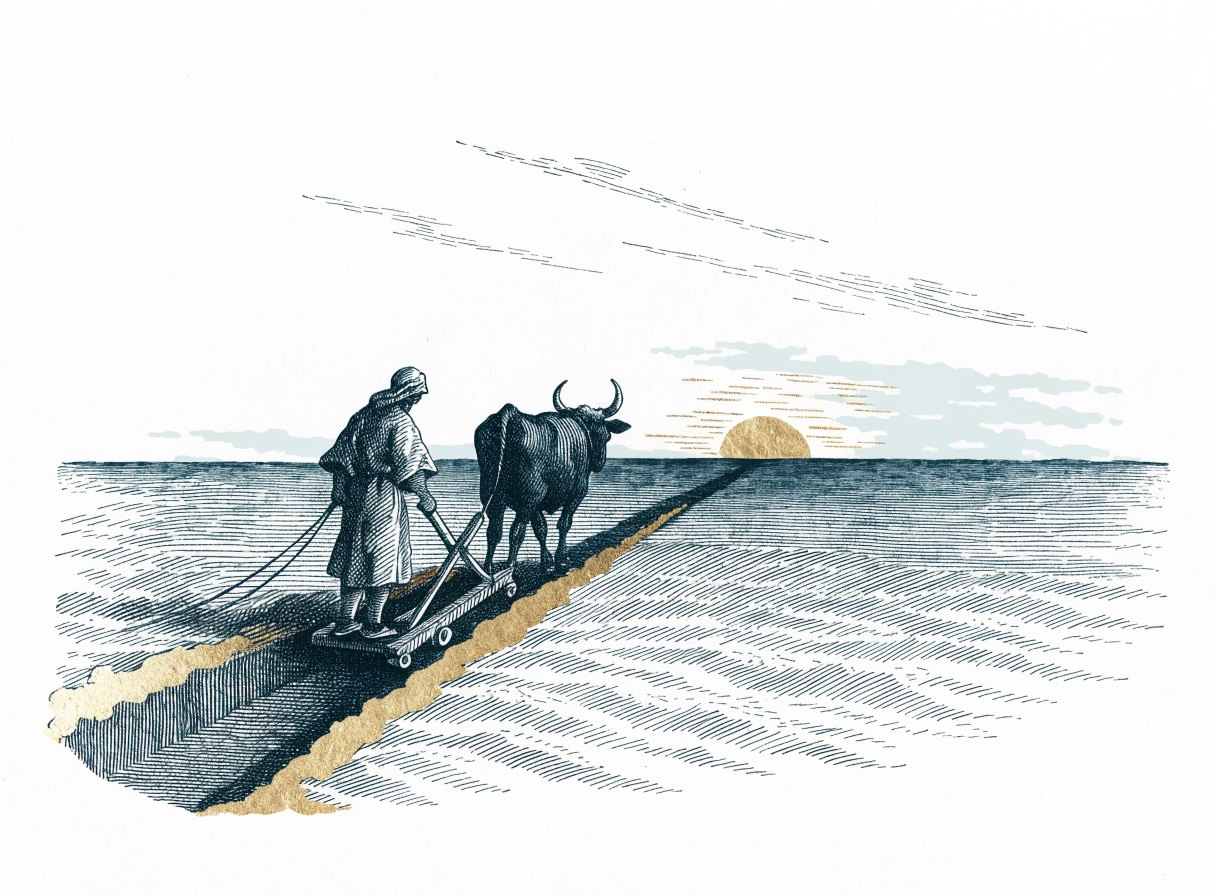
Paul told Timothy to handle God’s word “rightly.” The Greek word means to cut straight, like a farmer plowing a straight row. Our job is to keep the line straight: to let the Bible say what it says, without bending it toward what we wish it said. This short guide gives you the basic tools to do that.
Hermeneutics (her-meh-NEW-tiks) is a big word for a simple idea: the principles we use to understand what we read. In Bible study it comes down to one main question: What did the author mean? First we find what God meant through the human writer to his first readers. Then we ask what it means for us today.
Three questions to ask of any passage
Most mistakes in Bible reading come from jumping straight to the third question. The tools on the next pages help you answer the first two well, so the third one rests on solid ground.
Start with a humble heart
The Bible is not just a book we study. It is God speaking. So we come to listen, not to sit in judgment over it, and we ask for help we cannot give ourselves. Before you read, pray something as simple as this:
Tool 1: Read in context
If you remember only one rule, remember this one: a verse means what it means in its paragraph. Context is everything around a verse: the sentences before and after, the book it belongs to, and the whole story of the Bible. Picture it as circles around the verse, each one wider than the last.
A simple habit: before you decide what a verse means, read the whole paragraph, then the whole chapter. Ask who is speaking, to whom, and why. Here is what that looks like with one of the most-quoted verses in the Bible.
The verse still speaks to us: God keeps his promises to his people, even through long suffering. But that is a deeper comfort than the one we wanted to pull out of it, and a truer one.
Tool 2: Know what kind of writing you are reading
The Bible is one book, but it is also a library of sixty-six books written in different styles. You read a poem differently from a history book or a letter, and the same is true in Scripture. Ask, “What kind of writing is this?”
| Kind of writing | Examples | How to read it |
|---|---|---|
| History (narrative) | Genesis, Samuel, Acts | True events. It tells what happened, not always what should have happened. |
| Law | Exodus, Leviticus | God’s commands to Israel. They show his holiness and our need, and they point to Christ, who kept them for us. |
| Poetry and songs | Psalms, Song of Songs | Heart language. Its pictures are meant to be felt and prayed, not measured. |
| Wisdom | Proverbs, Ecclesiastes, Job | How life usually works in God’s world. A proverb is wise counsel, not a guaranteed promise. |
| Prophecy | Isaiah through Malachi | God’s messengers calling his people back to him, with warnings and promises, many fulfilled in Jesus. |
| Gospels | Matthew, Mark, Luke, John | Four true accounts of the life, death, and resurrection of Jesus. |
| Letters | Romans through Jude | Written to real churches with real problems. Often the clearest teaching on what to believe and how to live. |
| Visions | Daniel, Revelation | Vivid symbols that pull back the curtain on God’s rule over history. |
Tool 3: Learn the world behind the text
The Bible was written to real people in real places, thousands of years ago. To understand it, we try to stand where the first readers stood. Ask: Who wrote this? To whom? When? What was happening? What did these customs mean back then?
Take the parable of the Good Samaritan (Luke 10:25–37). Jews and Samaritans had despised each other for centuries. When Jesus made a Samaritan the hero, the man who helped while a priest and a Levite walked by, his listeners would have been shocked. The point goes deeper than being kind. Jesus was teaching that love has no borders, even toward people we look down on, and that the one who asked “Who is my neighbor?” needed to become one.
A good study Bible, with its introductions, notes, and maps, is the easiest place to learn this background. One caution: culture explains the text; it never overrules it. We learn the culture so we can hear what God said, not so we can set aside what we do not like.
Tool 4: Let Scripture explain Scripture
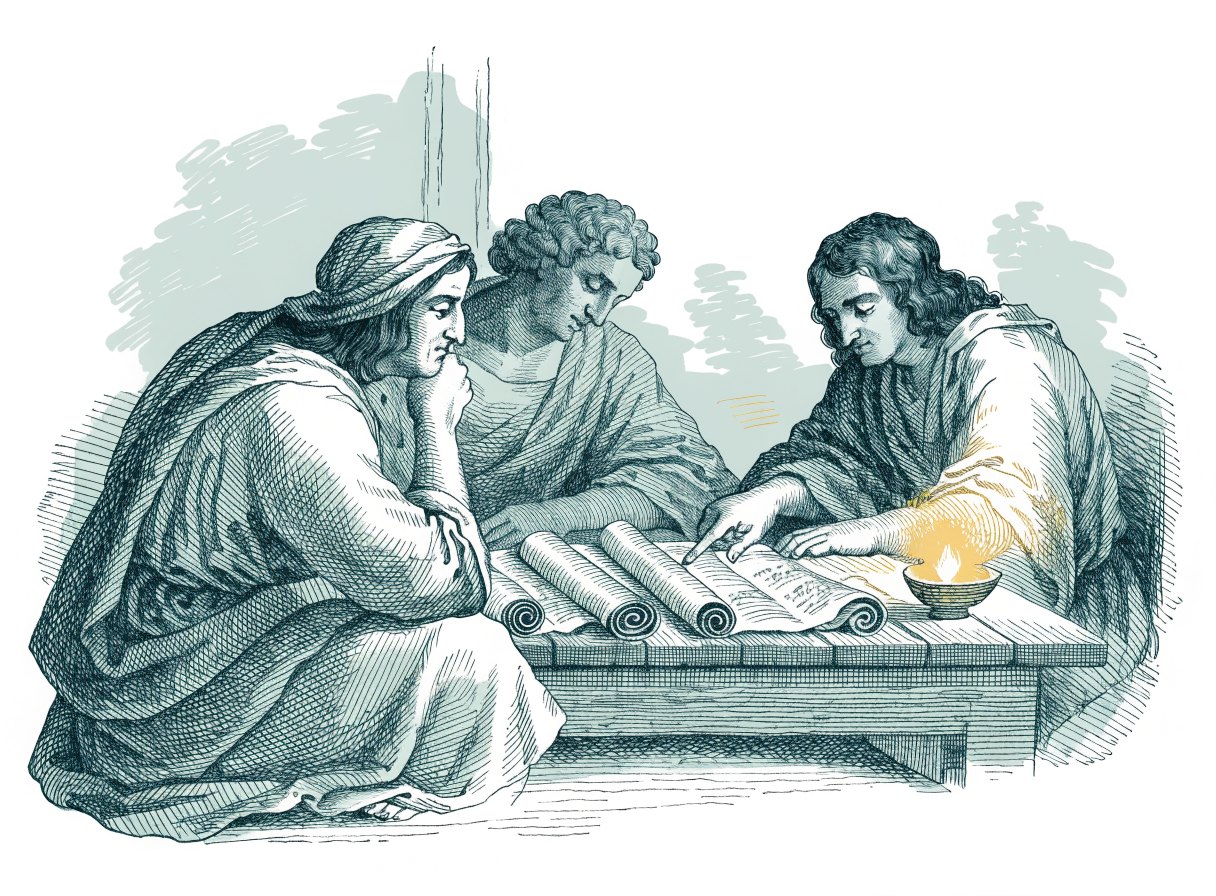
The Bible has one divine Author, so it never contradicts itself. That means the best commentary on the Bible is the Bible. When a passage is hard to understand, look for other passages on the same subject. Clear passages help explain the harder ones. The small cross-references in the margin of your Bible are there for exactly this.
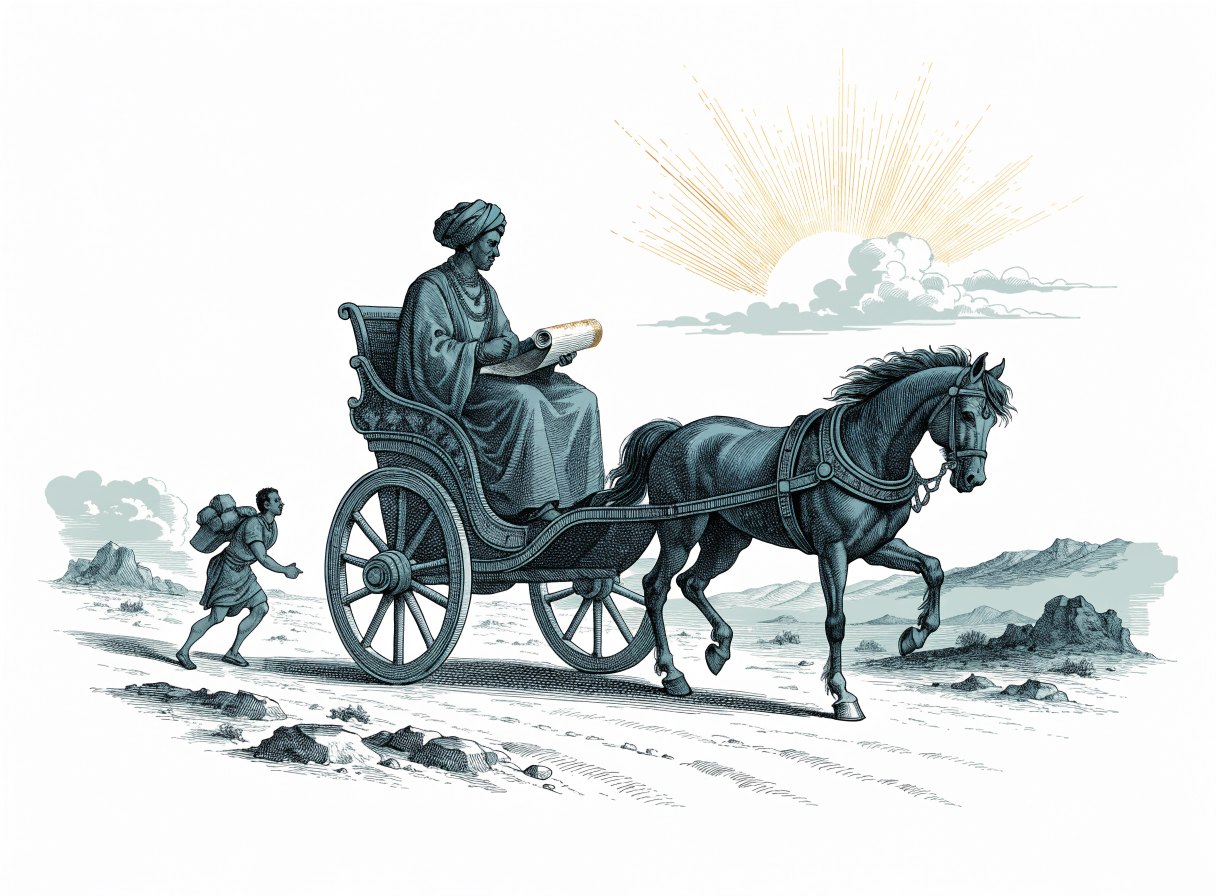
Luke praised the believers in Berea because they checked even the apostle Paul’s preaching against the Bible:
Do the same with every teacher, including this one.
Tool 5: Look for the author’s meaning
A passage has one meaning, the one God intended through its human author, though it can have many applications in our lives. So before asking, “What does this mean to me?” ask, “What did this mean to them?” As Bible teachers Gordon Fee and Douglas Stuart point out, a text cannot mean what it could never have meant to its first readers. Once you have the meaning, the application follows naturally.
Five common mistakes to avoid
- Pulling a verse out of its paragraph to prove a point it was never making. The fix: read the circles.
- Reading our world back into the text. The Greek word for power, dynamis, does not mean “dynamite”; dynamite was invented 1,800 years later. The fix: ask what the first readers heard.
- Treating every story as a rule. Because something happened in a Bible story does not mean God commands it for everyone. The fix: let the teaching passages tell you what the story means.
- Treating proverbs as promises. Proverbs describe how life usually goes in God’s world, not guarantees for every case. The fix: know the kind of writing.
- Letting feelings decide the meaning. “What this verse means to me” is a fine question to ask, but only after we know what it means. The fix: meaning first, then application.
A simple method you can use every time
| Step | Ask yourself |
|---|---|
| Pray | Have I asked God to open my eyes and make me willing to obey? |
| 1. Read | What does it say? Who is speaking, and to whom? What happens? What words repeat? |
| 2. Interpret | What kind of writing is this? What comes before and after? What did it mean to the first readers? |
| 3. Evaluate | Does my reading fit what the rest of the Bible clearly teaches? If it seems to clash, I go back and look again. |
| 4. Apply | What does this show me about God? About myself? What is one thing I should believe, change, or do? |
| 5. Correlate | How does this connect to the whole story of the Bible, and how does it point to Jesus? |
Your starter toolkit
- A good translation. Choose one that is accurate and readable, like the ESV, CSB, or NASB.
- A study Bible. The ESV Study Bible or the Reformation Study Bible gives you introductions, notes, maps, and cross-references in one place.
- A notebook. Write down what you notice and the questions you have.
- A church. God gives teachers to his people. Ask your pastor and others who know the Bible well; you were never meant to study alone (Acts 8:31).
Where to start
Read whole books, not scattered verses. A good path for a new reader: the Gospel of Mark to meet Jesus, then Philippians, a short letter full of joy, then Genesis to see where the story begins. A chapter a day is plenty.
Every road leads to Jesus
Bible study is more than learning facts. Its goal is to know God through his Son. After he rose from the dead, Jesus walked with two discouraged disciples and opened the Scriptures to them:
Read carefully, read humbly, and keep reading until you find him on every page. Jesus said of the Scriptures, “it is they that bear witness about me” (John 5:39).
Want this guide as a beautifully formatted, printable five-page PDF to share with a new believer or your small group? It’s free when you join the weekly list.