

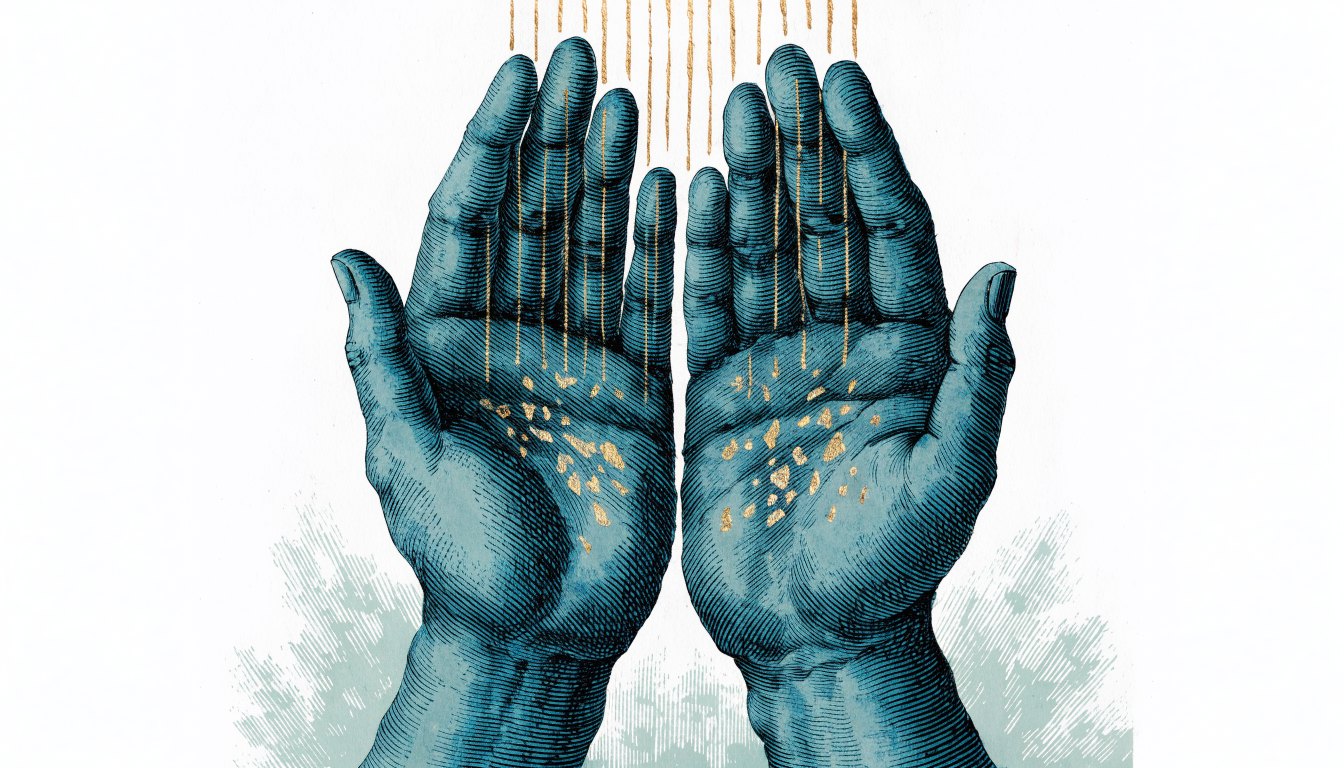
Most of us surrendered to God once, a long time ago, and we remember it. What we do not always notice is how much we have quietly taken back since. We still trust him with eternity. It is the medium-sized things we keep in our own hands: the plan for next year, the relationship we are managing, the timeline we have set, the outcome we have decided we cannot live without.
We would never say we are holding on. But our sleep says it. Our stomach says it. The way we replay the conversation for the fourth time at 2 a.m. says it.
This short study works like a doctor’s exam. You read the signs to find out where the grip is, so you can bring that exact place to the God who already knows about it and is not surprised. You do not read them to condemn yourself.
- Surrender answers God’s mercy. It never earns it.
- Letting go is not doing nothing. You still work and obey. You just stop believing everything depends on you.
- Casting your cares on God is how you humble yourself.
- God can be trusted with what you release, because he did not spare his own Son.
- It is daily, not once. When you take it back, throw it again.
1. What surrender is, and what it stands on
“Surrender” is a word that can be used badly, so two things need saying first.
The same Peter who tells you to cast your anxieties on God tells you in the next breath to be sober-minded and watchful (1 Pet. 5:8). The farmer who trusts God for the harvest still plows.
Second, no Christian has “fully surrendered” this side of heaven. The Westminster Confession (a historic summary of what the Bible teaches) says sanctification, God’s lifelong work of making us holy, is real but “imperfect in this life” (WCF 13.2). So this study is no ladder with ten rungs and a prize at the top.
And here is the ground under all of it. Paul only asks for surrender after eleven chapters of grace: “I appeal to you therefore, brothers, by the mercies of God, to present your bodies as a living sacrifice” (Rom. 12:1). The Heidelberg Catechism (an old teaching guide in questions and answers) asks what your only comfort is in life and death, and answers: “That I am not my own, but belong, body and soul, in life and in death, to my faithful Savior Jesus Christ” (Q&A 1). You are handing things back to the One who bought you. That turns surrender from a burden into a relief.
2. Throw it onto him
In the Greek of 1 Peter 5:6–7, “casting” hangs off the command in verse 6. You humble yourself by casting your anxieties on God. The pride is in the grip: the quiet belief that you must run the world because no one else will. The anxious feeling itself is what you hand him. Handing them over is a confession that God is God and you are not.
Translated “casting.” It means to throw something onto another, a fling, not a gentle placing. It appears only twice in the New Testament. The other time is Luke 19:35, where the disciples, “throwing their cloaks on the colt,” set Jesus on it. They took the cloak off their own back, flung it onto the animal, and it stayed there. Get your anxiety off your back, fling it onto God, and let it stay.

The word for “anxiety” is the same one Jesus uses when he says “do not be anxious about your life” (Matt. 6:25). Peter learned this from the Sermon on the Mount, and he is quoting a psalm:
Peter hands it to you with the reason attached: because he cares for you. You can throw the whole weight because the One catching it wants it.
3. Ten signs you are still holding on
Mark the two or three that land. They are symptoms, and every one of them has a promise waiting on the other side.
| The sign | What is underneath | Read |
|---|---|---|
| 1. You trust God with the earthquake and manage everything else yourself. | God gets the department called Emergencies, and you run the rest of the company. | Matt. 10:29–31 |
| 2. You keep pushing on doors he has not opened. | Impatience is unbelief wearing work clothes. | Ps. 37:7 |
| 3. You keep going back to the country he brought you out of. | Old slavery, but slavery you understood. “Remember Lot’s wife.” | Luke 17:32 |
| 4. You need everyone’s permission before you will obey. | “The fear of man lays a snare.” You already have the Father’s approval in Christ. | Gal. 1:10 |
| 5. You said “your will be done” and meant “my will, on time.” | Negotiating and calling it prayer. | Luke 22:42 |
| 6. You pray for peace and then rehearse the disaster. | Believing in God on paper and living as if the universe were unattended. | Prov. 3:5–6 |
| 7. You ask for new direction to avoid the last direction. | Stalling. Knowing follows willing (John 7:17). | Deut. 29:29 |
| 8. You are exhausted from carrying what was never yours. | Responsible for outcomes and other people’s choices. | Ex. 18:18 |
| 9. You cannot rest because you are still steering. | Supervising God, even in prayer. | Ps. 46:10 |
| 10. Your creed says trust. Your life says worry. | Two foundations at once. James calls it being double-minded (1:8). | Isa. 26:3 |
On plans. “Commit your work to the LORD, and your plans will be established” (Prov. 16:3) is a proverb, a description of how God ordinarily orders the lives of those who trust him. It is no guarantee that your particular plan will succeed. Sometimes God establishes a better plan than the one you rolled to him.
On obeying what God “has shown you.” That means what he has shown you in his Word, tested by wisdom and confirmed by counsel. Feelings alone are not a green light, and godly advice is good: “with many advisers they succeed” (Prov. 15:22). The trouble starts when the Word is clear and you still wait for one more person to sign off.
Now look closer at three of these, because they show the God behind the surrender.
4. When the answer is no
We pray “your will be done,” but underneath the words is a picture of how God should answer. When the answer comes back different, we feel cheated.
In the garden of Gethsemane, the night before the cross, Jesus asked for the cup of suffering to pass. The Father said no. And that no is the reason you and I are forgiven.
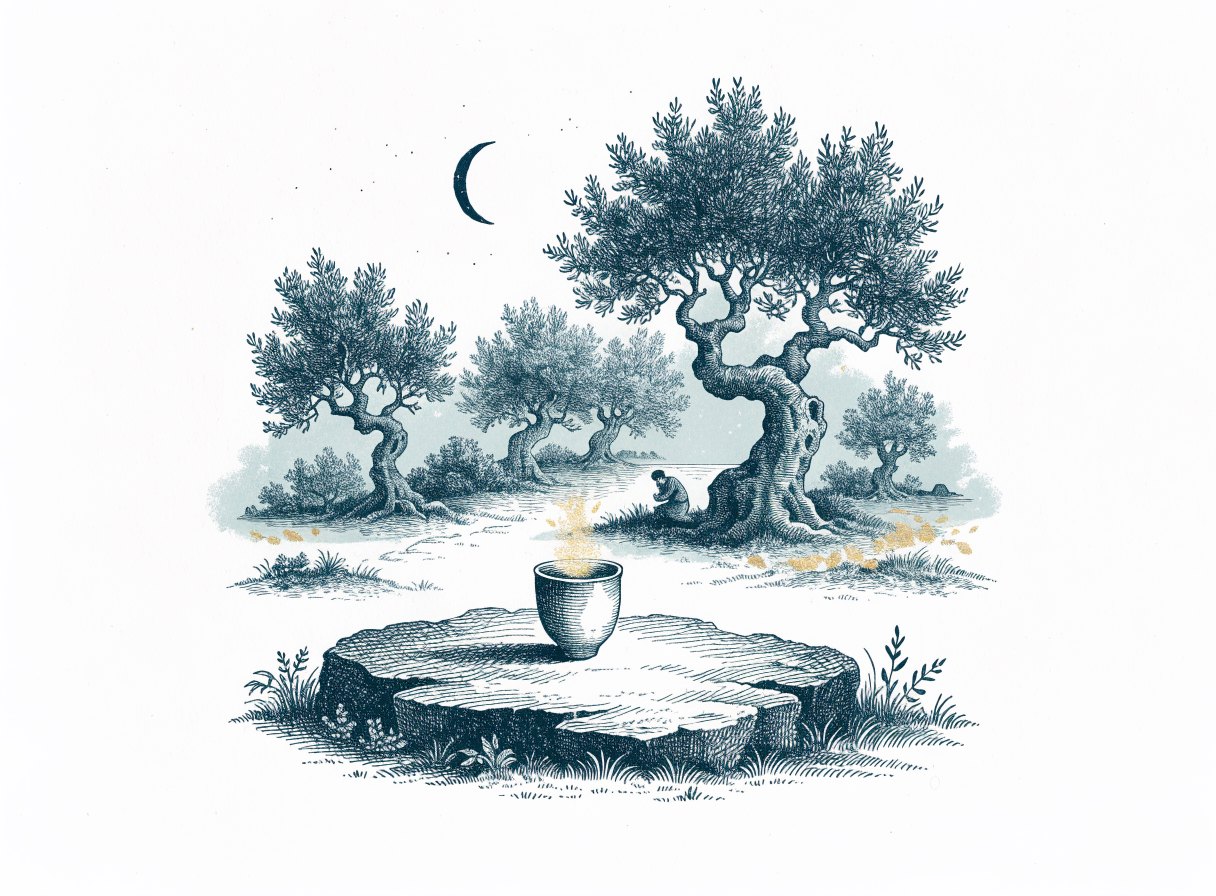
The one prayer in history that God refused is the prayer that saved the world. So his no to you is never careless. “My thoughts are not your thoughts,” God says (Isa. 55:8), and that is a comfort. If you knew everything God knows, you would ask for exactly what he is giving you.
5. When you rehearse the disaster
You pray and feel better for about four minutes. Then the mind runs the worst case again, because somewhere underneath you believe the outcome rests on you. Jesus asks, “Which of you by being anxious can add a single hour to his span of life?” (Matt. 6:27). Worry has never once changed an outcome. It only steals the strength you needed for today.
The word “lean” here is the word for putting your weight on a staff. You will lean on something. Your own understanding cannot hold you, because it does not know tomorrow. The Heidelberg Catechism says “all things come to us not by chance but from his fatherly hand” (Q&A 27). And Paul ends the rehearsal with one argument: “He who did not spare his own Son but gave him up for us all, how will he not also with him graciously give us all things?” (Rom. 8:32). If he did the hardest thing, he will not fail you on the easier ones.
6. When you are carrying what was never yours
Moses was doing holy work, and still doing too much of it. His father-in-law told him, “You will certainly wear yourself out, for the thing is too heavy for you. You are not able to do it alone” (Ex. 18:18). The psalm says God “gives to his beloved sleep” (Ps. 127:2). Sleep is a doctrine. You can close your eyes because Someone else is awake.
Jesus offers his own yoke. A yoke was built for two animals to pull together, so the question is whether you pull alongside him at his pace or drag the whole load yourself. He said “It is finished” from the cross (John 19:30). The rest he offers is the rest of a completed work.
What surrender actually is
Surrender is the moment you look at the God who did not spare his own Son, conclude that this God can be trusted with the thing in your hand, and open your hand. Jesus told of a man who found treasure buried in a field, “and in his joy he goes and sells all that he has and buys that field” (Matt. 13:44). He could not get rid of his things fast enough, because he had seen something worth more. Surrender trades small treasures for the great one.
And it is daily. You will find the cloak on your own shoulder again tomorrow morning. That is proof you are alive and still in the fight, so you throw it again. The Father is not counting how many times you come back with the same burden.
Five ways to open your hands this week
- Name what is in your hand. Under the signs that landed, write the specific person, plan, or outcome. You cannot release a fog.
- Throw it in words, out loud. “Father, I am throwing this on you, because you care for me.” Open your hands if it helps.
- Obey the last thing before asking for the next thing. Do what you already know, and watch the next step get clearer.
- Answer the rehearsal with Romans 8:32. Memorize it and let the cross argue with your worry.
- Practice one act of rest. Take your hands off one thing you are steering. Do not check it. Sleep on it.
For discussion
- Which of the ten signs described you most accurately? What is the specific thing behind it?
- Why is holding on to worry a form of pride? Had you ever thought of it that way?
- How does Gethsemane change the way you hear God’s no to your own prayers?
- What would it look like this week to pull alongside Jesus instead of dragging the whole load yourself?
The heaviest load is already carried. “Surely he has borne our griefs and carried our sorrows” (Isa. 53:4). The Son of God walked up a hill under the weight of every sin you will ever commit, and he did it so you could stop carrying what you never could. If you have never come to him, start there. Turn from your sin and trust Christ, who died for sinners and rose again. If your faith feels small, pray the prayer God loves to answer: “I believe; help my unbelief.” He flung your record as far as the east is from the west, and he is not about to start counting your anxieties. You can open your hands. He has already shown you what is in his.
Want this teaching as a printable five-page PDF to share with a friend or your small group? It’s free when you join the weekly list.