


“Trust in the LORD with all your heart, and do not lean on your own understanding.” Proverbs 3:5
“Nevertheless, not my will, but yours, be done.” Luke 22:42
Introduction: The Half-Surrendered Heart
Most of us surrendered to God once, a long time ago, and we remember it. What we do not always notice is how much we have quietly taken back since. Not the big things. We still trust him with eternity. It is the medium-sized things that we keep in our own hands: the plan for next year, the relationship we are managing, the timeline we have set, the outcome we have decided we cannot live without. We would never say we are holding on. But our sleep says it. Our stomach says it. The way we replay the conversation for the fourth time at 2 a.m. says it.
Before we go further, two things need to be said about the word “surrender,” because it is a word that can be used badly.
First, surrender in Scripture is not passivity. It is not “let go and let God” in the sense of doing nothing and calling it faith. The same Peter who tells you to cast your anxieties on God tells you in the next breath to be sober-minded and watchful (1 Pet. 5:8). The farmer who trusts God for the harvest still plows. Surrender is not the absence of effort. It is the absence of the belief that everything depends on your effort. Second, there is no such thing as a Christian who has “fully surrendered” this side of glory. The Westminster Confession says sanctification is real but “imperfect in this life,” with a war going on inside every believer until the end (WCF 13.2). So this study is not a ladder with ten rungs and a prize at the top. It is a doctor’s exam. The ten signs below are symptoms. You read them not to condemn yourself but to find out where the grip is, so you can bring that exact place to the God who already knows about it and is not surprised.
And here is the ground under all of it. Paul only asks for surrender after eleven chapters of grace: “I appeal to you therefore, brothers, by the mercies of God, to present your bodies as a living sacrifice” (Rom. 12:1). Surrender does not earn God’s mercy. It answers it. The Heidelberg Catechism opens by asking what your only comfort in life and death is, and answers: “That I am not my own, but belong, body and soul, in life and in death, to my faithful Savior Jesus Christ” (Q&A 1). You are not surrendering to a stranger. You are handing things back to the One who bought you. That is the whole difference between surrender as a burden and surrender as a relief.
The Word: What “Casting” Actually Means
The verse everyone quotes is verse 7. But verse 7 is not a sentence on its own. In the Greek, “casting” is a participle hanging off the command in verse 6: humble yourselves under God’s mighty hand… by casting your anxieties on him. That changes what the verse is about. Casting your cares on God is not a stress-management technique. It is how you humble yourself. Holding on to your anxieties is a form of pride: a quiet insistence that you must run the world because no one else will. Handing them over is a confession that God is God and you are not. Now look at the verb Peter chose:

The Exam: Ten Signs You Are Still Holding On
1You trust God with the earthquake and manage everything else yourself.
You give God the diagnosis, the layoff, the thing that is obviously beyond you. But the plan for the next five years, the relationship, the money, the timeline: those you keep, because those you can influence. This is not really trust. It is a division of labor. God gets the department called Emergencies, and you run the rest of the company. The problem is that Scripture knows nothing of a God who is sovereign over earthquakes but not over Tuesdays. Jesus says not one sparrow falls apart from your Father, and the hairs of your head are numbered (Matt. 10:29–31). The God who counts hairs is not too busy for your calendar.
The Hebrew verb behind “commit” is gālal, “to roll.” It is the word for rolling a stone off a well (Gen. 29:3). Roll your work onto the LORD. Get it off your back and onto his. One caution here, because this verse gets misquoted: it is a proverb, a description of how God ordinarily orders the lives of those who trust him, not a guarantee that your particular plan will succeed. The promise is that your plans will be established, set on solid ground, which sometimes means God establishes a better plan than the one you rolled to him. The same verb appears in Psalm 22:8, quoted by the mockers at the cross: “He trusts in the LORD; let him deliver him.” Jesus rolled his whole cause onto the Father, and for three days it looked like the plan had failed. It had not. Roll your work onto God, and let him decide what “established” looks like.
Also read: Psalm 37:5; James 4:13–15; Matthew 10:29–31
2You keep pushing on doors he has not opened.
You prayed. You waited a while. Then nothing happened on your schedule, so you started leaning on the door: calling in favors, forcing the conversation, making the thing happen. Abraham did exactly this. God promised a son. Ten years went by. So Sarah handed him Hagar, and Abraham took the promise into his own hands, and Ishmael was born (Gen. 16). The promise was real. The timing was God’s. And the child of forcing brought grief into that family for generations. Impatience is not a personality trait. It is unbelief wearing work clothes. It says: God is late, so I will be God for a while.
Waiting is not doing nothing. Abraham was supposed to keep walking with God, keep obeying what he already knew, and let the promise come in God’s time. That is what waiting looks like: obedience in the meantime. Paul says God sent his Son “when the fullness of time had come” (Gal. 4:4), not a day early and not a day late. The God who was on time for Bethlehem is not running behind on you.
Also read: Genesis 16:1–4; Isaiah 40:31; Galatians 4:4; Habakkuk 2:3
3You keep going back to the country he brought you out of.
You know the habit, the relationship, the pattern is not producing the life God is calling you toward. But it is familiar. It is the leeks and onions of Egypt (Num. 11:5): slavery, but slavery you understood. Israel actually said they would rather go back. And Lot’s wife, walking out of a city under judgment with angels holding her hand, still turned around to look (Gen. 19:26). Jesus put that whole story into three words: “Remember Lot’s wife” (Luke 17:32). What was she remembering? Not the sin. The furniture. The kitchen. The life she knew.
Notice what Hebrews says kept the patriarchs from going back. Not willpower. Desire. They wanted something better more than they wanted what was familiar. You do not break the pull of the old country by gritting your teeth. You break it by tasting the new one. Paul says “for freedom Christ has set us free; stand firm therefore, and do not submit again to a yoke of slavery” (Gal. 5:1). You are not a slave sneaking away. You are a freed man being invited to stop visiting the old cell. And if you have gone back, the Father in Luke 15 is not standing at the door with his arms crossed. He is running.
Also read: Numbers 11:4–6; Luke 9:62; Galatians 5:1; 2 Peter 2:20–22; Luke 15:20
4You need everyone’s permission before you will obey.
Counsel is good. Scripture commands it: “Without counsel plans fail, but with many advisers they succeed” (Prov. 15:22). So this sign is not about seeking wisdom. It is about what you do after you have it. You have prayed. You have searched the Word. You have asked godly people, and the answer is clear. And you still cannot move, because one more person has not signed off. That is not humility. Proverbs has a name for it: “The fear of man lays a snare” (29:25). The approval of people has become a thing you need in order to breathe. John says some of the rulers actually believed in Jesus but would not confess him, “for they loved the glory that comes from man more than the glory that comes from God” (John 12:43). They had the truth. They just needed the room to approve of them more than they needed to obey.
A word of care: when Scripture speaks of what God “has shown you,” it means what he has shown you in his Word, tested by wisdom and confirmed by counsel. Feelings alone are not a green light. But once the Word is clear, the gospel cuts the snare at the root. You already have the approval you were looking for. The Father said over the Son, “This is my beloved Son, with whom I am well pleased” (Matt. 3:17), and Paul says you have been blessed “in the Beloved” (Eph. 1:6). The verdict is in. You are free to obey without a second vote.
Also read: Proverbs 29:25; John 12:42–43; Proverbs 15:22; Ephesians 1:6; Romans 8:1
5You said “your will be done” and meant “my will, on time.”
We pray the words. We even mean them, in the moment. But underneath the words is a specific picture of how God should answer, and when the answer comes back different, we feel cheated, as if God broke a deal. He did not. We were negotiating and calling it prayer. Paul knew this feeling. He asked three times for the thorn to be removed. The answer was no, with a reason: “My grace is sufficient for you, for my power is made perfect in weakness” (2 Cor. 12:9). Paul did not get what he prayed for. He got something he would not have known to ask for.
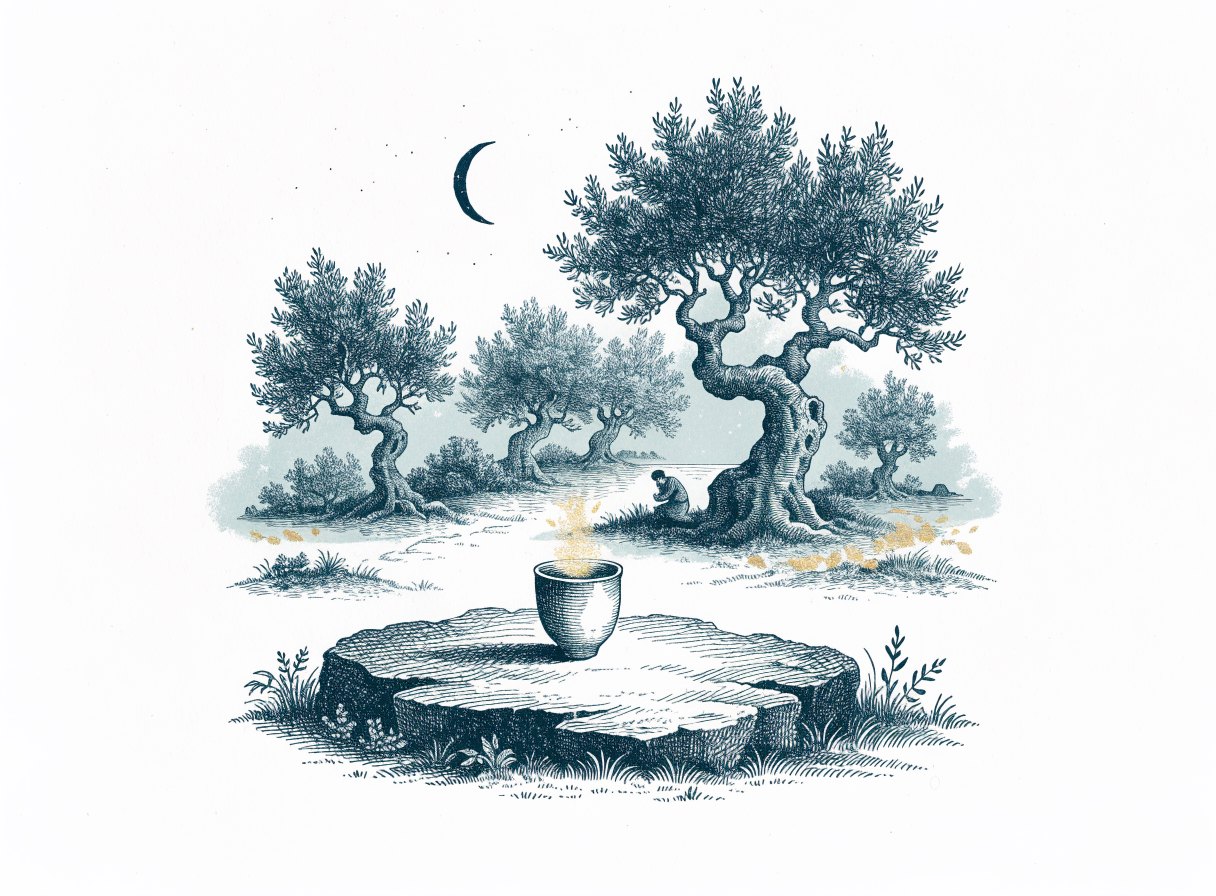
Read that prayer slowly, because it is the most important prayer ever prayed. Jesus asked for the cup to pass. The Father said no. And that “no” is the reason you and I are forgiven. The one prayer in history that God refused is the prayer that saved the world. So when you say “your will be done,” you are praying to a Father who has already proven, at infinite cost to himself, that his “no” is never careless. “My thoughts are not your thoughts,” God says (Isa. 55:8), and that is not a threat. It is a comfort. If you knew everything God knows, you would ask for exactly what he is giving you.
Also read: 2 Corinthians 12:7–10; Isaiah 55:8–9; Romans 8:28; Matthew 26:39
6You pray for peace and then rehearse the disaster.
You pray, and you feel better for about four minutes. Then the mind goes back to work, running the worst case, then the second-worst case, then the version where you said the wrong thing. Why? Because somewhere underneath, you believe the outcome rests on you. If you stop watching, the thing will fall. This is what the old writers called practical atheism: believing in God on paper and living as if the universe were unattended. Jesus asks the question that exposes it: “Which of you by being anxious can add a single hour to his span of life?” (Matt. 6:27). Worry has never once changed an outcome. It only steals the strength you needed for today.
The word “lean” here (shāʿan) is the word for putting your weight on a staff, or a king leaning on the arm of his officer (2 Kings 7:2). You will lean on something. The only question is whether it can hold you. Your own understanding cannot. It does not know tomorrow. The Heidelberg Catechism says God’s providence means “all things come to us not by chance but from his fatherly hand” (Q&A 27), and that because of this we can be “patient when things go against us, thankful when things go well” (Q&A 28). And Paul gives the argument that ends the rehearsal: “He who did not spare his own Son but gave him up for us all, how will he not also with him graciously give us all things?” (Rom. 8:32). If he did the hardest thing, he will not fail you on the easier ones.
Also read: Matthew 6:25–34; Philippians 4:6–7; Romans 8:32; Psalm 127:1–2
7You ask for new direction to avoid the last direction.
“Lord, show me what to do.” But you already know. There is a habit, a place, a relationship, a resentment he has been telling you for months to put down. You are not confused. You are stalling, and asking for more light is a way of not acting on the light you have. Jesus said: “If anyone’s will is to do God’s will, he will know” (John 7:17). Knowing follows willing. God does not usually give the next step to someone still standing on the last one with their arms folded.
Isaiah 30:21 is often quoted here: “Your ears shall hear a word behind you, saying, ‘This is the way, walk in it.’” It is a beautiful promise, but notice who it is for. In context it is spoken to a people who have finally turned back to God after running to Egypt for help (30:15–19). The guidance comes after the turning. That is the pattern: obey what is revealed, and the secret things get clearer. Hebrews says to “lay aside every weight, and sin which clings so closely” (12:1), and the next verse tells you how you can: by “looking to Jesus, the founder and perfecter of our faith.” He already ran the whole race. You are not putting the thing down alone.
Also read: John 7:17; Isaiah 30:15–21; Hebrews 12:1–2; James 1:22; Micah 6:8
8You are exhausted from carrying what was never yours.
Some tiredness is honest work. But there is another kind: the fatigue of being responsible for outcomes, other people’s choices, the future, the whole thing. Jethro saw it in Moses and said what a good father-in-law says: “You will certainly wear yourself out, for the thing is too heavy for you. You are not able to do it alone” (Ex. 18:18). Moses was doing holy work. He was still doing too much of it. The Psalmist is even blunter: “It is in vain that you rise up early and go late to rest, eating the bread of anxious toil; for he gives to his beloved sleep” (Ps. 127:2). Sleep is a doctrine. You can close your eyes because Someone else is awake.
This is the verse Peter was quoting. And the reason you can fling the burden is that the heaviest one has already been carried. “Surely he has borne our griefs and carried our sorrows” (Isa. 53:4). The Son of God walked up a hill under the weight of every sin you will ever commit. He did not stagger under it for you to then insist on carrying your own calendar. Ask yourself, honestly, which loads you are carrying that God never handed you. Then throw them. Like the cloak on the colt.
Also read: 1 Peter 5:6–7; Exodus 18:13–23; Psalm 127:2; Isaiah 53:4
9You cannot rest because you are still steering.
Even in prayer, you are managing. You tell God what to do, when, through whom, and what it should look like when he is done. You are not resting. You are supervising. Psalm 46:10 says “Be still, and know that I am God,” and the Hebrew behind “be still” (rāphāh) means to let your hands go slack, to drop what you are gripping. Some translations render it “cease striving.” God is not asking you to feel calm. He is asking you to take your hands off the wheel, because there is only one driver, and you are not him.
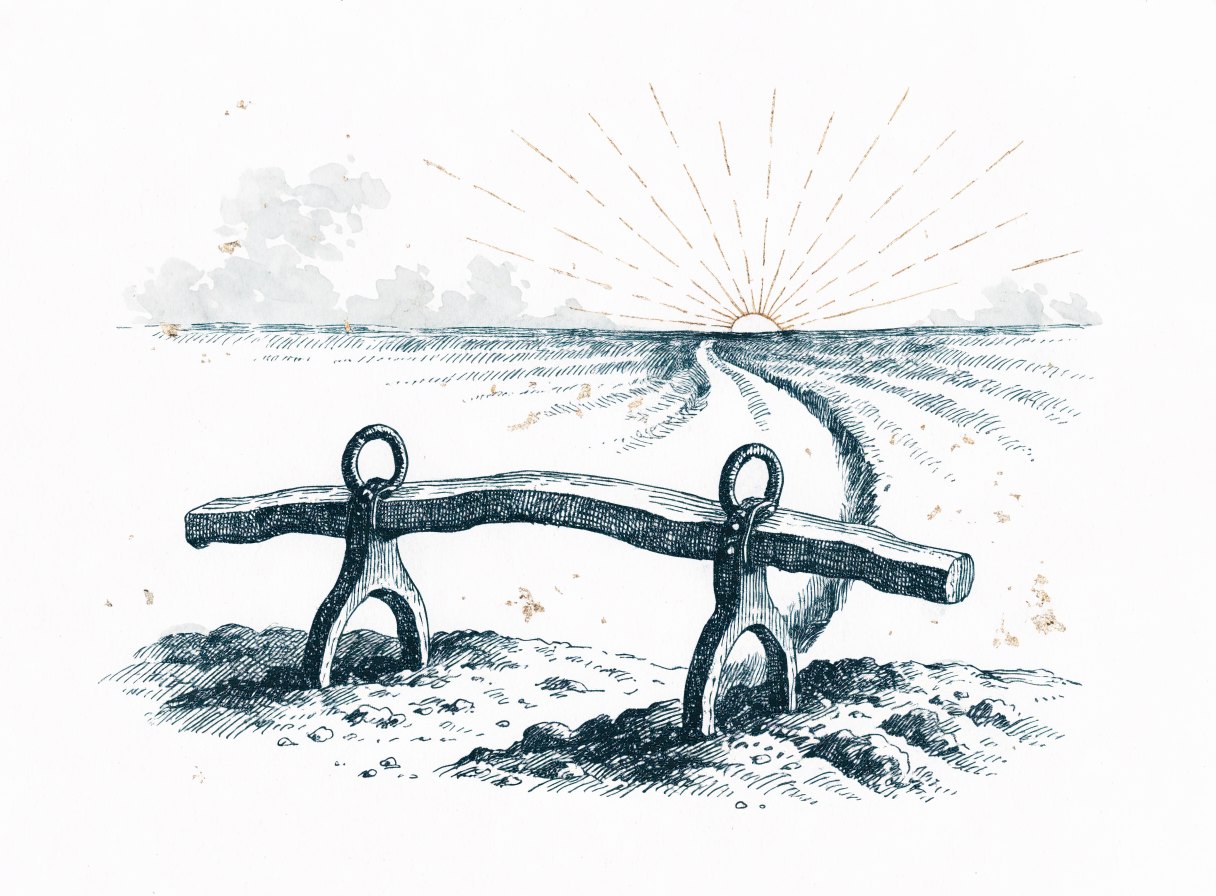
Notice Jesus does not say “I will remove all yokes.” He says take mine. A yoke was built for two animals to pull together. Every Christian is yoked to something. The question is whether you are pulling alongside Jesus at his pace or dragging the whole load yourself. Hebrews says whoever “has entered God’s rest has also rested from his works as God did from his” (4:10). God rested on the seventh day because the work was finished. Jesus said “It is finished” from the cross (John 19:30). The rest he offers is not a nap. It is the rest of a completed work. You can stop steering because the destination was secured before you were born.
Also read: Psalm 46:10; Hebrews 4:9–11; John 19:30; Psalm 131:1–2
10Your creed says trust. Your life says worry.
This is the summary sign, and the one that catches most of us. You would pass the theology exam. God is sovereign, God is good, God is in control. You believe it. And yet your days are run by worry, overthinking, emotional attachment to outcomes, and the need to control what happens next. Every Christian has two theologies: the one we confess and the one we function by. James calls the gap between them being “double-minded” (dipsychos, literally two-souled) and says such a person is “unstable in all his ways” (1:8). Not evil. Unstable. Tossed. You cannot rest on two foundations at once.
“Stayed” is the Hebrew sāmak, to lean upon or lay upon. It is the same word used in Leviticus 1:4, where the worshiper lays his hand on the head of the sacrifice, transferring his guilt to the animal that will die in his place. A mind “stayed” on God is a mind that has leaned its whole weight onto him the way that hand pressed down on the offering. And the offering has already been made. Christ is the one on whom the weight was laid. So the honest prayer here is not “Lord, I trust you.” It is the one the father prayed in Mark 9:24, the one God loves to answer: “I believe; help my unbelief.”
Also read: James 1:5–8; Matthew 6:24; Mark 9:24; Leviticus 1:4
The Turn: What Surrender Actually Is
Now step back from the ten signs, because if you only read the exam you will walk away with a list of failures, and that is not the point. Here is what surrender is. It is not giving up. It is not resignation. It is not pretending you do not care what happens. Surrender is the moment you look at the God who did not spare his own Son, and you conclude that this God can be trusted with the thing in your hand, and you open your hand.
Jesus told a story about a man who found treasure buried in a field, “and in his joy he goes and sells all that he has and buys that field” (Matt. 13:44). Sold everything. In his joy. That man did not surrender his possessions with a heavy heart. He could not get rid of them fast enough, because he had seen something worth more. Paul says the same: “I count everything as loss because of the surpassing worth of knowing Christ Jesus my Lord” (Phil. 3:8). This is why John Piper can say that God is most glorified in us when we are most satisfied in him. Surrender is not the loss of your treasure. It is the trading of small treasures for the great one.
And it is daily, not once. You will take things back. You will find the cloak on your own shoulder again tomorrow morning. That is not proof that you never surrendered. It is proof that you are alive and still in the war the Confession described. So you throw it again. And again. The Father does not count how many times you have had to come back to him with the same burden. He is not keeping that ledger. He flung your record as far as the east is from the west, and he is not about to start counting your anxieties.
Living It: Five Practices of Open Hands
For Discussion
- Which of the ten signs described you most accurately? What is the specific thing (person, plan, outcome) behind it?
- Peter says casting your anxieties on God is how you humble yourself. Why is holding on to worry a form of pride? Have you ever thought of it that way?
- Abraham forced the promise and got Ishmael. Where have you tried to make God’s timing happen on your own schedule? What came of it?
- Gethsemane was the one prayer the Father said no to. How does that change the way you hear God’s “no” to your own prayers?
- Jesus does not remove the yoke. He offers his. What would it look like this week to pull alongside him instead of dragging the whole load yourself?
Sources & For Further Study
- Text: 1 Peter 5:6–8; Luke 19:35; Psalm 55:22; Proverbs 3:5–6; 16:3; 29:25; Psalm 22:8; 37:5–7; 46:10; 127:2; Genesis 16; 19:26; Numbers 11:5; Deuteronomy 29:29; Isaiah 26:3; 30:15–21; 53:4; 55:8–9; Matthew 6:25–34; 10:29–31; 11:28–30; 13:44; Luke 17:32; 22:42; John 7:17; 12:43; 19:30; Romans 8:28–32; 12:1; 2 Corinthians 12:7–10; Galatians 1:10; 4:4; 5:1; Ephesians 1:6; Philippians 3:8; Hebrews 4:9–10; 11:15–16; 12:1–2; James 1:5–8; Mark 9:24. English quotations follow the ESV.
- Greek and Hebrew: BDAG on ἐπιρίπτω, μέριμνα, ἀνάπαυσις, δίψυχος; HALOT on גָּלַל (gālal, roll), שָׁעַן (shāʿan, lean), רָפָה (rāphāh, let go, sink), סָמַךְ (sāmak, lean upon, lay upon). Strong’s: epiriptō G1977; merimna G3308; gālal H1556; shāʿan H8172; rāphāh H7503; sāmak H5564. Word anatomies checked against actual usage, not etymology alone.
- Confessions: Westminster Confession of Faith 5 (providence) and 13.2 (sanctification imperfect in this life); Heidelberg Catechism Q&A 1, 26–28 (providence and its comfort).
- Commentaries: Thomas Schreiner, 1, 2 Peter, Jude (NAC), on the participle in 1 Peter 5:7; Bruce Waltke, The Book of Proverbs (NICOT), on Proverbs 3:5–6 and 16:3; John Calvin, Institutes 1.16–17 on providence.
- Practical: Timothy Keller, Counterfeit Gods (control and approval as idols); John Piper, Future Grace (faith in God’s promises as the engine of obedience); Jerry Bridges, Trusting God; David S. Jones, Seventy Times Seven, on the God who does not keep the count.
Want this whole study as a beautifully formatted, printable PDF, ready for your small group? It’s free when you join the weekly list.