

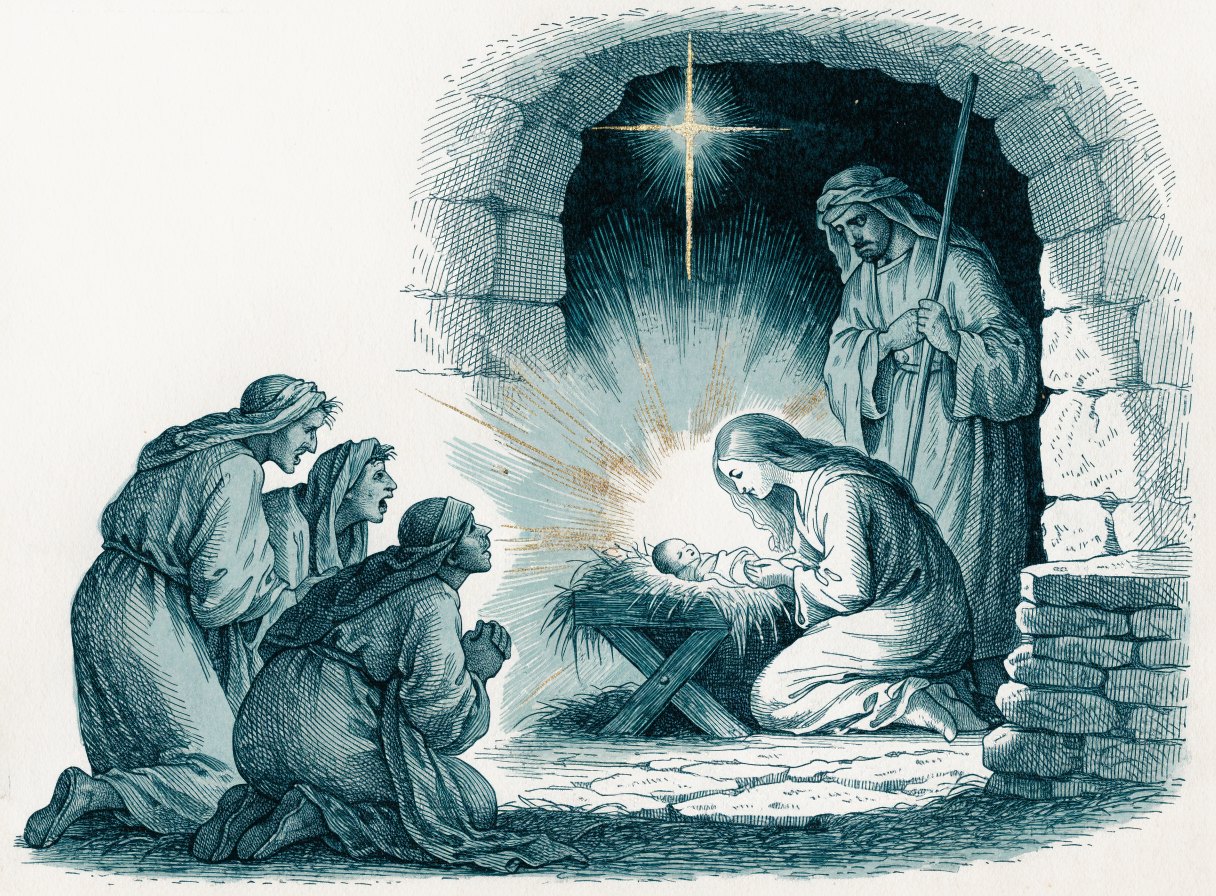
“For unto you is born this day in the city of David a Savior, who is Christ the Lord.” Luke 2:11
Introduction: The One the Whole Story Was Waiting For
For thirty-six weeks we have followed a promise. In Eden, God promised that the offspring of the woman would crush the serpent’s head (Week 8). He promised Abraham that all the nations would be blessed through his offspring (Week 11). He promised David a Son whose throne would last forever (Week 28). He promised a new covenant, a new heart, and a King whose kingdom would never end (Week 34). Then came four hundred years of silence.
This week opens Unit 5, “The King Arrives.” Around 5 BC, in the little town of Bethlehem, a baby was born to a young woman named Mary. The whole Bible has been pointing to him. His name was Jesus.
These two weeks ask the most important question anyone can ask: who is he? Not just what he taught, or what he did, but who he is. Jesus himself put the question to his closest friends: “But who do you say that I am?” (Matt. 16:15). By the end of next week, you will have to answer it too.
The Word: Immanuel
Part One: The Word Became Flesh
John begins his Gospel before the beginning of everything: “In the beginning was the Word, and the Word was with God, and the Word was God. He was in the beginning with God. All things were made through him” (John 1:1–3). The Word is not a thing. He is a Person, with God and yet himself God, the one through whom the universe was made. Then John says the most astonishing sentence in the Bible: “And the Word became flesh and dwelt among us” (1:14). The Creator took a created human nature to himself, without ever ceasing to be the Creator.
How did it happen? An angel told a young virgin in Nazareth named Mary that she would have a son. When she asked how, since she was a virgin, the angel answered, “The Holy Spirit will come upon you, and the power of the Most High will overshadow you; therefore the child to be born will be called holy,” and then the angel named him: “the Son of God” (Luke 1:35). Jesus had a human mother but no human father. The eternal Son of God took a real human nature from Mary, in her womb, by the Holy Spirit.
He was born in Bethlehem, the town of David, just as the prophet Micah had said seven centuries earlier (Mic. 5:2). The Roman emperor Augustus had ordered a census, so Joseph and Mary traveled there from Nazareth, and Mary “gave birth to her firstborn son and wrapped him in swaddling cloths and laid him in a manger, because there was no place for them in the inn” (Luke 2:7). The King of the universe was laid in an animal’s feeding trough.
The first people to hear the news were shepherds, working the night shift outside town. An angel told them, “For unto you is born this day in the city of David a Savior, who is Christ the Lord” (2:11). Notice the three titles. Savior: he came to rescue. Christ: the anointed King promised to David. Lord: in the Greek Old Testament, the word that stands for God’s own name, the one your English Bible prints as LORD.
(A note on the date: the monk who set up our calendar about AD 525 miscalculated by a few years. Herod the Great, who was alive when Jesus was born, died around 4 BC, so Jesus was probably born around 6 to 4 BC.)
Part Two: Truly God
As Jesus grew up and began his public ministry around age thirty, he said and did things that made people ask, again and again, who he was.
He forgave sins. When friends lowered a paralyzed man through a roof, Jesus said, “Son, your sins are forgiven.” The religious teachers were scandalized: “Who can forgive sins but God alone?” (Mark 2:5, 7). They were right about that. So Jesus healed the man on the spot, so that they would “know that the Son of Man has authority on earth to forgive sins” (2:10).
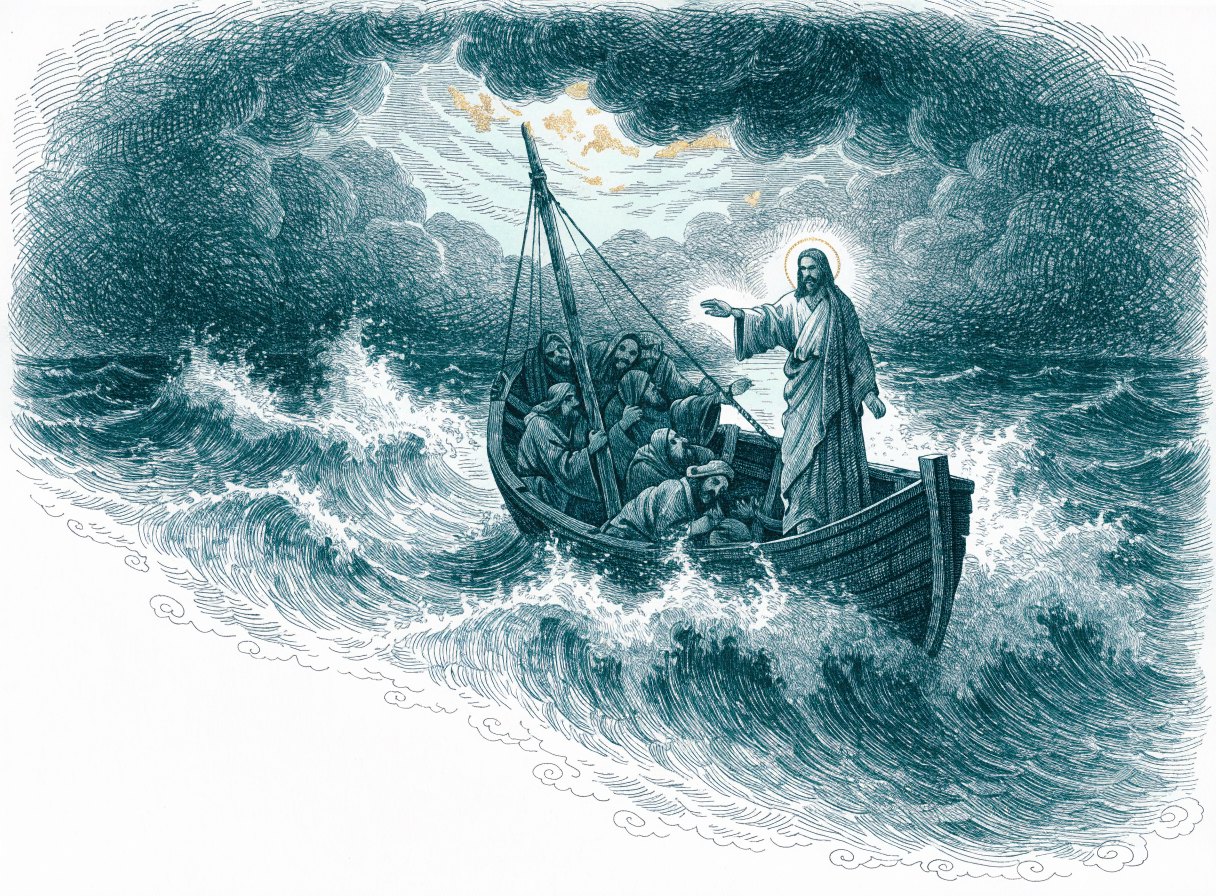
He ruled the wind and the sea. On the Sea of Galilee, a storm nearly swamped the disciples’ boat while Jesus slept. They woke him in terror. “And he awoke and rebuked the wind and said to the sea, ‘Peace! Be still!’ And the wind ceased, and there was a great calm.” The disciples were more frightened afterward than during the storm: “Who then is this, that even the wind and the sea obey him?” (Mark 4:39, 41). In the Old Testament, it is God who rules the raging sea and stills its waves (Ps. 89:9; 107:29).
He took God’s name. At the burning bush, God told Moses his name: “I am who I am” (Ex. 3:14; Week 3). One day Jesus told his opponents, “Truly, truly, I say to you, before Abraham was, I am” (John 8:58). They knew exactly what he meant. “So they picked up stones to throw at him” (8:59). Stoning was the Law’s punishment for blasphemy (Lev. 24:16). Later they said it plainly: “It is not for a good work that we are going to stone you but for blasphemy, because you, being a man, make yourself God” (John 10:33). He also said, “I and the Father are one” (10:30), and “Whoever has seen me has seen the Father” (14:9). This does not mean Jesus is the Father. The Father and the Son are two distinct persons who share the one being of God. That is why Jesus can be “with God” and “God” at the same time (John 1:1).
He accepted worship. After the resurrection, the women who met him “took hold of his feet and worshiped him” (Matt. 28:9). The doubting disciple Thomas looked at him and confessed, “My Lord and my God!” (John 20:28). Jesus corrected none of them. Every faithful Jew knew that only God may be worshiped. Paul sums it up: “For in him the whole fullness of deity dwells bodily” (Col. 2:9). Jesus is not a great man who became divine, or an angel, or a lesser god. He is God the Son.
The Turn: One and the Same
Every promise in the story was heading here. The Word who made the world was laid in a manger, and the same Jesus spoke from a boat and told the sea to be still. The baby in Bethlehem and the Lord of the storm are one and the same.
Paul puts the wonder in one sentence: “For you know the grace of our Lord Jesus Christ, that though he was rich, yet for your sake he became poor, so that you by his poverty might become rich” (2 Cor. 8:9). He came down that far to bring his people home. If God feels distant to you, look at the manger, and then keep reading to the cross. Next week we see how truly human he was, and Jesus asks the question every one of us must answer: “Who do you say that I am?”
Living It: Three Practices for This Week
Before Week 38: Begin reading the Gospel of Mark, a chapter a day, and read Matthew 16:13–17:8. Week 38 shows how truly human Jesus was, and asks who you say he is.
For Discussion
- The whole story has been heading toward Jesus. Which earlier promise in this series means the most to you now that you see him?
- John says the Word “became flesh.” What does it tell you about God that he came himself rather than sending a message?
- The disciples were more afraid after the storm was calmed than during it. Why?
- Which of Jesus’ claims or actions strikes you as the strongest evidence that he is God?
Sources & For Further Study
- On the date of Jesus’ birth: Harold W. Hoehner, Chronological Aspects of the Life of Christ. On John’s Gospel: D. A. Carson, The Gospel According to John (Pillar).
- For further reading: Sinclair B. Ferguson, In Christ Alone; Timothy Keller, Hidden Christmas; B. B. Warfield, The Person and Work of Christ.
Leading a small group? This week comes as a beautifully formatted, printable PDF, along with a 2-page Small Group Guide: a discussion page for your group and leader notes with a session plan and answer key. Both are free when you join the weekly list.