

“For the law was given through Moses; grace and truth came through Jesus Christ.” John 1:17
Introduction: Rescue Comes First
Picture a couple adopting a little boy out of a bad situation. They sign the papers, carry him out to the car, and bring him home. Only then, after he is already their son, do they sit down with him at the kitchen table and explain how their family lives: we tell the truth here, we are kind to each other, we eat dinner together, you are safe. The house rules do not make him their son. The rules show him what it looks like to live as one.
That is the order of the book of Exodus, and it is one of the most important things to understand about the whole Bible. God did not come to Israel in Egypt and say, “Keep these commandments, and then I will rescue you.” He rescued them first, by the blood of the lamb and the parting of the sea. Then, about seven weeks later, at the third new moon (Ex. 19:1), he brought them to a mountain in the desert called Sinai, and there he gave them his law.
God had called Israel “my firstborn son” (Ex. 4:22), so the adoption picture fits. One caution: God rescued the whole nation, yet not everyone who walked out of Egypt trusted him (Heb. 3:16–19). Being in the camp never saved anyone. Faith in God’s promise did.
Last week we watched the rescue. Now we watch God bind himself to the people he rescued in a covenant, and give them the Ten Commandments. Over these two weeks you will see God’s holiness, the purpose of the law, the first great breach of the covenant, and why God promised a better covenant (Heb. 8:6).
The Word: Torah
Part One: On Eagles’ Wings
Sinai is the mountain also called Horeb, where God spoke to Moses from the burning bush (Week 3). Back then God gave him a sign: “when you have brought the people out of Egypt, you shall serve God on this mountain” (Ex. 3:12). Now Moses was back, and the whole nation was with him.
When Israel camped at the foot of Sinai, God called Moses up the mountain and gave him a message for the people. Listen to what comes first:
“I bore you on eagles’ wings and brought you to myself.” Before a single command, God reminds them of what he did. He brought them out of Egypt to bring them “to myself.”
Notice the word “if.” God had already rescued them, in the verse before, so this cannot be a deal to earn rescue. The “if” describes how a rescued people would live as his treasured possession and enjoy what he promised, above all life in the land. When Israel later turned away for good, they lost the land and went into exile. But the “if” never reversed the order. Grace came first. Obedience was the shape of life inside the covenant, and God was about to give sacrifices for the times they failed.
And then God tells them what they will be: his “treasured possession,” a “kingdom of priests,” a “holy nation.” A priest stands between God and people. Israel as a whole was meant to show the nations what the true God is like, to be the channel of the blessing God promised Abraham for “all the families of the earth.” Why did God choose them? Moses later says it plainly: “It was not because you were more in number than any other people that the LORD set his love on you and chose you, for you were the fewest of all peoples, but it is because the LORD loves you and is keeping the oath that he swore to your fathers” (Deut. 7:7–8).
Peter takes these same titles and gives them to the church: “But you are a chosen race, a royal priesthood, a holy nation, a people for his own possession, that you may proclaim the excellencies of him who called you out of darkness into his marvelous light” (1 Pet. 2:9). If you belong to Christ, Exodus 19 is about you too.
Part Two: The Mountain of Fire
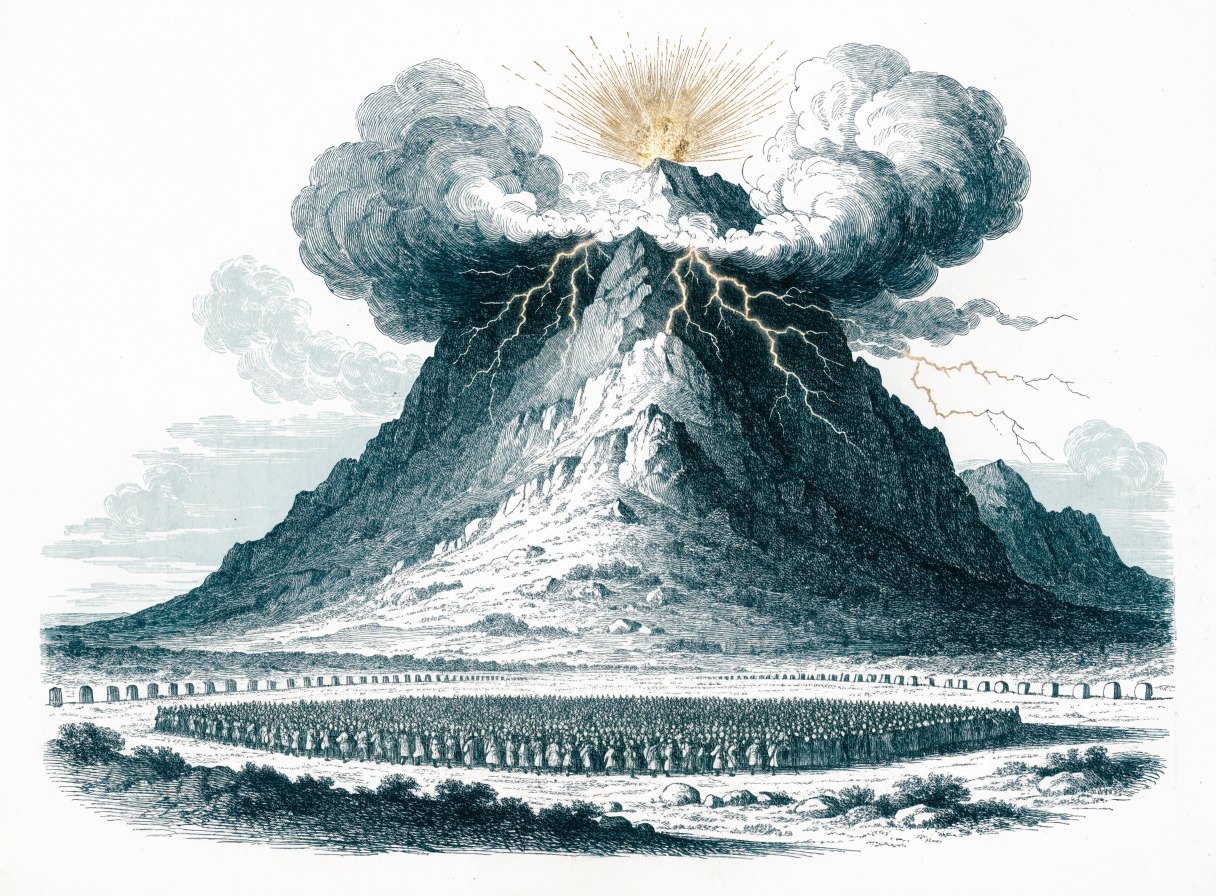
On the third day, God came down. “There were thunders and lightnings and a thick cloud on the mountain and a very loud trumpet blast, so that all the people in the camp trembled… Now Mount Sinai was wrapped in smoke because the LORD had descended on it in fire. The smoke of it went up like the smoke of a kiln, and the whole mountain trembled greatly” (19:16–18). God had already told Moses to set boundaries around the mountain. Anyone who touched it was to be put to death (19:12–13).
Remember Week 3: God is holy, holy, holy. Sinai shows what that means. The God who rescued them with such tenderness is also a consuming fire, and sinful people cannot simply walk into his presence. After God had spoken the Ten Commandments aloud to the whole people (we turn to them next), they begged Moses: “You speak to us, and we will listen; but do not let God speak to us, lest we die.” So “the people stood far off, while Moses drew near to the thick darkness where God was” (20:19, 21). Moses became their go-between, a mediator, the word we met in Week 10. Moses himself later said, “I stood between the LORD and you” (Deut. 5:5).
Part Three: The Ten Words
Look now at what God spoke from the fire (20:1; Deut. 5:22). The Bible calls them “the Ten Words” (Ex. 34:28, in Hebrew), and they begin, not with a command, but with a reminder: “I am the LORD your God, who brought you out of the land of Egypt, out of the house of slavery” (20:2). That sentence is the foundation of everything that follows. The Shorter Catechism draws the conclusion: “because God is the Lord, and our God, and redeemer, therefore we are bound to keep all his commandments” (WSC 44). We obey because we have been rescued, not in order to be rescued.
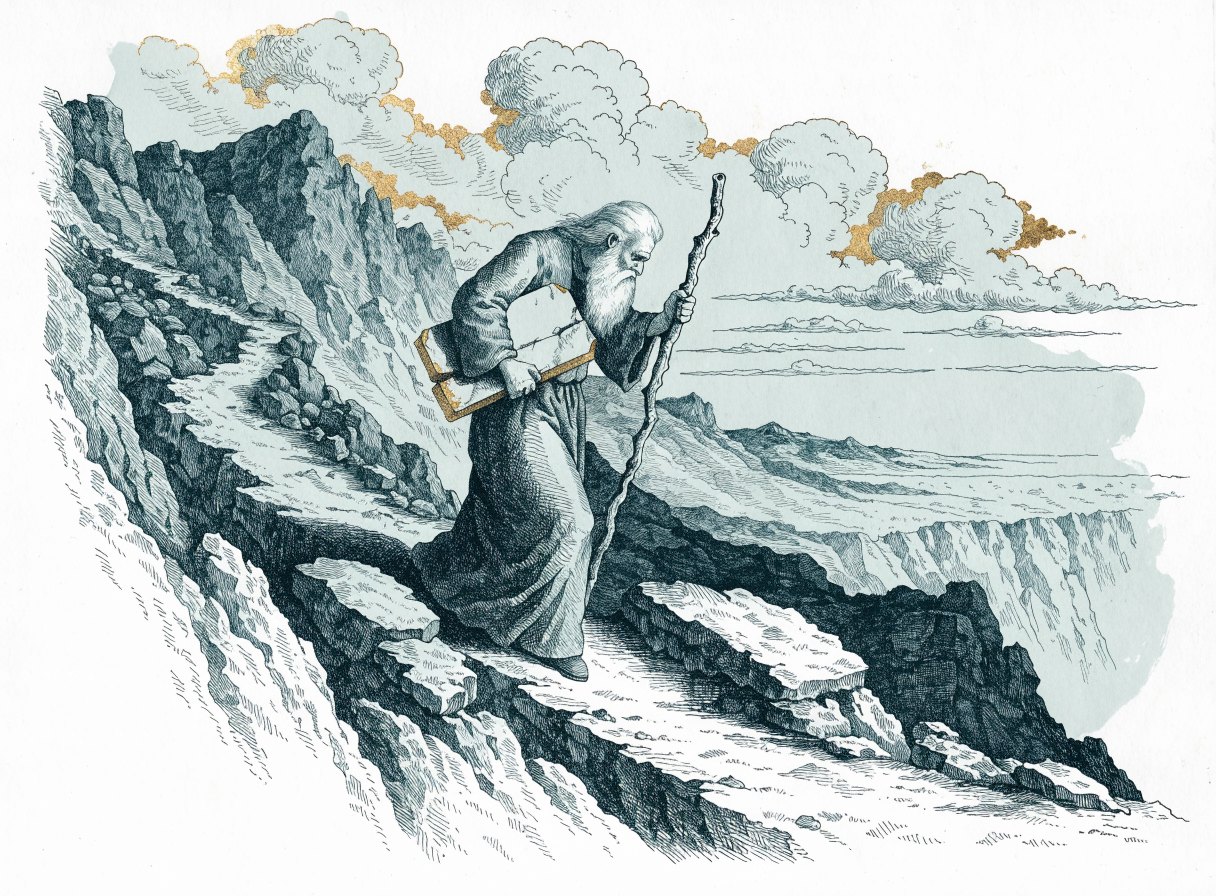
The commandments fall into two groups, often pictured as two stone tablets. The first four are about loving God: have no other gods, make no images to worship, do not misuse God’s name, and keep the Sabbath holy. The last six are about loving your neighbor: honor your parents, and do not murder, commit adultery, steal, lie about others, or covet what belongs to them.
Jesus summed up the whole law in two sentences. When someone asked him which commandment was greatest, he answered, “You shall love the Lord your God with all your heart and with all your soul and with all your mind. This is the great and first commandment. And a second is like it: You shall love your neighbor as yourself. On these two commandments depend all the Law and the Prophets” (Matt. 22:37–40), Jesus’ name for the Old Testament Scriptures. The Catechism says the same: “The sum of the ten commandments is to love the Lord our God with all our heart, with all our soul, with all our strength, and with all our mind; and our neighbor as ourselves” (WSC 42).
You may be wondering about the fourth commandment. If the Ten Commandments still bind us, should Christians rest on Saturday? The Sabbath goes back to creation, before Israel existed: God rested on the seventh day and blessed it (Gen. 2:3; Week 5). So one day in seven belongs to God for all people. What changed is which day. Jesus rose on the first day of the week, and from then on his people gathered on that day (Acts 20:7) and called it “the Lord’s day” (Rev. 1:10). The Westminster Confession says that from Christ’s resurrection the Sabbath “was changed into the first day of the week, which, in Scripture, is called the Lord’s day,” to be kept “as the Christian Sabbath” (WCF 21.7). Keeping it means setting aside ordinary work and recreation to give the day to worship, and to works of necessity and mercy (WCF 21.8). It is a weekly gift, and a small taste of the rest that remains for God’s people (Heb. 4:9).
The Turn: Grace Before Law
At Sinai God spoke as Israel’s Redeemer: “I am the LORD your God, who brought you out of the land of Egypt.” And he was so holy that his rescued people could not bear to hear him.
Both point to Jesus. The God who gave the Ten Words came near in his Son, and the Son is the go-between the people at Sinai longed for. “For there is one God, and there is one mediator between God and men, the man Christ Jesus” (1 Tim. 2:5). Moses could carry God’s words down the mountain. Jesus brings us all the way to God. So read the commandments this week the way Israel first heard them, as the words of a God who has already saved his people. Next week we ask what the law is for, and watch Israel break it before Moses even comes down the mountain.
Living It: Three Practices for This Week
Before Week 18: Read Exodus 24 and 32–34. Week 18 asks what the law is for, then watches the covenant sealed with blood and broken by a golden calf.
For Discussion
- Why does it matter that God rescued Israel before he gave them the law? What would change if it were the other way around?
- God called Israel a “kingdom of priests.” What does it mean for the church to be “a royal priesthood” today (1 Pet. 2:9)?
- Why were the people afraid at Sinai? Is that kind of fear of God healthy or harmful? Why?
- Read the Ten Commandments in Exodus 20:1–17. Which one do you find hardest to keep, and why?
Sources & For Further Study
- Westminster Confession of Faith (1646), 19.1–2 and 21.7–8. Westminster Shorter Catechism (1647), Q. 41–44.
- On תּוֹרָה and יָרָה: Brown, Driver, and Briggs, Hebrew and English Lexicon; Koehler and Baumgartner, HALOT, s.v.
- For further reading: Kevin DeYoung, The Ten Commandments: What They Mean, Why They Matter, and Why We Should Obey Them; Philip Graham Ryken, Written in Stone; John Calvin, Institutes 2.7–8 (on the law).
Leading a small group? This week comes as a beautifully formatted, printable PDF, along with a 2-page Small Group Guide: a discussion page for your group and leader notes with a session plan and answer key. Both are free when you join the weekly list.