

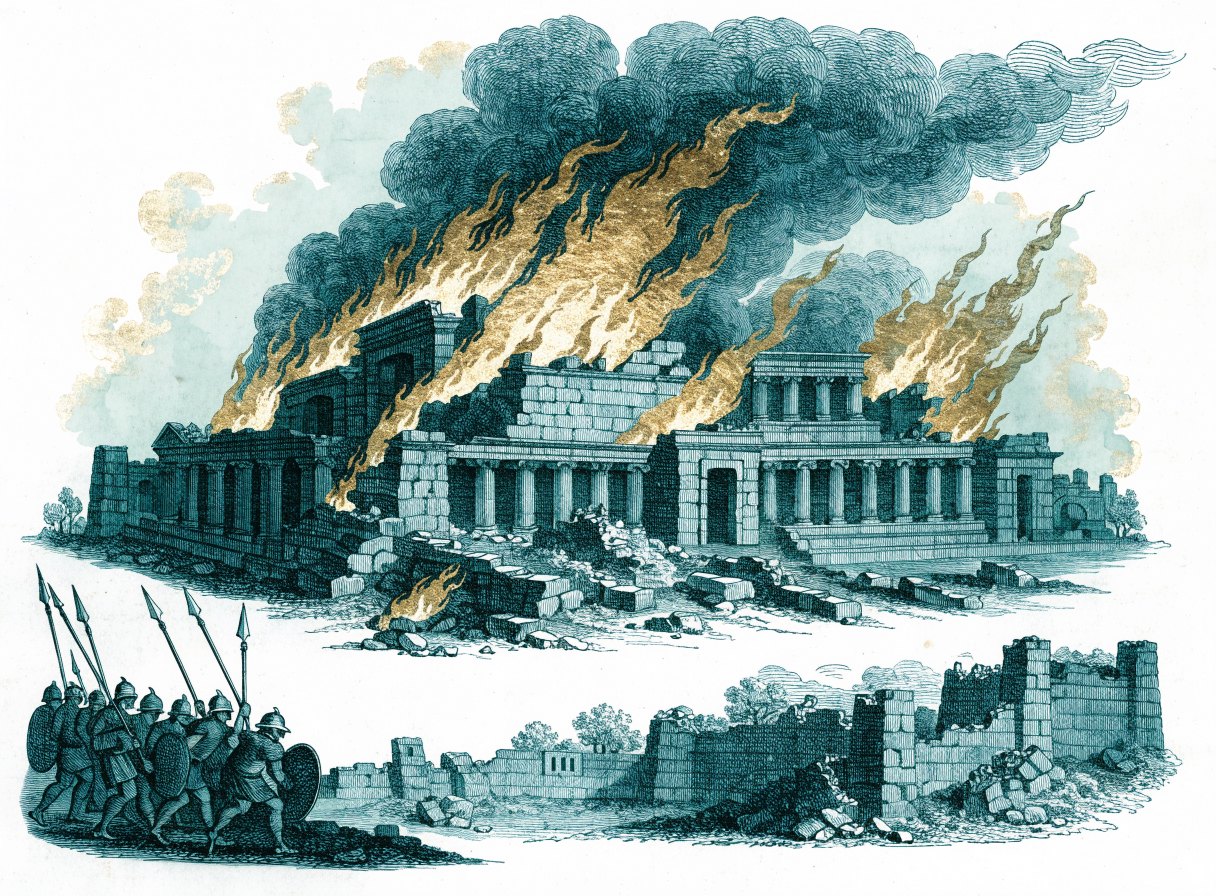
“How lonely sits the city that was full of people! How like a widow has she become” Lamentations 1:1
Introduction: The Darkest Day
In Week 32 the northern kingdom fell to Assyria in 722 BC. The southern kingdom of Judah watched it happen. It still had the temple, the city of Jerusalem, and a king from David’s line. It lasted another 136 years. But in 586 BC the armies of Babylon broke through Jerusalem’s walls, burned Solomon’s temple to the ground, and carried the people away to a foreign land.
This was the lowest point in the whole Old Testament. Everything God had given seemed to be lost: the land promised to Abraham, the king promised to David, the temple where God’s glory had come down. If you have ever felt that your life has collapsed and God is far away, this part of the story was written for you.
Yet the exile is also where some of the most beautiful promises in the Bible were given, as we will see next week. In the rubble, God promised a new covenant, a new heart, and a King whose kingdom would never be destroyed. On our timeline: Babylon first takes captives in 605 BC, takes more in 597 BC, and destroys Jerusalem and the temple in 586 BC.
Part One: Why the Fall Came
Judah had good kings and bad kings. One of the worst was Manasseh, who reigned fifty-five years. He rebuilt the pagan shrines, put idols in the temple itself, practiced sorcery, and burned his own son as an offering. God said through his prophets that Manasseh had done “things more evil than all that the Amorites did, who were before him” (2 Kings 21:11), the very nations God had driven out of the land. Yet even Manasseh, dragged to Babylon in chains, humbled himself and cried out, and God heard him (2 Chr. 33:12–13). No one is too far gone for grace.
Later came Josiah, one of the best kings Judah ever had. While repairing the temple, the high priest found the Book of the Law, long neglected and unread. When it was read to Josiah, “he tore his clothes” (22:11). He led a great reform, tore down the idols, and renewed the covenant. “Before him there was no king like him, who turned to the LORD with all his heart and with all his soul and with all his might” (23:25). Yet the next verse is one of the saddest in Kings: “Still the LORD did not turn from the burning of his great wrath” (23:26). The verse gives the reason: “because of all the provocations with which Manasseh had provoked him.” And the reform never reached the people’s hearts. Through Jeremiah, God said Judah “did not return to me with her whole heart, but in pretense” (Jer. 3:10). After Josiah died, they went right back.
God sent prophet after prophet. The best known in these last years was Jeremiah, called by God as a young man (Jer. 1:6–7). He stood in the temple gate and told the people to stop trusting their religious building: “Do not trust in these deceptive words: ‘This is the temple of the LORD, the temple of the LORD, the temple of the LORD’” (7:4). They thought God would never let his own house fall. God asked through Jeremiah, “Has this house, which is called by my name, become a den of robbers in your eyes?” (7:11). Six hundred years later, Jesus would quote that verse in the courts of the rebuilt temple, on the same hill (Matt. 21:13).
The writer of Chronicles sums up why the end came: “The LORD, the God of their fathers, sent persistently to them by his messengers, because he had compassion on his people and on his dwelling place. But they kept mocking the messengers of God, despising his words and scoffing at his prophets, until the wrath of the LORD rose against his people, until there was no remedy” (2 Chr. 36:15–16).
Part Two: The Temple Falls
Babylon was the new superpower, under its king Nebuchadnezzar. It came in waves.
In 605 BC Nebuchadnezzar took some of Jerusalem’s brightest young men to Babylon, including a teenager named Daniel (Dan. 1:1–6). In 597 BC he came back, took King Jehoiachin, emptied the temple treasury, and carried away “10,000 captives, and all the craftsmen and the smiths” (2 Kings 24:14), among them a young man from a priestly family named Ezekiel (Ezek. 1:1–3). Then in 588 BC, after Judah rebelled again, Babylon laid siege to Jerusalem. For about two and a half years the city slowly starved (2 Kings 25:1–3). In 586 BC the walls were breached, and the Babylonian commander “burned the house of the LORD and the king’s house and all the houses of Jerusalem” (25:9). The temple Solomon had built nearly four hundred years earlier was gone.
Before it happened, God showed Ezekiel in a vision something even more terrible than the fire. He saw the glory of the LORD, the same glory that had filled the tabernacle and the temple, rise up and leave: “Then the glory of the LORD went out from the threshold of the house” and moved to the east gate, and then up to the mountain on the east side of the city (Ezek. 10:18–19; 11:23). God’s glory had left the building before Babylon ever burned it.
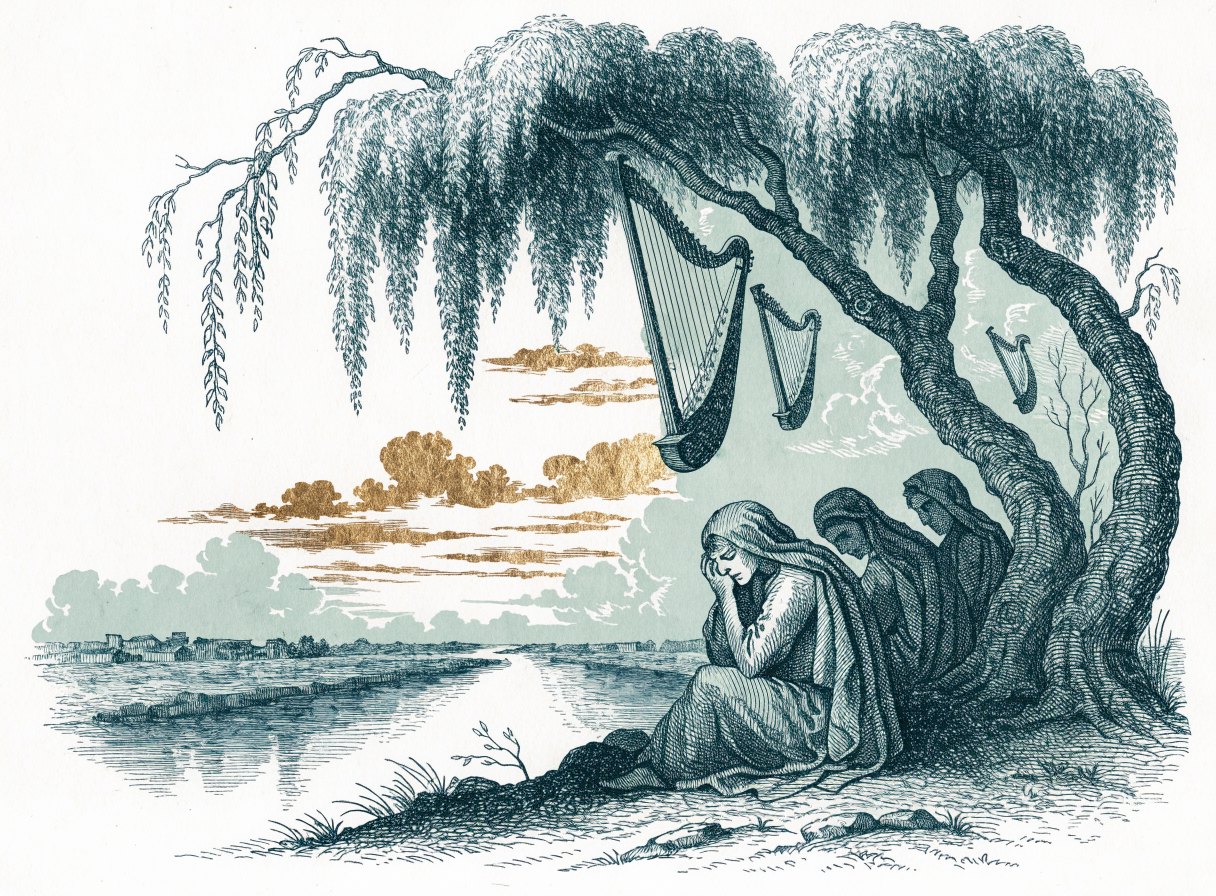
The book of Lamentations is a funeral poem for the city: “How lonely sits the city that was full of people! How like a widow has she become” (Lam. 1:1). And in Babylon the exiles wept for Zion, the city of Jerusalem:
The Turn: When There Was No Remedy
Judah had the temple, the king, and the city, and it trusted them more than it trusted God. “This is the temple of the LORD,” they said, as if the building could protect them from the God who lived there. In the end the warnings stopped, and there was no remedy.
That phrase is the end of the road for anyone who keeps refusing God. But it is not where the Bible ends. When there was no remedy in us, God provided one in his Son. “But God shows his love for us in that while we were still sinners, Christ died for us” (Rom. 5:8). Do not lean on religious things the way Judah leaned on the temple. Lean on Christ, while it is still called today. Next week we go with the exiles to Babylon and hear the brightest promises in the Old Testament, given in the ashes.
Living It: Three Practices for This Week
Before Week 34: Read Jeremiah 29:1–14 and 31:31–34, and Daniel 3 and 6. Week 34 shows how to live faithfully in exile, and the promises God gave in the ashes.
For Discussion
- Judah trusted that God would never let his own temple fall. What “sure things” do people trust instead of God himself?
- Josiah’s reform was sincere, yet the nation did not change. Why can outward reform fail to change a heart?
- Psalm 137 asks, “How shall we sing the LORD’s song in a foreign land?” Have you ever felt that way? What helped?
- Even Manasseh was heard when he humbled himself (2 Chr. 33:12–13). Is there anyone you have quietly decided is too far gone for grace?
Sources & For Further Study
- On the dates of Judah’s fall (605, 597, 586 BC): Edwin R. Thiele, The Mysterious Numbers of the Hebrew Kings; Eugene H. Merrill, Kingdom of Priests.
- For further reading: Philip Graham Ryken, Jeremiah and Lamentations (Preaching the Word); Iain M. Duguid, Ezekiel (NIV Application Commentary); Dale Ralph Davis, The Message of Daniel.
Leading a small group? This week comes as a beautifully formatted, printable PDF, along with a 2-page Small Group Guide: a discussion page for your group and leader notes with a session plan and answer key. Both are free when you join the weekly list.