

“Yet not what I will, but what you will.” Mark 14:36
Introduction: The Lamb God Provided
In Week 12, Isaac asked his father a question on the way up Mount Moriah: “where is the lamb for a burnt offering?” Abraham answered, “God will provide for himself the lamb” (Gen. 22:7–8). Ever since, the story has been full of lambs. The Passover lamb whose blood marked the doors in Egypt (Week 16). The lambs on the altar, morning and evening, for well over a thousand years. The goat for the LORD on the Day of Atonement (Week 22). The Servant in Isaiah “like a lamb that is led to the slaughter” (Isa. 53:7). And John the Baptist pointing at Jesus: “Behold, the Lamb of God, who takes away the sin of the world!” (John 1:29).
These two weeks are about the day the Lamb was offered. It is the center of the whole Bible. The four Gospels spend roughly a third of their pages on the last week of Jesus’ life. Jesus told his disciples again and again that “the Son of Man must suffer many things and be rejected… and be killed, and after three days rise again” (Mark 8:31). He “set his face to go to Jerusalem” (Luke 9:51), knowing exactly what waited there.
On our timeline, Jesus was crucified in Jerusalem at Passover, around AD 30 or 33 (scholars debate the exact year). We will walk through his last night and his death, and then ask the most important question in this whole study: what happened on the cross, and was it for you?
Part One: The Last Supper
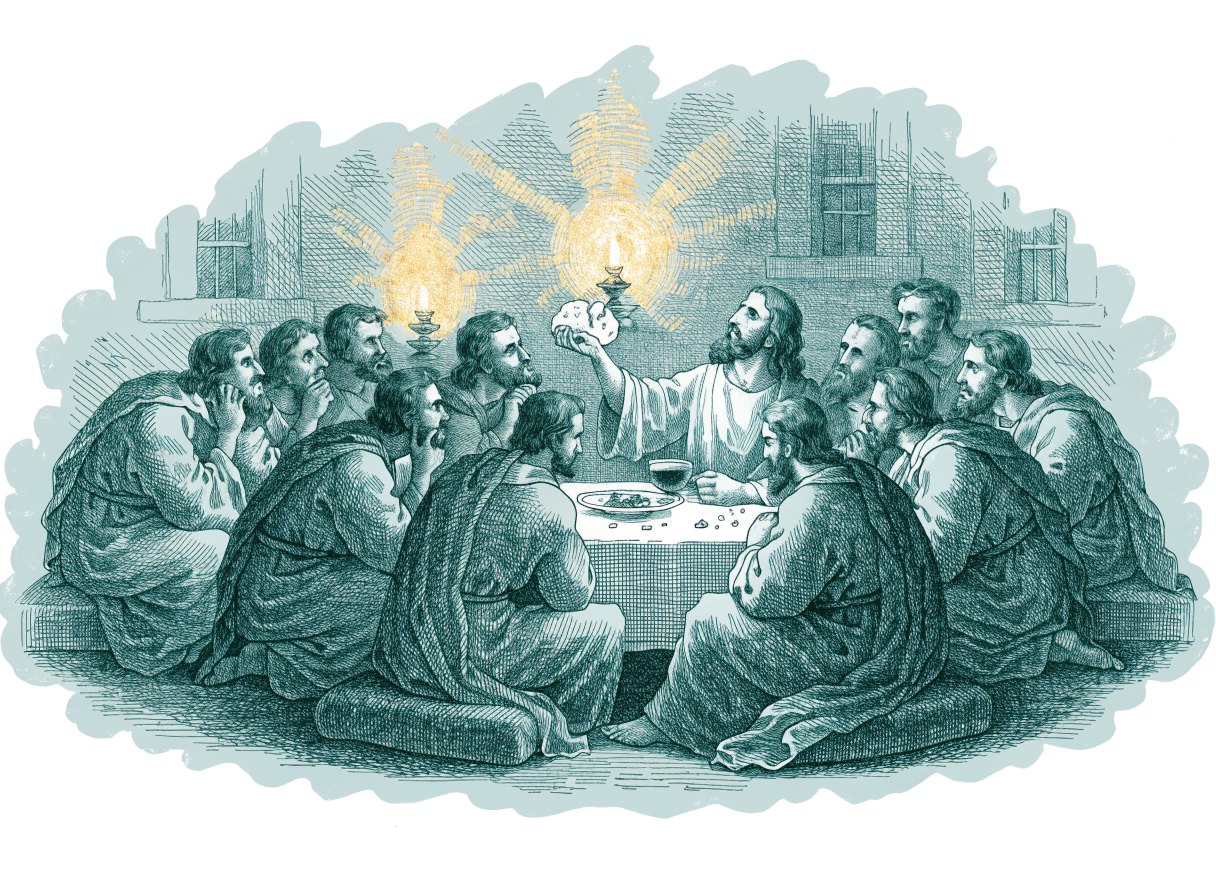
On the night before he died, Jesus ate the Passover meal with his twelve disciples in an upstairs room in Jerusalem. For well over a thousand years, Israel had eaten this meal to remember the lamb whose blood saved them in Egypt. Now Jesus gave it a new meaning:
Jesus was saying: I am the Passover Lamb. My body will be broken, my blood will be poured out, and it will be for you. “For Christ, our Passover lamb, has been sacrificed” (1 Cor. 5:7). And with his blood he would establish the new covenant God promised through Jeremiah in the ashes of Jerusalem (Week 34). Christians still eat this meal, the Lord’s Supper. It is a memorial, but more than a memorial. In it, as the Westminster Shorter Catechism says, the worthy receivers “are, not after a corporal and carnal manner, but by faith, made partakers of his body and blood, with all his benefits, to their spiritual nourishment, and growth in grace” (WSC 96).
On the night he was betrayed, Jesus took bread and the cup and told his followers to eat and drink in remembrance of him. The Lord’s Supper proclaims his death until he comes. In it believers remember Christ, are strengthened in faith, and share in his body together (1 Corinthians 10:16–17).
Part Two: The Cup in the Garden
After supper, Jesus walked out to an olive grove called Gethsemane. He “began to be greatly distressed and troubled. And he said to them, ‘My soul is very sorrowful, even to death’” (Mark 14:33–34). Falling to the ground, he prayed: “Abba, Father, all things are possible for you. Remove this cup from me. Yet not what I will, but what you will” (14:36).
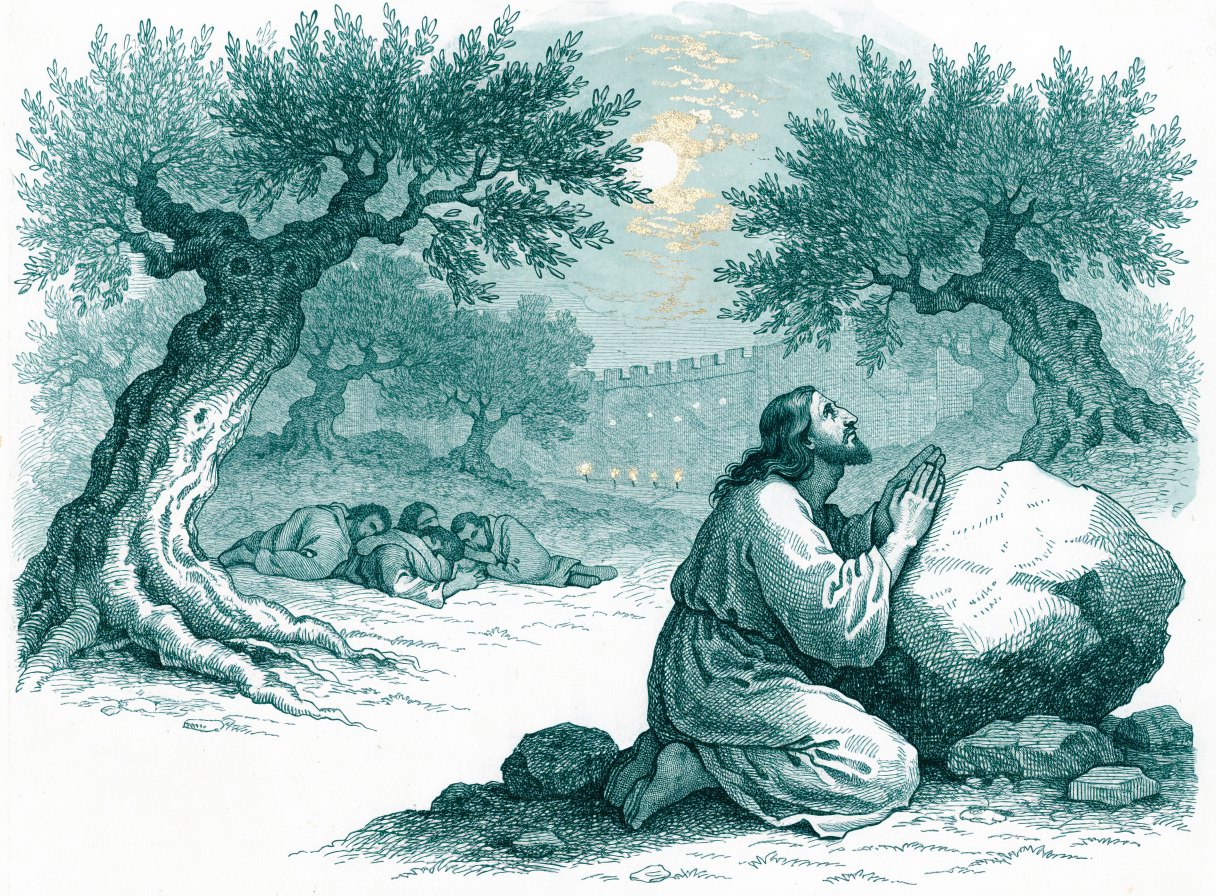
What was the cup? In the Old Testament, “the cup” is a picture of God’s wrath against sin. Isaiah speaks of Jerusalem drinking “from the hand of the LORD the cup of his wrath” (Isa. 51:17), and God told Jeremiah, “Take from my hand this cup of the wine of wrath” (Jer. 25:15). The nails were real, but they were not the deepest thing he faced. He was facing the full weight of God’s judgment against the sins of his people. And he chose to drink it.
Soldiers came with torches and arrested him, and “they all left him and fled” (Mark 14:50). Through the night he was put on trial. The high priest asked him, “Are you the Christ, the Son of the Blessed?” Jesus answered, “I am” (14:61–62), and they condemned him for blasphemy. In the morning they brought him to the Roman governor, Pontius Pilate. Pilate offered the crowd a choice: he would release one prisoner, Jesus or a rebel and murderer named Barabbas (Luke 23:19). The crowd chose Barabbas. “So Pilate, wishing to satisfy the crowd, released for them Barabbas, and having scourged Jesus, he delivered him to be crucified” (Mark 15:15). The guilty man walked free, and the innocent one went to the cross in his place.
The Turn: Not What I Will
In a garden, the first Adam reached for what God had forbidden. In another garden, the last Adam fell to the ground and prayed, “Not what I will, but what you will.” Jesus knew what was in the cup, and he did not turn back.
Hebrews says that “although he was a son, he learned obedience through what he suffered” (Heb. 5:8), and Paul says that “by the one man’s obedience the many will be made righteous” (Rom. 5:19). Every step from the upper room to the garden was obedience offered for his people. When your own will fights God’s, you are not praying alone. The Son prayed that prayer before you and kept it all the way to the cross. Next week we stand at the foot of that cross and ask what happened there.
Living It: Three Practices for This Week
Before Week 42: Read Mark 15 and Isaiah 52:13–53:12. Week 42 stands at the cross.
For Discussion
- Jesus called the bread his body and the cup the new covenant in his blood. What does the Lord’s Supper show us about the cross?
- What was “the cup” Jesus asked the Father to remove? Why did he drink it anyway?
- Barabbas went free while Jesus was condemned. How is that a picture of what Jesus does for us?
- The disciples “all left him and fled” (Mark 14:50). What does Jesus’ faithfulness to people who abandoned him say to you?
Sources & For Further Study
- On the date of the crucifixion: Harold W. Hoehner, Chronological Aspects of the Life of Christ. On the Lord’s Supper: Westminster Shorter Catechism 96–97.
- For further reading: John Murray, Redemption Accomplished and Applied; Donald Macleod, Christ Crucified; J. I. Packer and Mark Dever, In My Place Condemned He Stood.
Leading a small group? This week comes as a beautifully formatted, printable PDF, along with a 2-page Small Group Guide: a discussion page for your group and leader notes with a session plan and answer key. Both are free when you join the weekly list.