

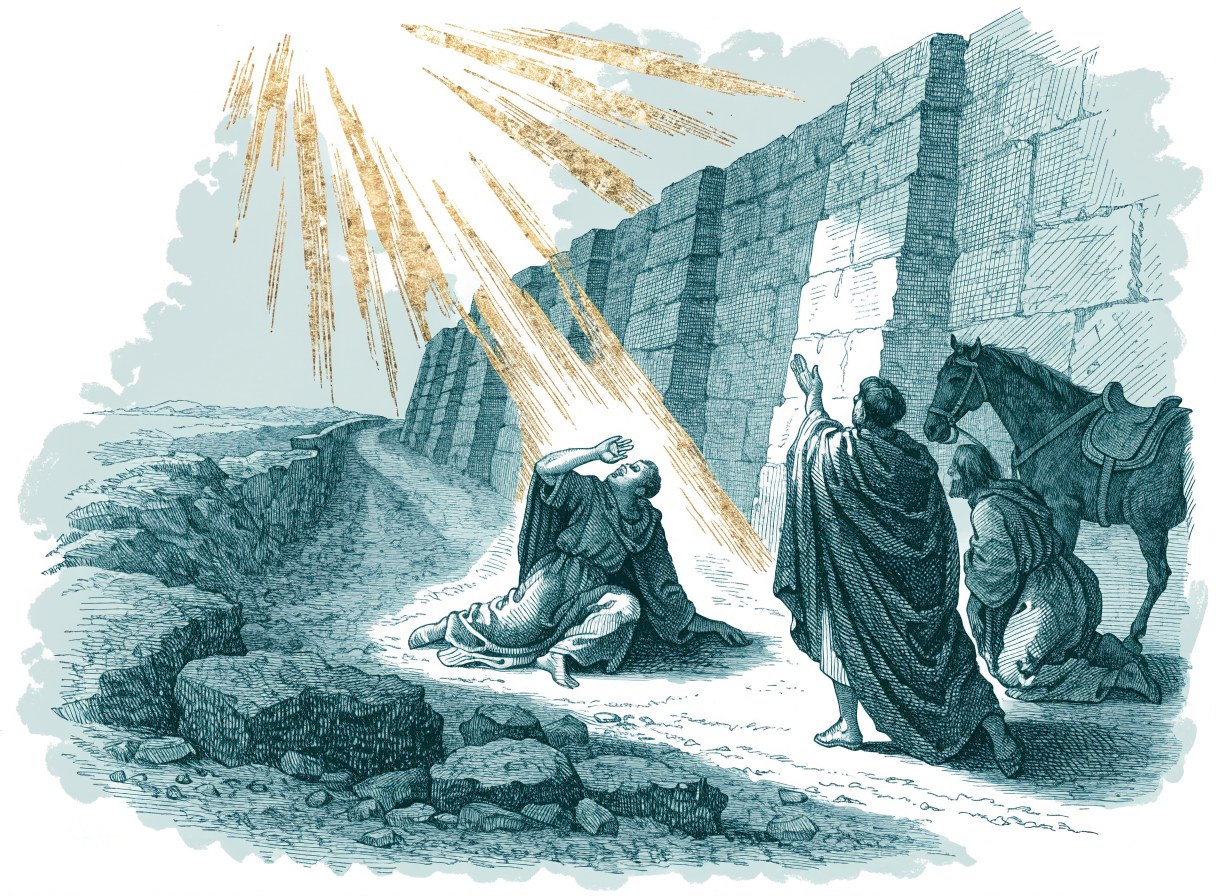
“he is a chosen instrument of mine to carry my name before the Gentiles and kings and the children of Israel.” Acts 9:15
Introduction: The Man Nobody Expected
If you had been a Christian in Jerusalem a few years after the cross, the last man on earth you would have expected to become a Christian was Saul of Tarsus. He was a brilliant young Pharisee, one of the strictest keepers of the Jewish law, “educated at the feet of Gamaliel according to the strict manner of the law of our fathers” (Acts 22:3). He had watched Stephen die and approved (Acts 7:58; 8:1). Then he went from house to house dragging believers off to prison (Acts 8:3). The church was afraid of him, and they had reason to be.
Yet this man became the apostle Paul. He traveled something like ten thousand miles on foot and by sea, planted churches across what is now Turkey and Greece, and wrote thirteen of the twenty-seven books of the New Testament. More than anyone besides Jesus himself, he explained what the cross means and how a sinner can be right with God.
These two weeks follow Paul from the Damascus road to a rented house in Rome, from the early AD 30s to about AD 62, covering Acts 9 and 13–28, and then to his death a few years later. Then they open his greatest letter, Romans, to hear the gospel he preached. Weeks 49 and 50 turn to the letters of Hebrews, James, Peter, and John.
Part One: The Persecutor Becomes the Apostle
Saul was on his way to Damascus with letters authorizing him to arrest Christians when a light from heaven flashed around him and he fell to the ground. Jesus spoke: “I am Jesus, whom you are persecuting.” Blinded, Saul was led by the hand into the city. Three days later a frightened believer named Ananias came and laid hands on him. Something like scales fell from his eyes, and he was baptized (Acts 9:3–18).
The Lord had told Ananias why: “he is a chosen instrument of mine to carry my name before the Gentiles and kings and the children of Israel” (9:15). Years later Paul remembered Jesus’ words to him that day: he was sent “to open their eyes, so that they may turn from darkness to light and from the power of Satan to God, that they may receive forgiveness of sins” (26:18).
The change was immediate. “And immediately he proclaimed Jesus in the synagogues, saying, ‘He is the Son of God’” (9:20). Paul never got over the grace of it. “I am the least of the apostles,” he wrote, “unworthy to be called an apostle, because I persecuted the church of God. But by the grace of God I am what I am” (1 Cor. 15:9–10). If God could save Saul, there is no one too far gone for him.
Part Two: The Journeys
About AD 46, the church in Antioch was worshiping and fasting when “the Holy Spirit said, ‘Set apart for me Barnabas and Saul for the work to which I have called them’” (13:2). That began the first of three great missionary journeys. Along the way Luke starts using his Roman name: “Saul, who was also called Paul” (13:9). He did not get a new name at his conversion. Like many Jews of his day, he had carried both names all along. Paul’s pattern was simple. He went to a city, preached first in the Jewish synagogue, and then turned to the Gentiles (13:46). He told them that “through this man forgiveness of sins is proclaimed to you” (13:38). Some believed, others stirred up trouble, and at Lystra he was stoned and left for dead (14:19). He got up and went back into the city (14:20).
As Gentiles came to faith, a hard question arose: did they have to become Jews, be circumcised and keep the law of Moses, to be saved? About AD 49 the apostles and elders met in Jerusalem to decide. Peter said it plainly: “we believe that we will be saved through the grace of the Lord Jesus, just as they will” (15:11). Salvation is by grace, for Jew and Gentile alike.
On his second journey Paul crossed into Europe. In Philippi a businesswoman named Lydia listened, and “The Lord opened her heart to pay attention to what was said by Paul” (16:14). Then Paul and his new partner Silas were beaten and thrown in prison. At midnight they were “praying and singing hymns to God” when an earthquake shook the doors open. The jailer, about to kill himself, cried out, “Sirs, what must I do to be saved?” They answered, “Believe in the Lord Jesus, and you will be saved, you and your household.” That night he and all his family were baptized (16:25–33).
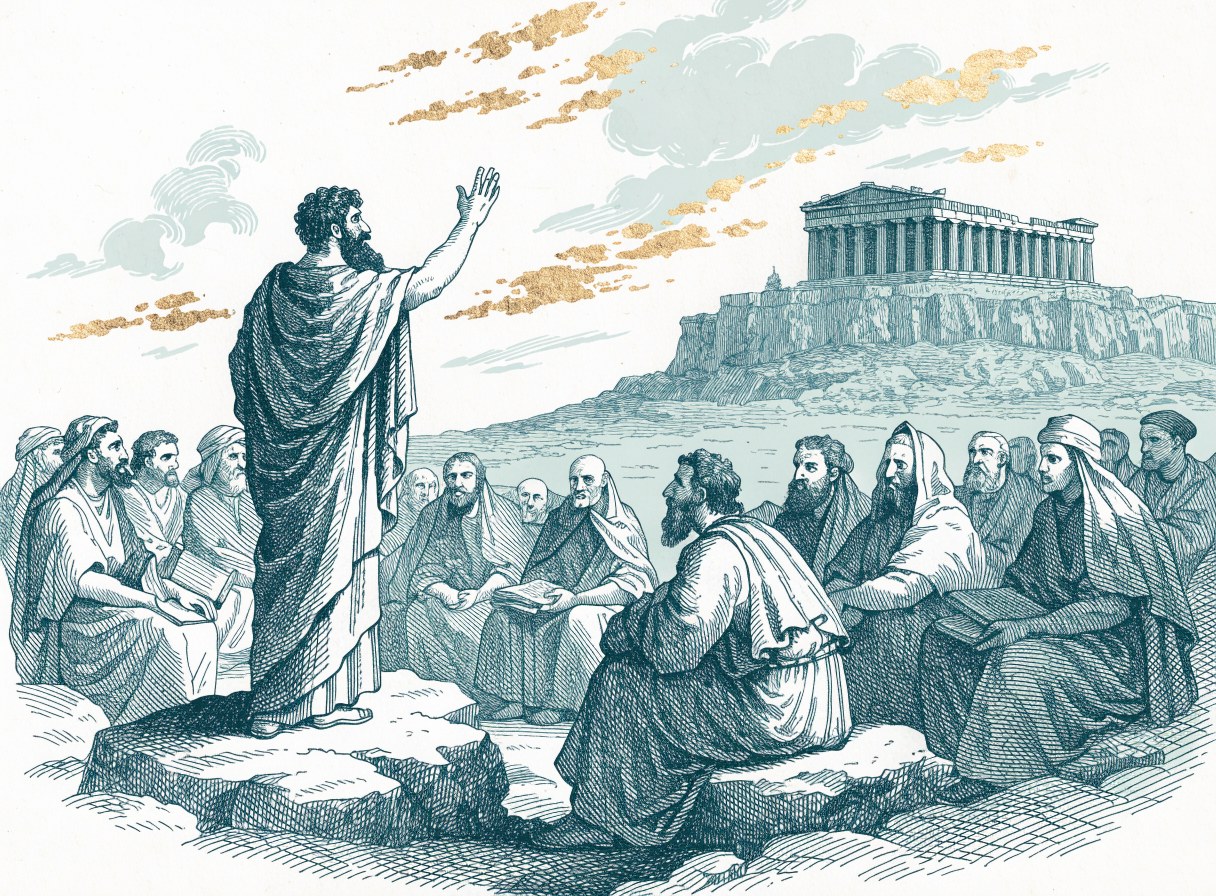
In Athens, still the proud university city of the Greek world, Paul stood before the philosophers at the Areopagus, the city’s ancient council, which met on a rocky hill near the Acropolis and wanted to hear his “new teaching” (17:19). He started where they were, with an altar “To the unknown god,” and told them who that God is: the Creator who “gives to all mankind life and breath and everything.” Then he called them to turn: “now he commands all people everywhere to repent, because he has fixed a day on which he will judge the world in righteousness by a man whom he has appointed; and of this he has given assurance to all by raising him from the dead” (17:23, 25, 30–31). Some mocked. A few believed.
He spent a year and a half in Corinth (18:11) and about three years in Ephesus (20:31). The cost was enormous. He listed it once: beaten with rods three times, “Once I was stoned. Three times I was shipwrecked,” in danger from robbers and rivers, in hunger and cold, and on top of it all, “the daily pressure on me of my anxiety for all the churches” (2 Cor. 11:25–28). His answer to all of it: “I do not account my life of any value nor as precious to myself, if only I may finish my course and the ministry that I received from the Lord Jesus, to testify to the gospel of the grace of God” (Acts 20:24).
The Turn: An Example of Mercy
Jesus found Saul on a road, in the middle of a mission to destroy his church. The man who held the coats at Stephen’s death spent the rest of his life carrying the name he had tried to wipe out, and suffering gladly for it.
Years later Paul explained why God chose him: “But I received mercy for this reason, that in me, as the foremost, Jesus Christ might display his perfect patience as an example to those who were to believe in him for eternal life” (1 Tim. 1:16). Saul’s conversion put Christ’s patience on display for people like you. Whatever you have done, you are not out of his reach, and neither is the person you have given up on. Next week Paul reaches Rome in chains, and we open his letter to the Romans.
Living It: Three Practices for This Week
Before Week 48: Read Acts 27–28 and Romans 1–8. Week 48 follows Paul to Rome in chains and opens the gospel he preached.
For Discussion
- Why do you think God chose a persecutor like Saul to be his great apostle? What does that tell you about grace?
- Paul preached differently in the synagogue and in Athens, but the message was the same. What stayed the same?
- Paul suffered beatings, shipwreck, and prison. How could he say his life was not precious to him?
- “The Lord opened her heart” (Acts 16:14). What does Lydia’s story tell you about how people come to faith?
Sources & For Further Study
- On Paul and Romans: Douglas J. Moo, The Epistle to the Romans; John Stott, The Message of Romans; F. F. Bruce, Paul: Apostle of the Heart Set Free.
- For further reading: R. C. Sproul, Faith Alone; Timothy Keller, Romans 1–7 For You.
Leading a small group? This week comes as a beautifully formatted, printable PDF, along with a 2-page Small Group Guide: a discussion page for your group and leader notes with a session plan and answer key. Both are free when you join the weekly list.