

“Blessed are the poor in spirit, for theirs is the kingdom of heaven.” Matthew 5:3
Introduction: The First Thing Jesus Said
When Jesus began his public ministry, around AD 27 to 29, Mark sums up his whole message in one sentence: “The time is fulfilled, and the kingdom of God is at hand; repent and believe in the gospel” (Mark 1:15). The kingdom of God was the theme Jesus talked about more than any other. Many of his best-known stories are about it. He taught his followers to pray for it. He said his miracles were signs of it.
For people who had walked through the whole Old Testament story, those words were electric. God had promised David a King whose throne would last forever (Week 28). Daniel had seen a kingdom that would never be destroyed (Week 34). After four hundred years with no new prophet, a man from Nazareth was standing up and saying: it is here. The King has come.
But the kingdom Jesus announced was not what anyone expected. These two weeks look at what he meant, who gets in, and the upside-down life he called his followers to, especially in his most famous sermon, the Sermon on the Mount (Matthew 5–7).
The Word: Kingdom
Part One: The King Arrives
Jesus did not just talk about the kingdom. He showed it. In his hometown synagogue in Nazareth, he read from Isaiah: “The Spirit of the Lord is upon me, because he has anointed me to proclaim good news to the poor. He has sent me to proclaim liberty to the captives and recovering of sight to the blind, to set at liberty those who are oppressed.” Then he sat down and said, “Today this Scripture has been fulfilled in your hearing” (Luke 4:18, 21).
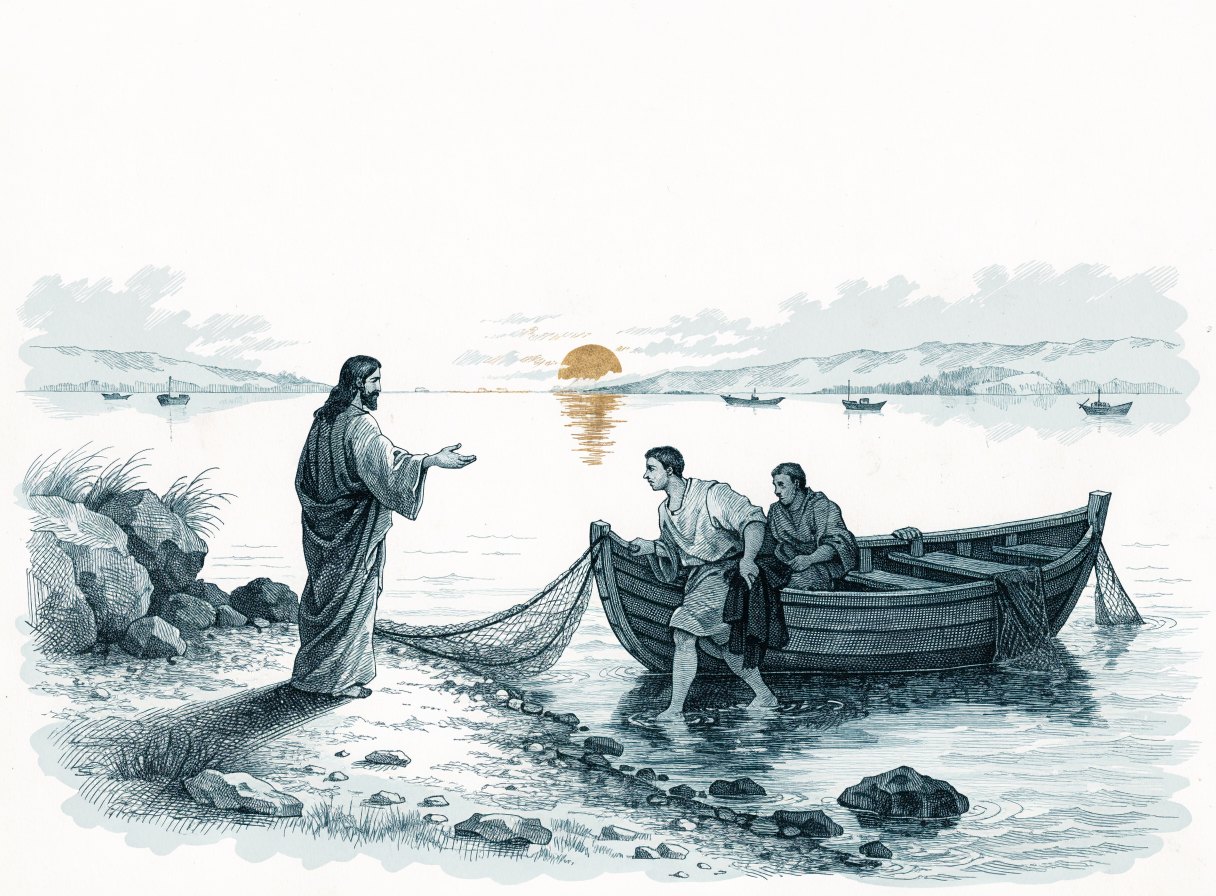
And he did it. He called ordinary fishermen to follow him: “Follow me, and I will make you become fishers of men.” And “immediately they left their nets and followed him” (Mark 1:17–18). He healed the sick, cast out demons, and fed the hungry. He said, “if it is by the Spirit of God that I cast out demons, then the kingdom of God has come upon you” (Matt. 12:28). Every miracle was a preview of what God’s rule will one day do in the new creation: no more sickness, no more evil, no more death.
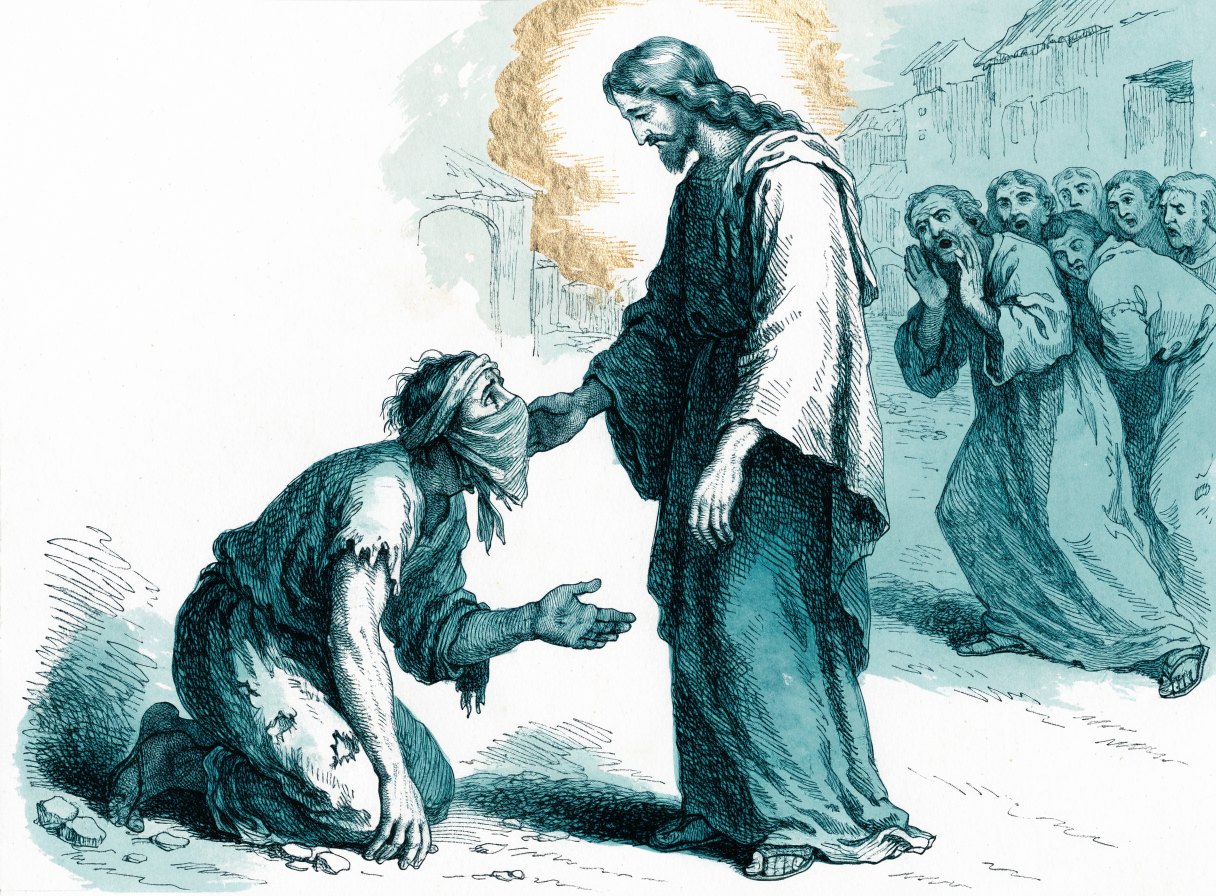
Watch who he spent time with. A man with leprosy, a skin disease that made a person unclean and an outcast, knelt in front of Jesus and said, “If you will, you can make me clean.” Under the law, touching him made you unclean. But Jesus was “moved with pity.” “He stretched out his hand and touched him and said to him, ‘I will; be clean’” (Mark 1:40–41). The uncleanness did not pass to Jesus. The cleanness passed to the man.
He ate dinner with tax collectors and notorious sinners, and the religious leaders were scandalized. Jesus answered, “Those who are well have no need of a physician, but those who are sick. I came not to call the righteous, but sinners” (Mark 2:17). The kingdom was open to exactly the people everyone assumed were shut out.
Part Two: The Upside-Down Kingdom
Matthew records Jesus’ longest sermon, preached on a mountainside in Galilee (Matt. 5:1), traditionally placed on the hills above the Sea of Galilee. We call it the Sermon on the Mount. It begins with eight blessings, called the Beatitudes:
Every value of the world is turned upside down. The world says the strong, the confident, and the self-made are blessed. Jesus says the kingdom belongs to the “poor in spirit,” people who know they have nothing to bring God. It belongs to those who mourn over sin, to the meek, to the hungry for righteousness, to the merciful, the pure in heart, the peacemakers, and the persecuted (5:3–10). The way in is down.
Jesus kept turning things over. “Whoever would be great among you must be your servant, and whoever would be first among you must be slave of all” (Mark 10:43–44). When parents brought their children to him and the disciples shooed them away, Jesus was indignant: “Let the children come to me; do not hinder them, for to such belongs the kingdom of God. Truly, I say to you, whoever does not receive the kingdom of God like a child shall not enter it” (10:14–15).
He taught his followers to be salt and light in the world (Matt. 5:13–16). He told them to love their enemies and pray for those who persecute them (5:44). He warned them not to store up treasure on earth, “For where your treasure is, there your heart will be also” (6:21). He told them not to be anxious, but to “seek first the kingdom of God and his righteousness, and all these things will be added to you” (6:33). And he taught them to pray, “Your kingdom come, your will be done, on earth as it is in heaven” (6:10).
The Turn: The King Who Touches
When the King arrived, he did not go first to the palace. He went to fishermen at their nets, to a man everyone else backed away from, and to a dinner table full of people the religious leaders had written off. Then he sat down on a hillside and told the crowd that the kingdom belongs to the poor in spirit.
That is still where he is found. “For thus says the One who is high and lifted up, who inhabits eternity, whose name is Holy: ‘I dwell in the high and holy place, and also with him who is of a contrite and lowly spirit’” (Isa. 57:15). If you feel unclean, or unimportant, or far from God, you are exactly the kind of person Jesus came to touch. Next week the Sermon on the Mount turns into a mirror, and we learn why this kingdom is already here and not yet complete.
Living It: Three Practices for This Week
Before Week 40: Read Matthew 6–7 and 13:31–46. Week 40 looks at a righteousness no one can reach, and a kingdom that is already here and not yet complete.
For Discussion
- Jesus’ first message was “the kingdom of God is at hand.” What do you think people expected the kingdom to look like? What did they get?
- Jesus touched a leper and ate with sinners. Who are the people everyone avoids in your world? What would it look like to move toward them?
- Read the Beatitudes (Matt. 5:3–10). Which one surprises you most? Which one do you most need?
- Jesus said, “whoever would be great among you must be your servant” (Mark 10:43). Where does that turn your ambitions upside down?
Sources & For Further Study
- On βασιλεία and the kingdom of God: Herman Ridderbos, The Coming of the Kingdom; George Eldon Ladd, The Gospel of the Kingdom (on “already and not yet”).
- On the Sermon on the Mount: D. Martyn Lloyd-Jones, Studies in the Sermon on the Mount; Sinclair B. Ferguson, The Sermon on the Mount.
- For further reading: Westminster Larger Catechism 191 (on “Thy kingdom come”); Timothy Keller, King’s Cross.
Leading a small group? This week comes as a beautifully formatted, printable PDF, along with a 2-page Small Group Guide: a discussion page for your group and leader notes with a session plan and answer key. Both are free when you join the weekly list.