

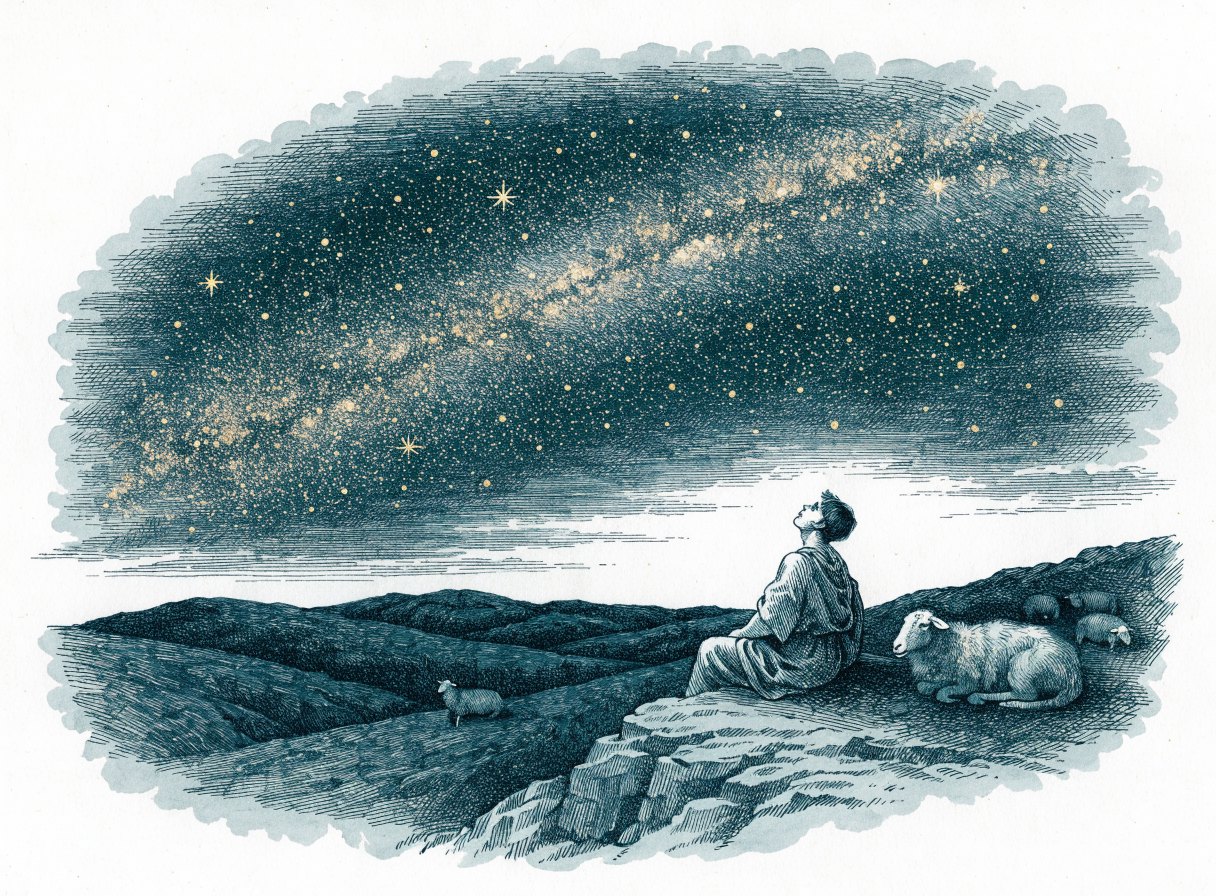
“The heavens declare the glory of God, and the sky above proclaims his handiwork.” Psalm 19:1
Introduction: Who Made God?
Sooner or later every child asks it. You tell them God made the trees and the stars and the puppy and them, and they think about it for a minute, and then they ask: “Then who made God?”
It is a better question than it sounds, and the Bible’s answer is the place every other answer starts. Nobody made God. Everything else had a beginning, and he is the one who gave it one. The first sentence of the Bible does not try to prove that he exists. It simply starts with him, the way a story starts with its storyteller: “In the beginning, God created the heavens and the earth” (Gen. 1:1). Before the beginning, there was God.
Last week we stood back and looked at the whole story in four acts. This week we go back before Act One, before there was a world or a single star, and ask the first question of the story: who is the God who is there? The phrase comes from Francis Schaeffer, who used it as the title of a book in 1968 to describe the God the Bible actually presents. God is not an idea people came up with to explain things. He is a real, personal God who is really there, whether anyone believes in him or not.
This may be the most important pair of weeks in the series. What you believe about God shapes everything else you believe: about yourself, about right and wrong, about suffering, about whether anyone is listening when you pray. John Calvin, a sixteenth-century pastor in Geneva, opened his great work on the Christian faith by saying that nearly all true wisdom comes down to two things, “the knowledge of God and of ourselves” (Institutes 1.1.1). We will spend Weeks 5 and 6 on ourselves. Today, God.
The Word: I AM
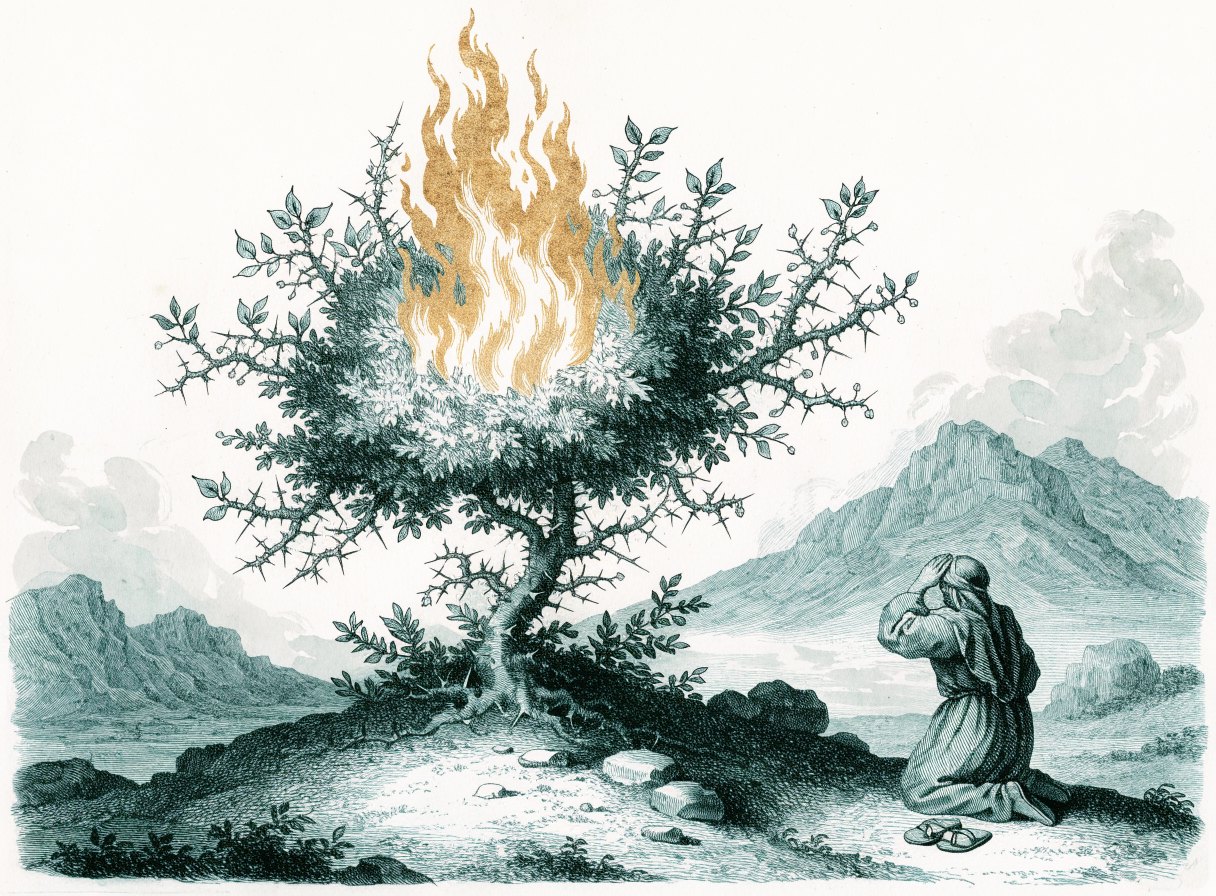
Around 1446 BC, a shepherd named Moses was keeping sheep in the desert near a mountain called Horeb. He saw a bush on fire, and it was not burning up. When he came closer, God spoke to him out of the flames and sent him to rescue Israel from slavery in Egypt. Moses asked the obvious question: when the people ask who sent me, what do I tell them?
Moses “hid his face, for he was afraid to look at God” (Ex. 3:6). That is the right first response. The God who is there is a fire that burns without fuel. He is also the God who came down to that bush because he had “surely seen the affliction” of his people (3:7).
Part One: In the Beginning, God
Psalm 90’s heading calls it “a prayer of Moses,” the same Moses who stood barefoot at the bush. Look at how he says it: from everlasting to everlasting, you are God. Look back past the first morning or forward past the last, and God is there, the same. He does not grow older. He does not move through time the way we do, waiting for tomorrow and losing yesterday. He made time, the way he made space, and he stands over all of it.
God has never needed anything. Before there was a world, there was nothing missing from him. The apostle Paul said it to a crowd of philosophers in Athens:
Think about what that does to the way people usually picture God. Many of us assume, without ever saying it, that God is a bit like us: lonely, needy, or bored, so he made people to keep him company or to do things for him. The Bible says the opposite. You cannot give God anything he lacks, because he lacks nothing. Every breath you have ever taken came from him. Theologians call this God’s aseity, from Latin words meaning “from himself.” He has life in himself, and everything else has life from him.
At first that can feel cold, as if God does not need us and therefore does not care. It turns out to be the best news in the world, and you will see why next week. A God who needs nothing from you is a God who can only give. He did not make you because he was empty. He made you because he was full.
Hebrews puts the starting point plainly: “whoever would draw near to God must believe that he exists and that he rewards those who seek him” (Heb. 11:6). He is, and he can be found.
Part Two: The God Who Shows Himself
If God is this great, how could we ever know him? We could not, unless he showed himself. The Bible says he has, in two ways. David put both in one psalm. He was a shepherd before he was a king, and he must have spent a thousand nights on the hills outside Bethlehem looking up at the stars.
The sky preaches. It has no words, and yet every person on earth can hear it. Paul says the same thing in Romans: God’s “invisible attributes, namely, his eternal power and divine nature, have been clearly perceived, ever since the creation of the world, in the things that have been made. So they are without excuse” (Rom. 1:20). Christians call this general revelation: what God shows of himself to everyone, everywhere, through the world he made and the conscience he put in us.
Then, halfway through the psalm, David changes subjects, and something changes with it:
Look at the name. In the first half of the psalm, about the sky, God is called simply “God” (El, the general word). In the second half, about his Word, he is called “the LORD,” the personal name from the burning bush, six times in three verses, and once more in the last line. The stars can tell you that God is great. Only his Word tells you his name. The sky shows his power. The Scriptures show his heart: his promises, his law, his plan to rescue.
The Westminster Confession says it carefully. Creation shows enough of God’s “goodness, wisdom, and power” to leave people “unexcusable,” yet it is “not sufficient to give that knowledge of God, and of his will, which is necessary unto salvation” (WCF 1.1). That is why God spoke, and why he had it written down. This second way is called special revelation: God speaking in words, and finally in his Son (Heb. 1:1–2). Today we have it in the Scriptures. Paul told Timothy the Scriptures “are able to make you wise for salvation through faith in Christ Jesus” (2 Tim. 3:15). The stars cannot do that. They can bring you to your knees. Only the Word can tell you how to get up.
Also read: Psalm 8; Isaiah 40:25–26; Romans 1:18–23; Acts 14:15–17
Part Three: What Is God?
So what does the Word tell us God is like? For centuries Christian parents have taught their children the answer from the Westminster Shorter Catechism (a set of questions and answers written in the 1640s to teach the faith, still used in many Reformed churches, the churches that grew from the Reformation of the 1500s; “WSC” from here on). Question 4 asks, “What is God?” The answer is one of the finest sentences ever written about him:
Read it slowly, because every word carries weight. God is a spirit: he has no body and no physical limits (John 4:24). He is infinite: there is no edge to him, nowhere he stops. He is eternal: no beginning, no end. He is unchangeable: “For I the LORD do not change” (Mal. 3:6), “with whom there is no variation or shadow due to change” (James 1:17). Then the sentence lists seven things that are true of him, and all three of those words apply to all seven. God’s wisdom is infinite, eternal, and unchangeable. So is his power. So is his goodness. So is his justice. The seven words do not divide God into parts; each one describes the whole God. Nothing in God is small, temporary, or moody.
That last part should be a deep comfort. People change. Your feelings about yourself change hour by hour. Even the people who love you most can grow tired or distant. God’s goodness toward his people does not run low on a bad day. His truth does not shift when the culture shifts. “God is not man, that he should lie, or a son of man, that he should change his mind” (Num. 23:19).
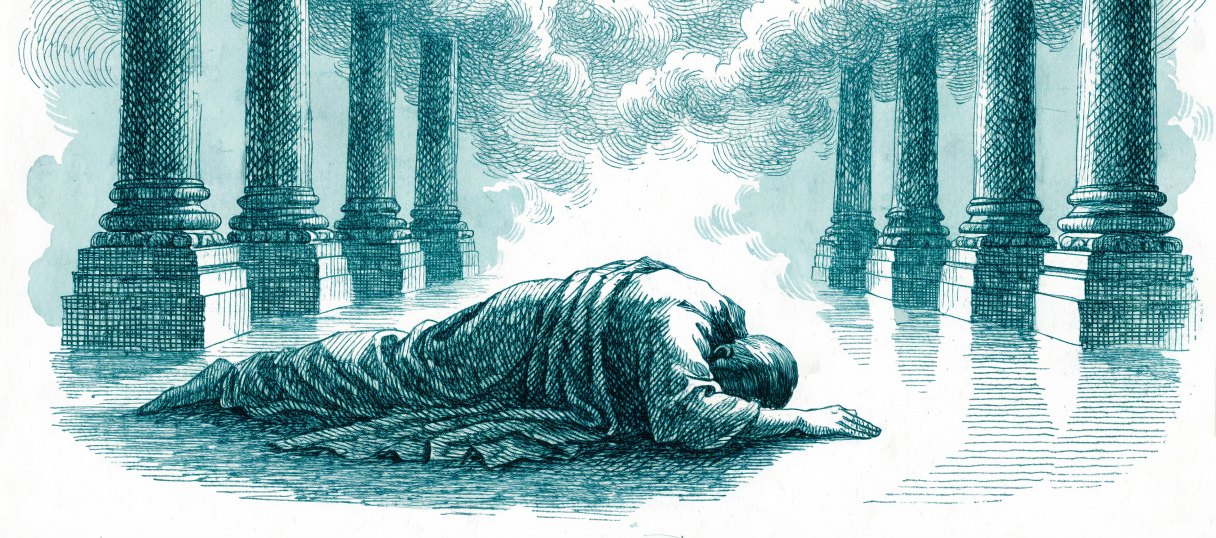
In Isaiah 6, one word about God is spoken with unusual force. Around 740 BC the prophet Isaiah was given a vision of the Lord on his throne in the temple, with angelic beings called seraphim (“burning ones”) around him. “Each had six wings: with two he covered his face, and with two he covered his feet, and with two he flew. And one called to another and said: ‘Holy, holy, holy is the LORD of hosts; the whole earth is full of his glory!’” (Isa. 6:2–3). Hebrew often repeats a word to make it emphatic, and saying it three times is rare. The seraphim say it of God, and in Revelation the creatures around the throne are still saying it (Rev. 4:8). God is holy beyond all measure.
“Holy” means set apart: so pure and so far above us that even the angels cover their faces. And Isaiah, a man who served God in Jerusalem, fell apart: “Woe is me! For I am lost; for I am a man of unclean lips, and I dwell in the midst of a people of unclean lips; for my eyes have seen the King, the LORD of hosts!” (Isa. 6:5). When you see who God really is, you see who you really are.
But watch what happens next. One of the seraphim flew to Isaiah with a burning coal from the altar, the place of sacrifice, and touched his mouth: “Behold, this has touched your lips; your guilt is taken away, and your sin atoned for” (Isa. 6:6–7). To atone means to cover sin and make peace with God. The holy God made the unclean man clean, and he did it with fire from the altar. Keep that picture. It is a picture of the gospel before the gospel, and we will see it again.
When God described himself to Moses on the mountain, he put both sides together in one breath: “The LORD, the LORD, a God merciful and gracious, slow to anger, and abounding in steadfast love and faithfulness, keeping steadfast love for thousands, forgiving iniquity and transgression and sin, but who will by no means clear the guilty” (Ex. 34:6–7). Merciful, and just. Forgiving, and he will not pretend sin is nothing. For most of the Old Testament, the question hangs in the air: how can God be both? The cross is the answer, and we are walking toward it.
The Turn: The God Who Speaks
Here is the wonder of this week. The God who is there is infinite, eternal, and unchangeable, and holy enough to make Isaiah cry, “Woe is me!” And he has not stayed hidden. He spoke the world into being, he spoke to Moses from a burning bush, and he speaks in his written word. “Long ago, at many times and in many ways, God spoke to our fathers by the prophets, but in these last days he has spoken to us by his Son” (Heb. 1:1–2).
Remember the coal from the altar. A holy God provided the cleansing that a sinful man could not provide for himself. That is the pattern of the whole Bible, and it points to the cross. If God feels distant or unknowable to you, start where he has made himself known. Open his word, and look for his Son.
Living It: Three Practices for This Week
Before Week 4: Read Matthew 3:13–17 and John 1:1–18. Week 4 opens the deepest truth about God: one God in three persons.
For Discussion
- How would you have answered a child who asked, “Who made God?” before this week? How would you answer now?
- Psalm 19 shows God speaking through the sky and through his Word. What can the stars tell you about God? What can they never tell you?
- Walk through the seven words in WSC 4 (being, wisdom, power, holiness, justice, goodness, truth). Which one do you most need to remember is infinite, eternal, and unchangeable this week? Why?
- Isaiah saw God’s holiness and cried, “Woe is me!” Why do you think seeing God clearly made him see himself clearly? What did God do about it?
Sources & For Further Study
- Westminster Shorter Catechism (1647), Q. 4 and Q. 6. Westminster Confession of Faith (1646), 1.1; 2.1; 2.3.
- John Calvin, Institutes of the Christian Religion 1.1.1 (Beveridge translation).
- On יהוה and אֶהְיֶה: Brown, Driver, and Briggs, A Hebrew and English Lexicon of the Old Testament, s.v. הָיָה; Koehler and Baumgartner, HALOT, s.v. יהוה.
- Francis A. Schaeffer, The God Who Is There (1968).
- For further reading: J. I. Packer, Knowing God; A. W. Tozer, The Knowledge of the Holy; R. C. Sproul, The Holiness of God; Michael Reeves, Delighting in the Trinity.
Leading a small group? This week comes as a beautifully formatted, printable PDF, along with a 2-page Small Group Guide: a discussion page for your group and leader notes with a session plan and answer key. Both are free when you join the weekly list.