

“Blessed are those who have not seen and yet have believed.” John 20:29
Introduction: Sunday Morning
Week 42 ended at a sealed tomb. Imagine the Saturday that followed. The disciples were most likely hiding behind locked doors. Their teacher was dead. Every hope they had placed in him, that he was the Christ, the King, the one who would redeem Israel, seemed to lie in that tomb with him. Two of them would later say it in four sad words: “But we had hoped” (Luke 24:21; Week 1).
Then came Sunday. These two weeks tell what happened on the first day of the week, the forty days that followed, and the day Jesus was taken up into heaven. The resurrection is not a happy ending tacked onto the story. Paul says it is “of first importance” (1 Cor. 15:3), and that if it did not happen, Christianity is false. Everything stands or falls here.
The Word: Resurrection
Part One: The Empty Tomb
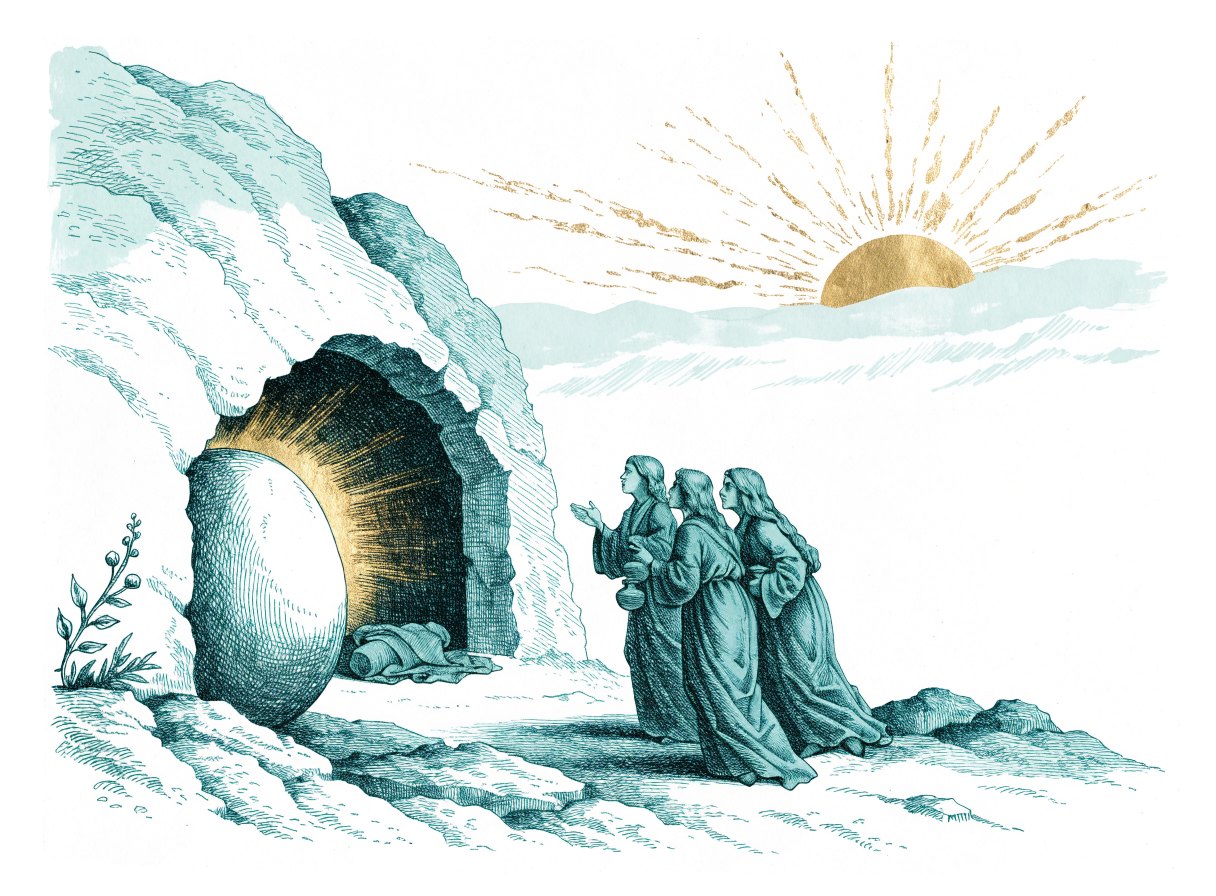
Early on Sunday morning, a group of women who had watched Jesus die came to the tomb with spices to anoint his body. On the way they worried about who would roll away the heavy stone. When they arrived, it was already rolled back, and the body was gone. An angel said to them, “Do not be alarmed. You seek Jesus of Nazareth, who was crucified. He has risen; he is not here. See the place where they laid him” (Mark 16:6).
Mary Magdalene stayed behind at the tomb, weeping, sure that someone had taken the body. A man she thought was the gardener asked why she was crying. Then he said one word: “Mary.” She turned and cried, “Rabboni!” which means Teacher (John 20:16). According to John, the first person to see the risen Jesus was a woman whose life he had once rescued from seven demons (Luke 8:2).
That detail matters. In that culture, a woman’s testimony was often not accepted in court. If the disciples had invented the story, women are the last witnesses they would have chosen. The most natural explanation is that the Gospels report it because that is what happened.
Part Two: He Appeared
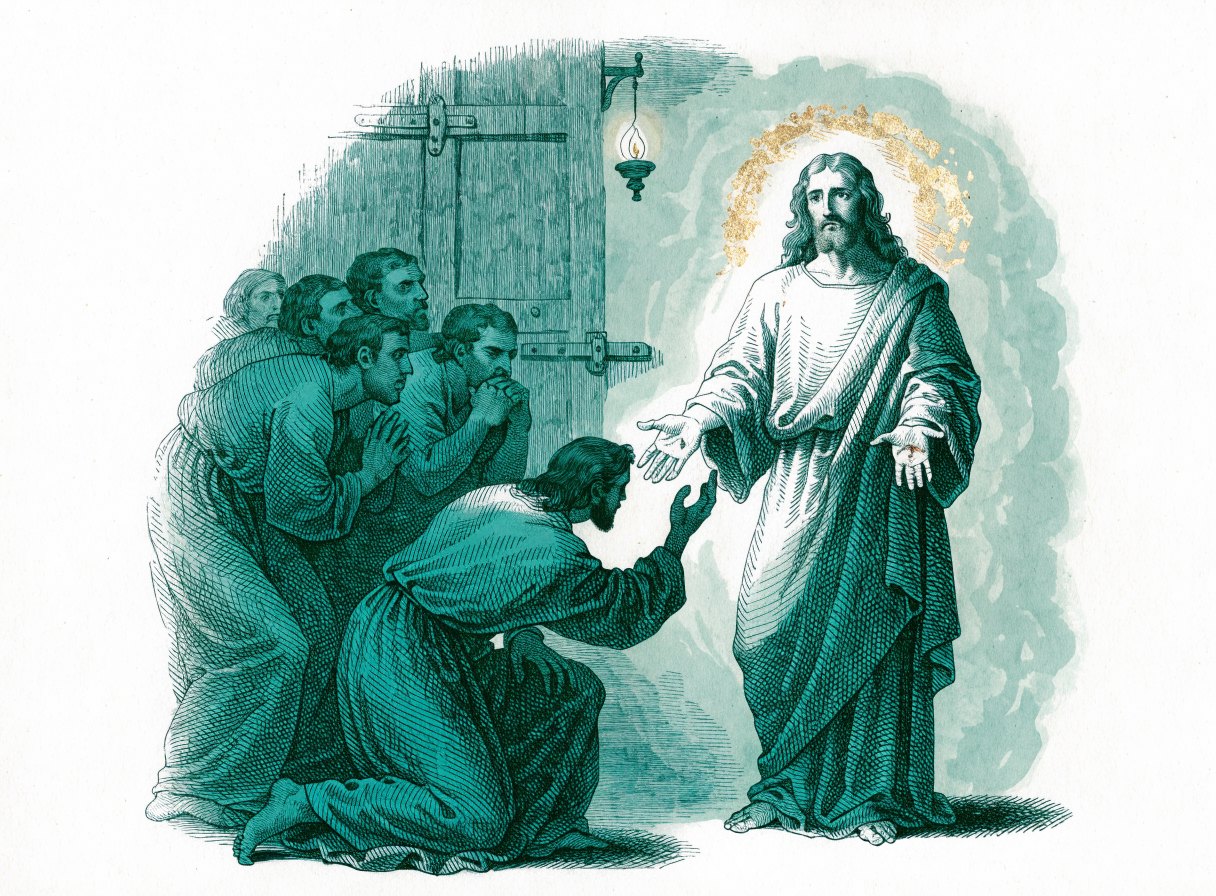
That evening the disciples were together behind locked doors, afraid. “Jesus came and stood among them and said to them, ‘Peace be with you.’ When he had said this, he showed them his hands and his side. Then the disciples were glad when they saw the Lord” (John 20:19–20). They thought at first he was a ghost, so he told them to touch him, “For a spirit does not have flesh and bones as you see that I have,” and he ate a piece of broiled fish in front of them (Luke 24:39, 42–43). His body was real, the same body with the nail marks in it, yet changed: no longer able to die.
Thomas was not there that night, and he refused to believe: “Unless I see in his hands the mark of the nails… I will never believe.” A week later Jesus appeared again and said, “Put your finger here, and see my hands; and put out your hand, and place it in my side. Do not disbelieve, but believe.” Thomas answered, “My Lord and my God!” (John 20:25, 27–28). Then Jesus said something for everyone who would come after: “Blessed are those who have not seen and yet have believed” (20:29). That means you.
Jesus also restored Peter, who had denied him three times. By the Sea of Galilee, three times Jesus asked, “Simon, son of John, do you love me?” And three times he gave him a job: “Feed my lambs,” “Tend my sheep,” “Feed my sheep” (John 21:15–17). The risen Jesus brings failures back.
Over forty days, Jesus “presented himself alive to them after his suffering by many proofs” (Acts 1:3). Some twenty years later, Paul wrote down a list of witnesses he had received much earlier (1 Cor. 15:3): Peter, the twelve, “more than five hundred brothers at one time, most of whom are still alive,” James, all the apostles, and finally Paul himself (1 Cor. 15:5–8). “Most of whom are still alive” amounted to an invitation: go ask them.
Something changed these people. Frightened men hiding behind locked doors became bold witnesses who were beaten and jailed, and several of them were killed, rather than deny what they had seen. Jesus’ own brother James, who did not believe in him during his ministry (John 7:5), became a leader of the church in Jerusalem (Gal. 2:9). People do not die for something they know is a lie.
The Turn: Peace Be with You
Look at the people the risen Jesus went looking for. A weeping woman who thought he was the gardener. Frightened men behind a locked door. A doubter who said he would never believe. A friend who had denied him three times. He did not wait for any of them to come to him.
His first word to the locked room was “Peace be with you,” and then, “As the Father has sent me, even so I am sending you” (John 20:21). He still comes to people like that, and he still sends them out. Whatever has locked you in, he is alive, and he knows your name. Next week we ask why the resurrection matters so much, and watch him return to the Father.
Living It: Three Practices for This Week
Before Week 44: Read 1 Corinthians 15 and Acts 1:1–11. Week 44 asks why the resurrection matters, and watches Jesus ascend.
For Discussion
- Imagine the disciples’ Saturday. What did they think had happened to all their hopes?
- Why does it matter that women were the first witnesses to the empty tomb?
- Jesus ate fish and showed his scars. Why does it matter that his resurrection body was a real, physical body?
- Jesus restored Peter after his denial. What does that say to someone who has failed Jesus badly?
Sources & For Further Study
- On the historical evidence for the resurrection: N. T. Wright, The Resurrection of the Son of God; Gary R. Habermas and Michael R. Licona, The Case for the Resurrection of Jesus.
- For further reading: Richard B. Gaffin Jr., Resurrection and Redemption; Timothy Keller, Hope in Times of Fear.
Leading a small group? This week comes as a beautifully formatted, printable PDF, along with a 2-page Small Group Guide: a discussion page for your group and leader notes with a session plan and answer key. Both are free when you join the weekly list.