

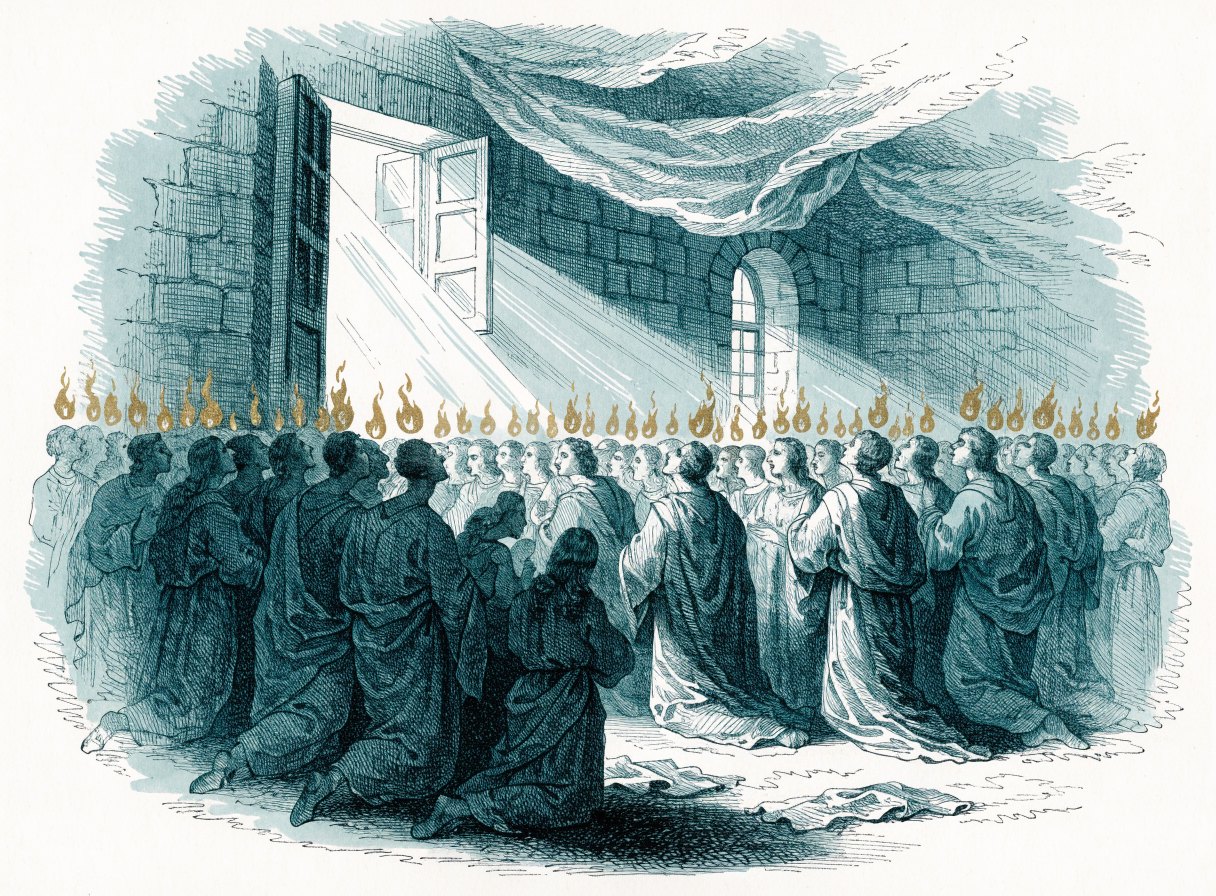
“And they devoted themselves to the apostles’ teaching and the fellowship, to the breaking of bread and the prayers.” Acts 2:42
Introduction: What Jesus Began
The night before he died, Jesus told his disciples something that must have sounded impossible: “it is to your advantage that I go away, for if I do not go away, the Helper will not come to you” (John 16:7). How could anything be better than having Jesus physically with them?
The book of Acts answers that question. It was written by Luke, the same doctor who wrote the Gospel of Luke, and he begins it this way: “In the first book, O Theophilus, I have dealt with all that Jesus began to do and teach” (Acts 1:1, emphasis added). The Gospel was what Jesus began. Acts is what he continued to do, from heaven, through his Spirit and his people. In about thirty years, a frightened band of followers in one city became a movement across the Roman Empire.
This week opens Unit 6, “The Church and the End.” These two weeks cover Acts 1–12: the coming of the Holy Spirit, the birth of the church, the first persecution, and the gospel breaking out beyond the Jewish people. On our timeline, it begins at Pentecost in AD 30 or 33, just seven weeks after the resurrection.
The Word: Spirit
Part One: The Day of Pentecost
Ten days after Jesus ascended, about a hundred and twenty believers were praying together in Jerusalem. It was the Jewish harvest festival of Pentecost, and the city was full of Jewish pilgrims from all over the world. “And suddenly there came from heaven a sound like a mighty rushing wind, and it filled the entire house where they were sitting. And divided tongues as of fire appeared to them and rested on each one of them. And they were all filled with the Holy Spirit and began to speak in other tongues as the Spirit gave them utterance” (Acts 2:2–4).
A crowd gathered, amazed, because each one heard the disciples speaking in his own native language. Remember Babel (Week 10), where God scattered proud humanity by confusing their languages? At Pentecost God began to undo Babel. He did not make everyone speak one language again. He spoke the gospel into every language.
Peter, the same man who had denied Jesus seven weeks earlier, stood up and preached. He explained that this was what the prophet Joel had promised: “I will pour out my Spirit on all flesh” (Acts 2:17; Joel 2:28). He told them about Jesus, whom they had crucified and God had raised. “Let all the house of Israel therefore know for certain that God has made him both Lord and Christ, this Jesus whom you crucified” (2:36).
The crowd was “cut to the heart” and asked, “Brothers, what shall we do?” Peter answered: “Repent and be baptized every one of you in the name of Jesus Christ for the forgiveness of your sins, and you will receive the gift of the Holy Spirit. For the promise is for you and for your children and for all who are far off, everyone whom the Lord our God calls to himself” (2:37–39). That day about three thousand people believed and were baptized (2:41). The water did not wash away their sins. Christ did, and baptism was his visible mark and seal on those who belonged to him. The church was born.
Baptism is the sign Jesus commanded for his people: washing with water in the name of the Father and of the Son and of the Holy Spirit. It marks a person as belonging to Christ and joins them to his church. The water itself does not save. Christ saves, and baptism is his visible sign and promise of cleansing and new life in him.
Part Two: The First Church
What did these new believers do? Luke gives us a snapshot:
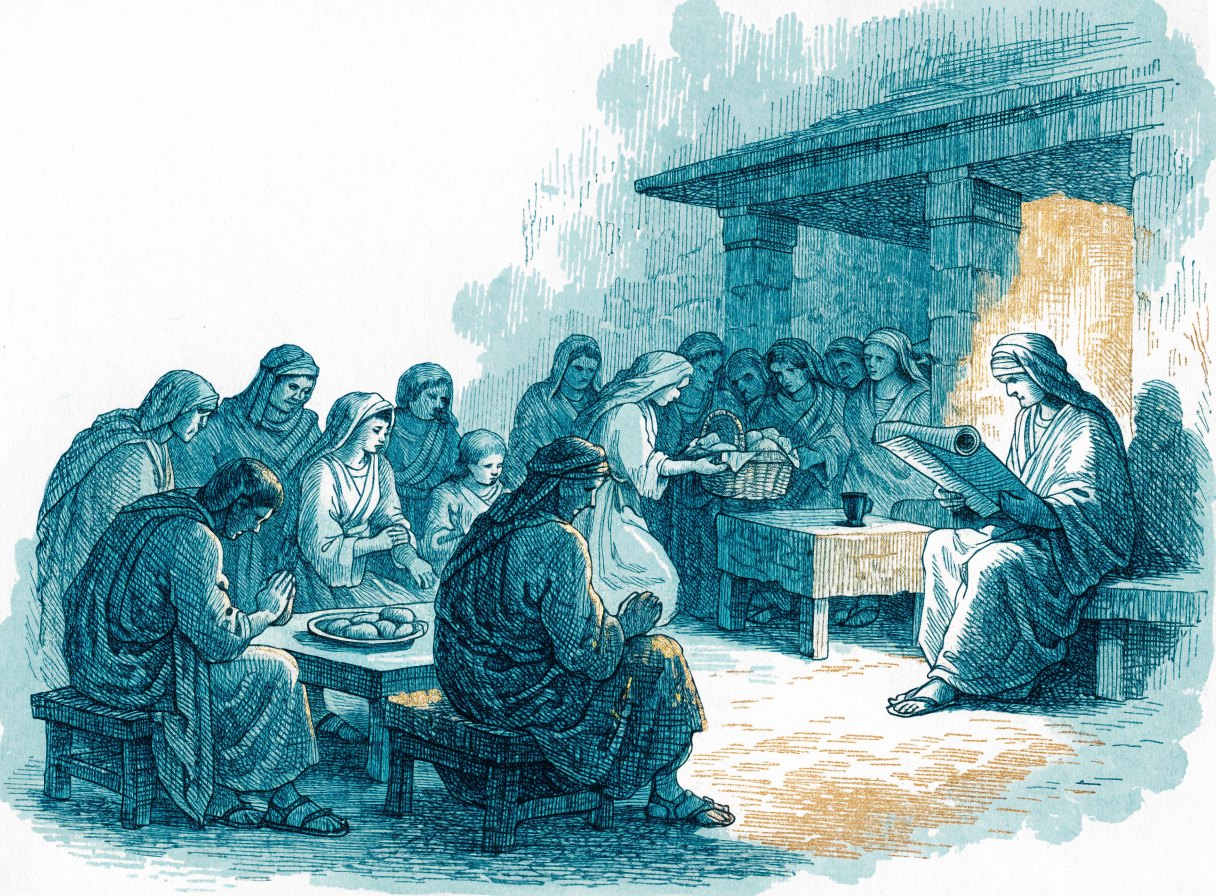
Four things marked them: the apostles’ teaching (God’s word), fellowship (shared life), the breaking of bread (including the Lord’s Supper), and prayer. These are still the marks of a healthy church today. Christians call God’s word, the sacraments (baptism and the Lord’s Supper, the meal Jesus gave his church the night before he died), and prayer the “means of grace,” the ordinary ways God gives and strengthens the new life Christ won for his people (WSC 88).
Their love was practical. “There was not a needy person among them,” because people with land or houses sold them and gave the money so that “it was distributed to each as any had need” (4:34–35). No one was forced to; it was the overflow of grace. A new kind of family had been born, made up of rich and poor, young and old. The New Testament calls the church a body with many parts (1 Cor. 12:12–13), a holy temple where God lives by his Spirit (Eph. 2:21–22), and “a chosen race, a royal priesthood, a holy nation, a people for his own possession” (1 Pet. 2:9).
The Turn: The Helper Has Come
Jesus told his friends it was better for them that he go away, and at Pentecost they found out why. The same frightened disciples who had run from the cross stood up in the streets of Jerusalem and preached Christ.
By his Spirit the risen Jesus lives in his people now. “And because you are sons, God has sent the Spirit of his Son into our hearts, crying, ‘Abba! Father!’” (Gal. 4:6). He joins ordinary people to Christ and to each other. If you belong to Jesus, the same Spirit lives in you, and he has not given you a faith to live alone. Next week that courage is tested, and the Spirit carries the gospel to Samaria and beyond.
Living It: Three Practices for This Week
Before Week 46: Read Acts 3–8 and 10–12. Week 46 follows the church through its first persecution and out toward the ends of the earth.
For Discussion
- Jesus said it was to their advantage that he go away. Why would having the Spirit be better than having Jesus physically present?
- At Pentecost, people heard the gospel in their own languages. How does that reverse Babel?
- The crowd asked, “What shall we do?” What did Peter tell them, and what does that mean for you?
- Acts 2:42 lists four things the first Christians devoted themselves to. Which is strongest in your life? Which is weakest?
Sources & For Further Study
- On the person and work of the Holy Spirit: Sinclair B. Ferguson, The Holy Spirit; Westminster Shorter Catechism 6, 29–30, 88.
- On Acts: Dennis E. Johnson, The Message of Acts in the History of Redemption; John Stott, The Message of Acts.
- For further reading: Mark Dever, What Is a Healthy Church?; Michael Green, Evangelism in the Early Church.
Leading a small group? This week comes as a beautifully formatted, printable PDF, along with a 2-page Small Group Guide: a discussion page for your group and leader notes with a session plan and answer key. Both are free when you join the weekly list.