

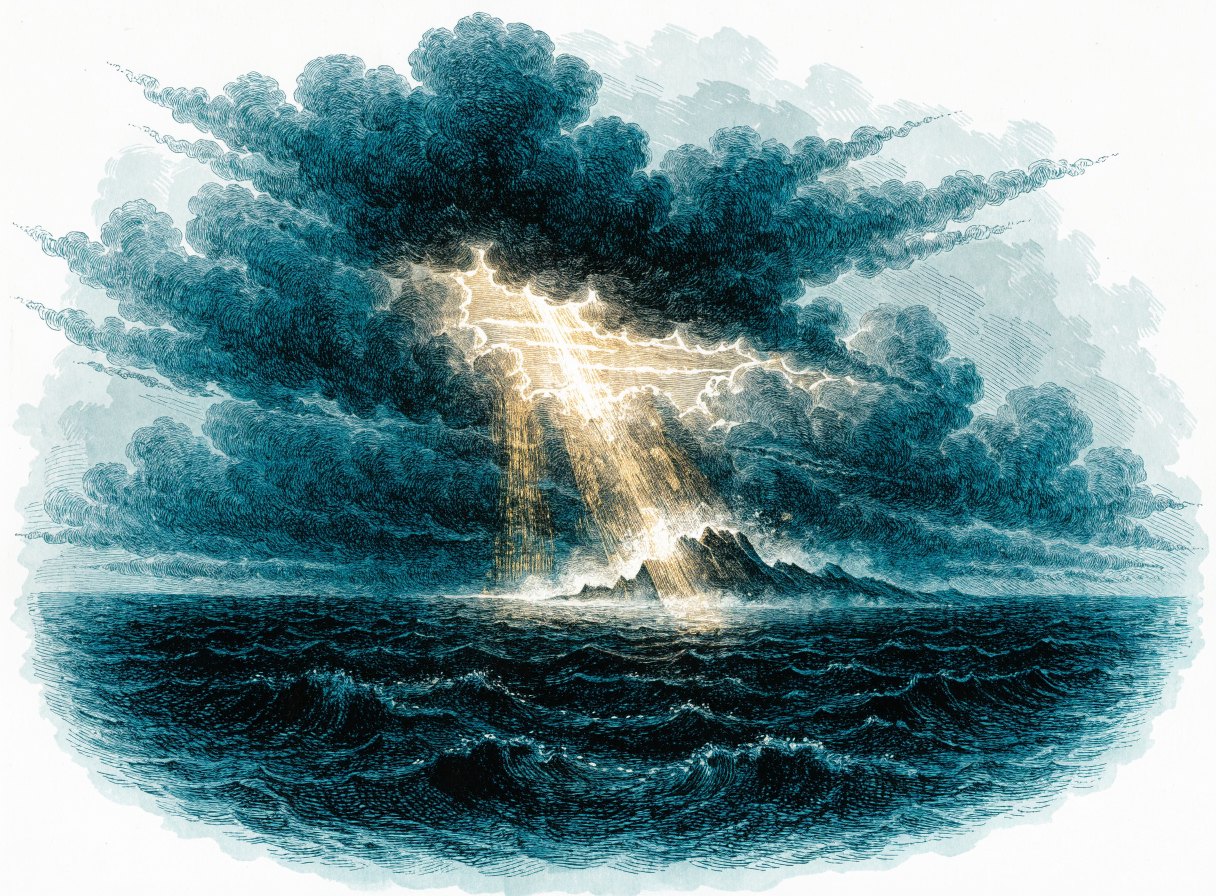
“And God saw everything that he had made, and behold, it was very good.” Genesis 1:31
Introduction: What Are People For?
Clean out an old man’s garage after he dies and you will find things you cannot name. A bent piece of iron with a wooden handle. A brass fitting shaped like nothing you have ever seen. You can turn it over in your hands all afternoon and never figure out what it was for. The only one who could tell you is the one who made it.
That is the situation every human being is in. We are here, and we did not make ourselves, and the question underneath almost every other question we ask is this: what am I for? Our culture gives a hundred answers. You are for being happy. You are for achieving. You are for being true to yourself. You are a lucky accident and you are for nothing at all. Every one of those answers is a guess made from the inside, by the thing itself, turning itself over in its own hands.
Genesis 1 and 2 are the Maker’s answer. Last week we met the God who is there: eternal, holy, needing nothing, one God in three persons. This week we watch him make a world, and then make us, and we hear him say what we are for. If you get these two weeks, you will understand why people matter, why work matters, why your body matters, why marriage matters, and why the world is so beautiful. In Week 7 we will see why it also feels so wrong.
The Word: Image
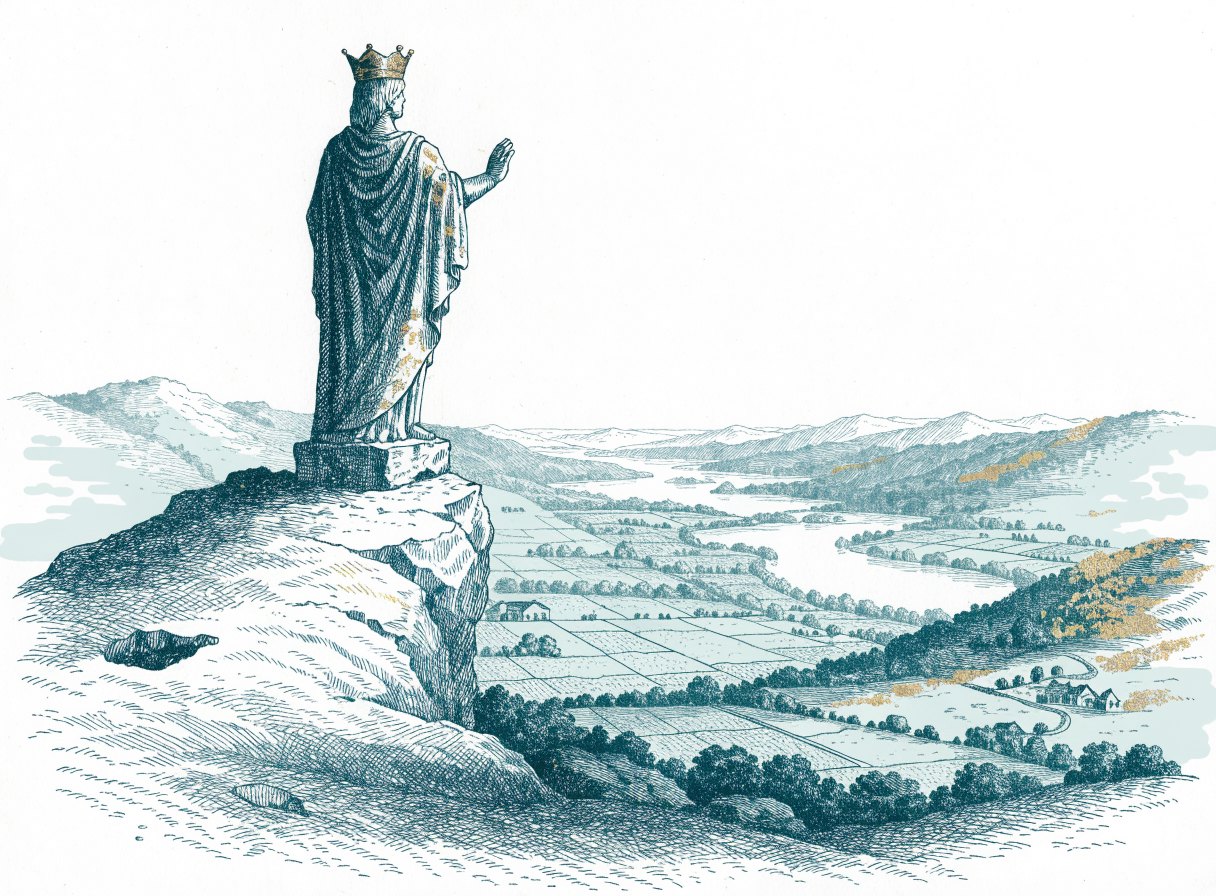
Keep that picture. Every person you have ever met is a living statue of the King, set in his world to represent him. Every one of us has defaced it, some more visibly than others, but none have ceased to bear it. That one word answers the garage question. You are for God: to know him, reflect him, and rule his world on his behalf.
Part One: Out of Nothing, by a Word
Notice how God makes things. He speaks. Ten times in the chapter you read “And God said,” and whenever he commands something into being, it happens. A psalm puts it in one line: “For he spoke, and it came to be; he commanded, and it stood firm” (Ps. 33:9). He did not shape the world out of something that was already lying around. “By faith we understand that the universe was created by the word of God, so that what is seen was not made out of things that are visible” (Heb. 11:3). Theologians use a Latin phrase for this, ex nihilo: out of nothing. The Shorter Catechism puts it plainly: “The work of creation is, God’s making all things of nothing, by the word of his power, in the space of six days, and all very good” (WSC 9).
Verse 2 gives us two problems, and the rest of the chapter solves them. The earth was “without form” (shapeless, not yet ordered) and “void” (empty, not yet filled). Watch what God does over the six days. On the first three days he forms: he separates light from darkness, sky from sea, and dry land from water. On the next three days he fills what he formed: lights for the day and night, birds for the sky and fish for the sea, animals for the land. And last, he makes the man and the woman to rule it all. Then on the seventh day he rests.
The pattern is in the text itself, and it shows you a God of order and generosity. He builds a house, then furnishes it, then puts someone in it to live. Nothing in Genesis 1 is random. Everything is made “according to its kind,” put in its place, and called good.
How long were those days? This study takes them as ordinary days of evening and morning, and the Westminster Confession says God created “in the space of six days” (WCF 4.1). God himself ties the Sabbath (the weekly day of rest he later gave Israel) to those days when he speaks the Ten Commandments: “For in six days the LORD made the heavens and the earth, the sea, and all that is in them, and rested on the seventh day” (Ex. 20:11). You should know that faithful Reformed teachers have read the days in other ways, as long ages or as a literary framework, and a person can love Christ and hold the Bible as God’s Word whichever of these views he holds. What every one of them holds, and what matters most, is the main thing Genesis 1 teaches: the one true God made everything there is, by his word, on purpose, and it was good.
Also read: Psalm 104; Psalm 33:6–9; John 1:1–3; Colossians 1:15–17; Revelation 4:11
Part Two: Very Good
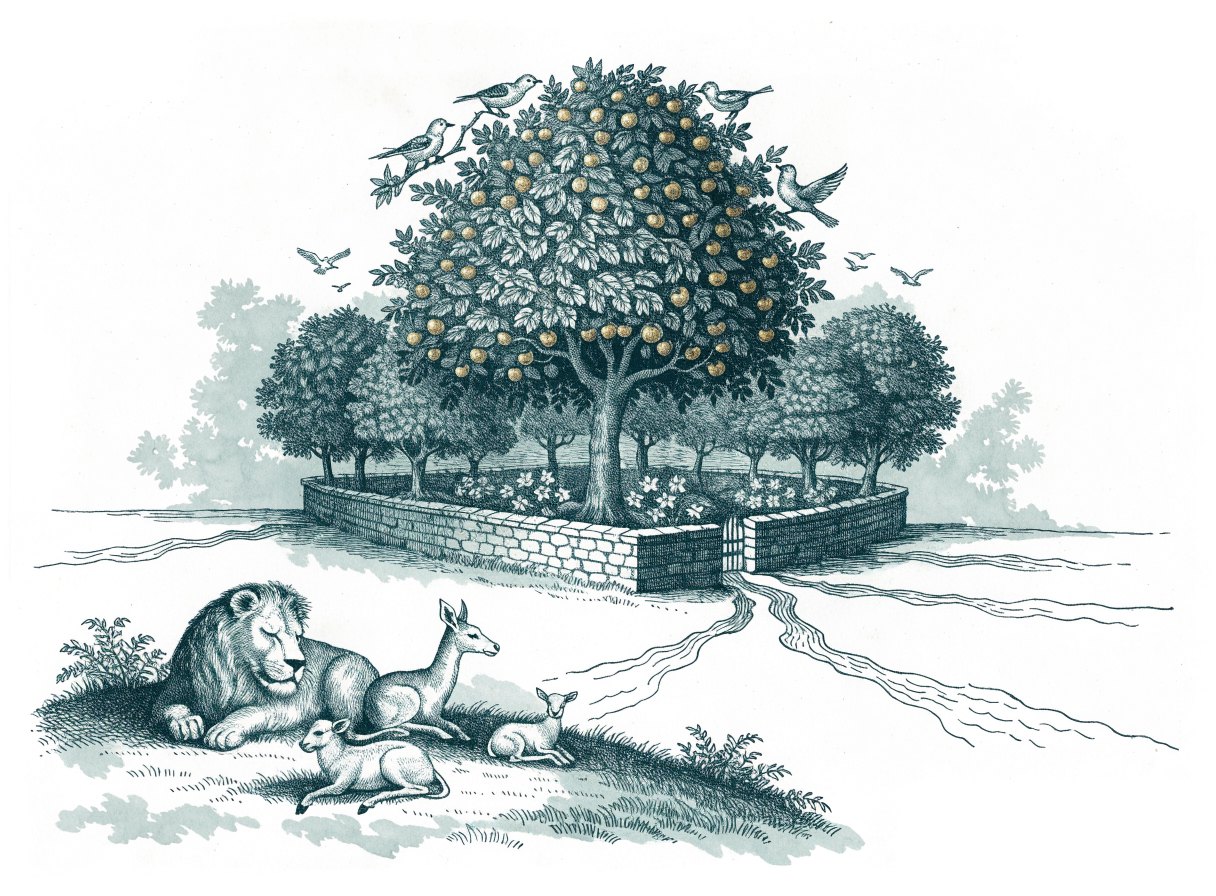
Six times in Genesis 1 God looks at what he has made and sees that it is good. The seventh time comes after he makes the man and the woman: “And God saw everything that he had made, and behold, it was very good” (Gen. 1:31).
Let that correct something many religious people believe. Some think the body is a prison for the soul, that matter is dirty and only the “spiritual” is holy, that the real goal is to escape this world. That is an old idea, and the Bible rejects it from the first page. God made trees “pleasant to the sight and good for food” (Gen. 2:9). He made bodies. He made taste and color and the smell of rain. He made work and marriage and rest. Paul says it bluntly to Timothy about teachers who forbade marriage and certain foods: “For everything created by God is good, and nothing is to be rejected if it is received with thanksgiving” (1 Tim. 4:3–4).
And the world was made for someone. The New Testament tells us who did the making: “For by him all things were created, in heaven and on earth, visible and invisible… all things were created through him and for him” (Col. 1:16). The “him” is Jesus. The Son through whom God spoke the world into being is the same Son the world was made for. When you enjoy a good meal, a sunrise, or the laughter of a child, you are enjoying a gift that was made through Christ and for Christ. That is why gratitude is the right response, and why the world’s goodness is meant to lead you back to its Giver.
The Turn: Made Through Him
John tells us who that creating Word is. “All things were made through him, and without him was not any thing made that was made” (John 1:3). The Son of God made the world, and the same Son came into it to rescue it. The world you live in is not an accident or a mistake. It is a gift, and it has a Maker who can be thanked and trusted. Start there this week: everything you have came from him, and was made through Christ.
Living It: Three Practices for This Week
Before Week 6: Read Genesis 1:26–2:25 and Psalm 8. Week 6 asks what it means to be made in God’s image.
For Discussion
- What answers does our culture give to the question “What are people for?” How does Genesis 1–2 answer it differently?
- Look at the forming and filling pattern of the six days. What does it tell you about the kind of God who made the world?
- Why does it matter that God called the physical world “very good”? Where have you seen Christians treat the body or the material world as less than good?
- Read John 1:1–3. What difference does it make to you that the world was made through Jesus?
Sources & For Further Study
- Westminster Shorter Catechism (1647), Q. 1, 9, 10, 12, 16. Westminster Confession of Faith (1646), 4.1–2; 7.2; 21.7–8.
- On the length of the creation days among Reformed teachers: Orthodox Presbyterian Church, Report of the Committee to Study the Views of Creation (2004).
- For further reading: Anthony A. Hoekema, Created in God’s Image; Derek Kidner, Genesis (Tyndale Old Testament Commentaries).
Leading a small group? This week comes as a beautifully formatted, printable PDF, along with a 2-page Small Group Guide: a discussion page for your group and leader notes with a session plan and answer key. Both are free when you join the weekly list.