

“But be doers of the word, and not hearers only, deceiving yourselves.” James 1:22
Introduction: Letters to Christians Under Pressure
Paul was not the only one who wrote letters to the young churches. Near the end of the New Testament, after Paul’s letters, sit eight more: Hebrews, James, 1 and 2 Peter, 1, 2, and 3 John, and Jude. The seven from James to Jude are often called the “general letters,” because most of them were written to Christians scattered across many places rather than to one church. Hebrews is sometimes counted with them.
Their writers knew Jesus in the flesh or knew those who did. James and Jude were his younger brothers, sons of Mary and Joseph, who did not believe in him until after the resurrection. Peter denied him three times and was restored. John leaned against him at the Last Supper. The writer of Hebrews, whose name we do not know, heard the gospel from those who had heard the Lord himself (Heb. 2:3).
They wrote to Christians who were tired, pressured, and tempted to give up. Some faced prison and loss of property. Some were tempted to go back to their old religion. Some had a faith that talked well but did nothing. These letters were written from about AD 45 to 95, and they still speak to anyone who is tempted to drift. These two weeks walk through them under four headings: Jesus is better (Hebrews) and faith that works (James) this week, then hope in suffering (Peter) and love and assurance (John) next week, with a short word from Jude at the end.
The Word: Faith
Part One: Hebrews: Jesus Is Better
Hebrews seems to have been written to Jewish Christians, probably in the 60s, before the temple was destroyed in AD 70. They had suffered for Christ, and now some were tempted to drift back to the temple, the priests, and the sacrifices they had grown up with. The writer answers with one word, repeated again and again: better. Why go back to the shadows when you have the real thing?
He begins with who Jesus is. “Long ago, at many times and in many ways, God spoke to our fathers by the prophets, but in these last days he has spoken to us by his Son.” The Son “is the radiance of the glory of God and the exact imprint of his nature, and he upholds the universe by the word of his power. After making purification for sins, he sat down at the right hand of the Majesty on high” (1:1–3).
Then he shows what Jesus does. Every priest in the temple “stands daily at his service, offering repeatedly the same sacrifices, which can never take away sins.” Notice: the priests stood, because their work was never done. “But when Christ had offered for all time a single sacrifice for sins, he sat down at the right hand of God” (10:11–12). He sat down because the work was finished. “For it is impossible for the blood of bulls and goats to take away sins” (10:4), but Christ entered heaven “by means of his own blood, thus securing an eternal redemption” (9:12).
And he is a priest who understands us. “For we do not have a high priest who is unable to sympathize with our weaknesses, but one who in every respect has been tempted as we are, yet without sin. Let us then with confidence draw near to the throne of grace, that we may receive mercy and find grace to help in time of need” (4:15–16). He “always lives to make intercession” for those who come to God through him (7:25).
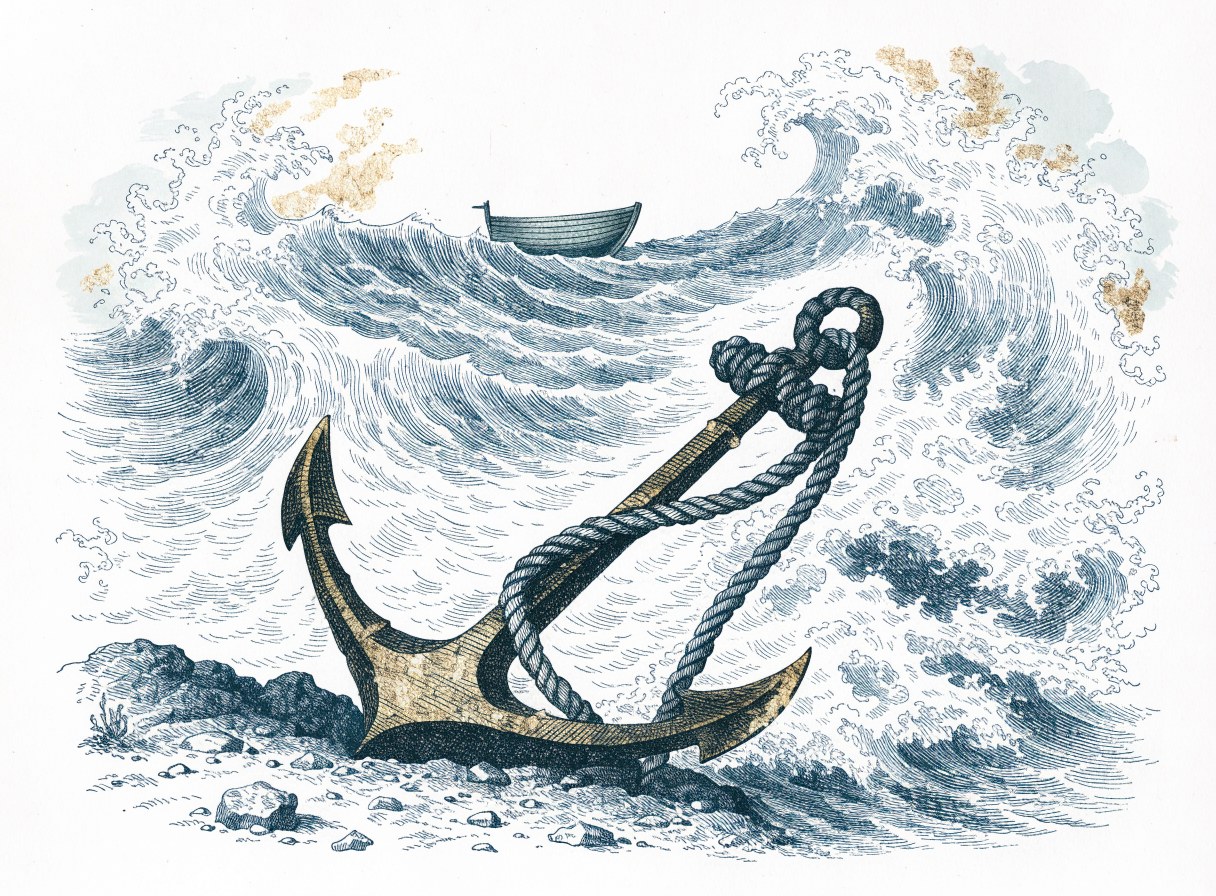
Hebrews 11 is the great chapter of faith: Abel, Noah, Abraham, Moses, Rahab, and many more, who trusted God’s promises before they saw them fulfilled. Then comes the call: “let us run with endurance the race that is set before us, looking to Jesus, the founder and perfecter of our faith, who for the joy that was set before him endured the cross” (12:1–2). Our hope in him is “a sure and steadfast anchor of the soul” (6:19). Storms come, but the anchor holds.
Part Two: James: Faith That Works
This is not the apostle James, the brother of John, who was put to death early on (Acts 12:2). This James was a brother of Jesus. During Jesus’ ministry, “not even his brothers believed in him” (John 7:5). After the resurrection Jesus appeared to James (1 Cor. 15:7), and he became a leader of the church in Jerusalem. His letter, perhaps the earliest book of the New Testament (about AD 45 to 50), is intensely practical and full of commands.
James writes about trials: “Count it all joy, my brothers, when you meet trials of various kinds, for you know that the testing of your faith produces steadfastness” (1:2–3). He writes about the tongue, which is small, but “How great a forest is set ablaze by such a small fire!” (3:5). He writes about pride and plans: “What is your life? For you are a mist that appears for a little time and then vanishes” (4:14). And over it all: “be doers of the word, and not hearers only, deceiving yourselves” (1:22).
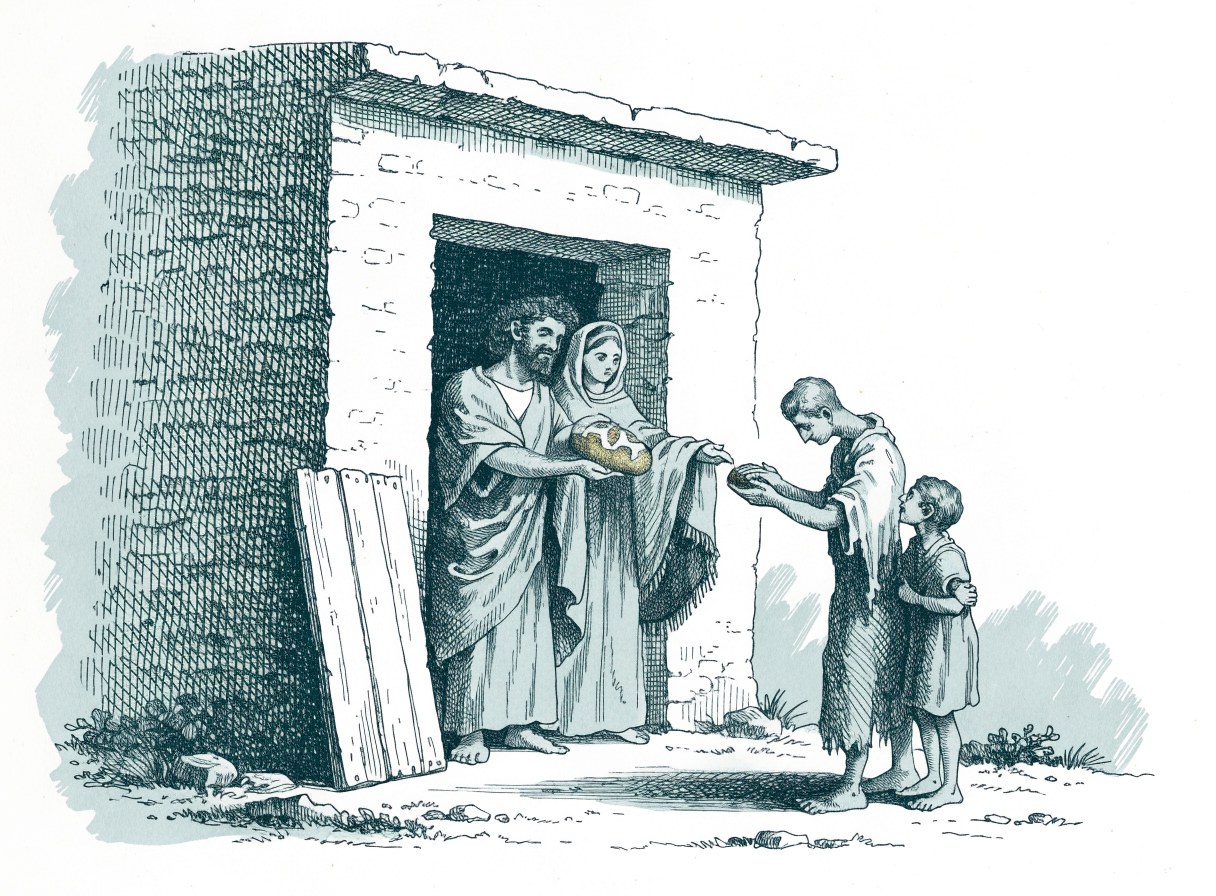
His most famous passage asks a hard question: “What good is it, my brothers, if someone says he has faith but does not have works? Can that faith save him?” Imagine a brother or sister without food or clothes, and you say, “Go in peace, be warmed and filled,” and do nothing. “So also faith by itself, if it does not have works, is dead” (2:14–17).
Then James writes, “You see that a person is justified by works and not by faith alone” (2:24). Does that contradict Paul, who wrote that “one is justified by faith apart from works of the law” (Rom. 3:28)? No. They are fighting different enemies. Paul is answering people who think they can earn God’s acceptance, so he says we are declared righteous by faith alone. James is answering people who claim to have faith but live as if Christ makes no difference, so he says real faith is shown to be real by what it does. James even uses the word “justified” in a different sense. His example is Abraham offering Isaac on the altar (2:21), many years after God had already counted Abraham righteous for believing his promise (Gen. 15:6). Abraham’s obedience did not make him right with God. It showed that he already was. Paul is talking about the root, and James is talking about the fruit. We are saved by faith alone, but the faith that saves is never alone.
Those God justifies, he also makes holy. Sanctification is the Spirit’s lifelong work of making us more like Christ, as we put sin to death and grow in love and obedience. It is never finished in this life, but God will finish it. Everyone truly joined to Christ will persevere to the end, because he keeps them.
“They, whom God hath accepted in his Beloved, effectually called, and sanctified by his Spirit, can neither totally nor finally fall away from the state of grace, but shall certainly persevere therein to the end, and be eternally saved.” (Westminster Confession of Faith 17.1)
The Turn: Draw Near
Each of these letters was written to people tempted to drift, from Christ, from his people, or into a faith that did nothing. Maybe that is you. Hebrews says, “how shall we escape if we neglect such a great salvation?” (2:3). Drifting is not neutral. A boat without an anchor does not stay where it is. Christ never lets go of those who are truly his, and warnings like this are one of the ways he keeps them. His people hear the warning and hold on: “we are his house, if indeed we hold fast our confidence and our boasting in our hope” (3:6).
But the invitation is greater than the warning. “Let us then with confidence draw near to the throne of grace, that we may receive mercy and find grace to help in time of need” (Heb. 4:16). You do not come to a God who is waiting to crush you. You come to a throne of grace, through a High Priest who knows your weakness and has already paid for your sin.
If you have never trusted Christ, trust him today. He “has appeared once for all at the end of the ages to put away sin by the sacrifice of himself” (Heb. 9:26). If you have, draw near and confess your sins. Let your faith show itself in love. Next week Peter and John write to believers who are suffering and shaken.
Living It: Three Practices for This Week
Before Week 50: Read 1 Peter 1:3–9 and 4:12–19, 1 John 1:5–2:2 and 4:7–21, and Jude 24–25. Week 50 hears from Peter, John, and Jude.
For Discussion
- Hebrews says Jesus is better than angels, Moses, the priests, and the sacrifices. Which of these comparisons helps you most?
- Why does it matter that the priests stood but Christ sat down?
- How would you explain to a friend how Paul and James fit together on faith and works?
- James says the tongue is like a small fire. Where do you see that in your own life?
Sources & For Further Study
- On faith and works: Westminster Confession of Faith 11 and 14; Westminster Shorter Catechism 86.
- On Hebrews: Richard D. Phillips, Hebrews (Reformed Expository Commentary); F. F. Bruce, The Epistle to the Hebrews.
- On the general letters: Douglas J. Moo, The Letter of James; Edmund P. Clowney, The Message of 1 Peter; John Stott, The Letters of John.
Leading a small group? This week comes as a beautifully formatted, printable PDF, along with a 2-page Small Group Guide: a discussion page for your group and leader notes with a session plan and answer key. Both are free when you join the weekly list.