

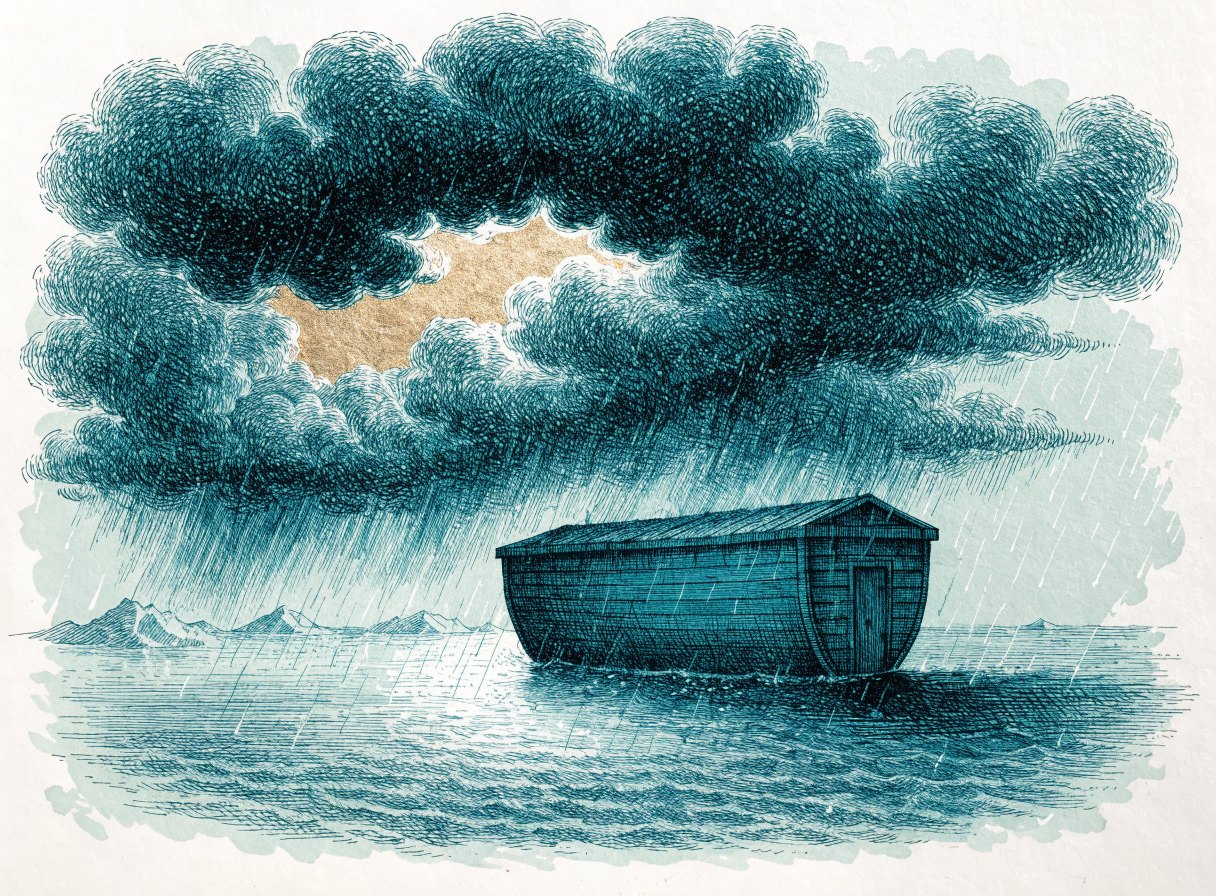
“At that time people began to call upon the name of the LORD.” Genesis 4:26
Introduction: Sin Grows Up Fast
A crack in a windshield starts as a chip the size of a fingernail. You tell yourself you will get it fixed. Then a cold morning comes, and the defroster runs, and by the time you get to work the crack runs from one side of the glass to the other. Small breaks do not stay small.
Two weeks ago we watched the first sin: one bite of forbidden fruit in a garden. Genesis 4 through 11 shows what that chip does to the whole windshield. In one chapter, a brother kills a brother. A few generations later, a man boasts of killing for a bruise. By chapter 6 the earth is “filled with violence” (Gen. 6:11), and God sends a flood. Even after the flood, humanity gathers on a plain to build a tower to heaven and make a name for itself. These chapters cover more time than any other stretch of the Bible, perhaps two thousand years, and they move quickly, because they are showing you one thing: what sin does when it is left to grow.
But watch for the other thing these chapters show. Every time sin breaks out, judgment comes, and every time judgment comes, God holds out grace. The ruin spreads. So does the mercy. And the line of the promised Offspring from Genesis 3:15 keeps going, name by name, through the darkness.
The Word: Favor
Part One: Cain and Abel
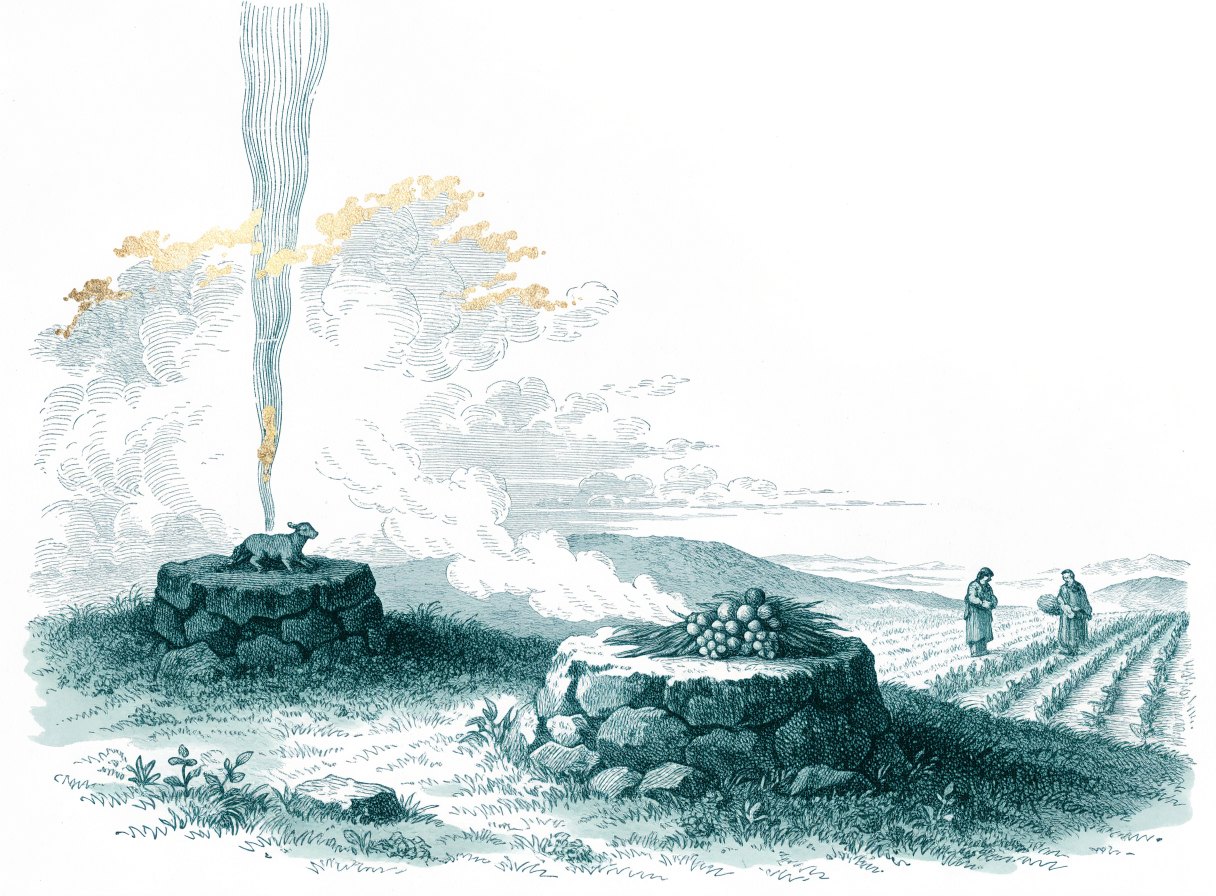
Outside the garden, Adam and Eve have children. When Cain is born, Eve says, “I have gotten a man with the help of the LORD” (Gen. 4:1). Maybe she hoped he was the promised Offspring. He was not. Two brothers grow up: Abel keeps sheep, Cain works the ground. Both bring an offering to God. Abel brings “the firstborn of his flock and of their fat portions,” and God accepts it. Cain brings “an offering of the fruit of the ground,” and God does not (4:3–5).
Why the difference? Genesis hints at it: Abel brought the best of what he had, the firstborn and the fat portions, while Cain simply brought some fruit. But the New Testament gives the deeper reason: “By faith Abel offered to God a more acceptable sacrifice than Cain” (Heb. 11:4). The difference was in their hearts. Abel came trusting God. Cain came going through the motions, and when God did not accept him, he was furious. John says Cain “was of the evil one and murdered his brother… because his own deeds were evil and his brother’s righteous” (1 John 3:12).
Before Cain acted, God spoke to him with remarkable patience: “Why are you angry, and why has your face fallen? If you do well, will you not be accepted? And if you do not do well, sin is crouching at the door. Its desire is for you, and you must rule over it” (4:6–7). This is the first time the word “sin” appears in the Bible, and God describes it as an animal crouched at the door, waiting to pounce. Every one of us has stood at that door with Cain.
Cain did not rule over it. He led his brother into a field and killed him. And God came with a question again, as he did in the garden: “Where is Abel your brother?” Cain answered with a lie and a sneer: “I do not know; am I my brother’s keeper?” (4:9). Then God said, “The voice of your brother’s blood is crying to me from the ground” (4:10). Abel’s blood cried out for justice. Hold on to that sentence. The New Testament will answer it.
Even here, God showed mercy. He drove Cain away, but when Cain feared that someone would kill him, God put a mark on him to protect him (4:15). The murderer was shown mercy he never showed his brother.
Part Two: Two Lines
From here, Genesis follows two family lines. Cain’s line builds a city and gives the world herding, music, and metalwork (4:17–22). Human culture is real and good, and it comes from people made in God’s image even when they do not honor him. But the father of those inventors, a man named Lamech, five generations after Cain (not the Lamech of Genesis 5, who was Noah’s father), sings this to his wives:
Lamech took God’s promise to protect Cain, “vengeance shall be taken on him sevenfold” (4:15), and turned it into a boast. Hurt me once, and I will destroy you seventy-seven times over. In Seventy Times Seven I called this the score-keeping heart, fully grown, glaring out at us from the dawn of the world. And then, thousands of years later, Peter asked Jesus how many times he had to forgive his brother. Seven? Jesus answered, “I do not say to you seven times, but seventy-seven times” (Matt. 18:22). (The ESV’s footnote gives the other way to read it, “seventy times seven,” which is where 490 Life gets its name.) In the Greek Old Testament, the translation many Jews of Jesus’ day read, Lamech’s boast uses the very same phrase Jesus used. Jesus reached back to the oldest, darkest math in the Bible and flipped the sign. Where Lamech multiplied vengeance, Jesus multiplies mercy.
The other line runs through Seth, the son God gave Adam and Eve “instead of Abel” (4:25). And at the end of chapter 4, a small sentence glows in the dark: “At that time people began to call upon the name of the LORD” (4:26). While Cain’s line built a city, Seth’s line prayed.
Genesis 5 traces Seth’s line from Adam to Noah, ten generations, and it reads like a cemetery. Over and over, the same refrain: “and he died.” The curse of Genesis 3 is working its way down the family tree. But one man breaks the pattern: “Enoch walked with God, and he was not, for God took him” (5:24). In a chapter of funerals, one man did not die. It was a small sign that death would not have the last word.
You will also notice the ages. Adam lived 930 years (5:5), Methuselah 969 (5:27). Genesis gives these as real lifespans, and they are the numbers behind the timeline in Week 2. After the flood they fall fast. Shem lived 600 years, Abraham 175, and by Moses’ day seventy or eighty was a full life (Ps. 90:10). Shrinking lifespans are the curse of Genesis 3 doing its work.
The Turn: Sin at the Door
Before Cain killed his brother, God came to him with a warning and an invitation. “If you do well, will you not be accepted? And if you do not do well, sin is crouching at the door. Its desire is for you, and you must rule over it” (Gen. 4:7). Cain would not listen. Sin that is fed does not stay small.
But notice that God spoke to Cain before the murder, spoke to him again after it, and even put a mark on him for his protection. Abel’s blood cried out from the ground for justice, and next week we will hear the better word God has spoken in answer. For now, name the sin crouching at your own door. You cannot master it alone. Christ came to forgive its guilt and break its power, and he gives his Spirit to everyone who trusts him.
Living It: Three Practices for This Week
Before Week 10: Read Genesis 6–9 and Genesis 11:1–9. Week 10 follows the flood, the rainbow, and the tower of Babel.
For Discussion
- Genesis 4–11 shows sin spreading from one act to a whole world. Where do you see small sins grow into bigger ones, in the world or in your own life?
- God warned Cain that sin was “crouching at the door.” What does it look like to “rule over it” (Gen. 4:7)? What help do Christians have that Cain did not?
- Lamech multiplied revenge; Jesus multiplied forgiveness (Gen. 4:24; Matt. 18:22). Why is keeping score so natural to us? What would it take for you to stop?
Sources & For Further Study
- On חֵן and חָנַן: Brown, Driver, and Briggs, Hebrew and English Lexicon; Koehler and Baumgartner, HALOT, s.v. On the Noah/ḥen wordplay: Gordon J. Wenham, Genesis 1–15 (Word Biblical Commentary), on 6:8.
- On Genesis 4:24 and Matthew 18:22: the Greek Old Testament (Septuagint) of Genesis 4:24 reads hebdomēkontakis hepta, the same phrase as Matthew 18:22. David S. Jones, Seventy Times Seven: On the God Who Forgives Past All Counting, chapters 1 and 8.
- For further reading: Derek Kidner, Genesis (Tyndale Old Testament Commentaries); Bruce K. Waltke, Genesis: A Commentary.
Leading a small group? This week comes as a beautifully formatted, printable PDF, along with a 2-page Small Group Guide: a discussion page for your group and leader notes with a session plan and answer key. Both are free when you join the weekly list.