

“God’s love has been poured into our hearts through the Holy Spirit who has been given to us.” Romans 5:5
“God has sent the Spirit of his Son into our hearts, crying, ‘Abba! Father!’” Galatians 4:6
Introduction: The Love We Forget
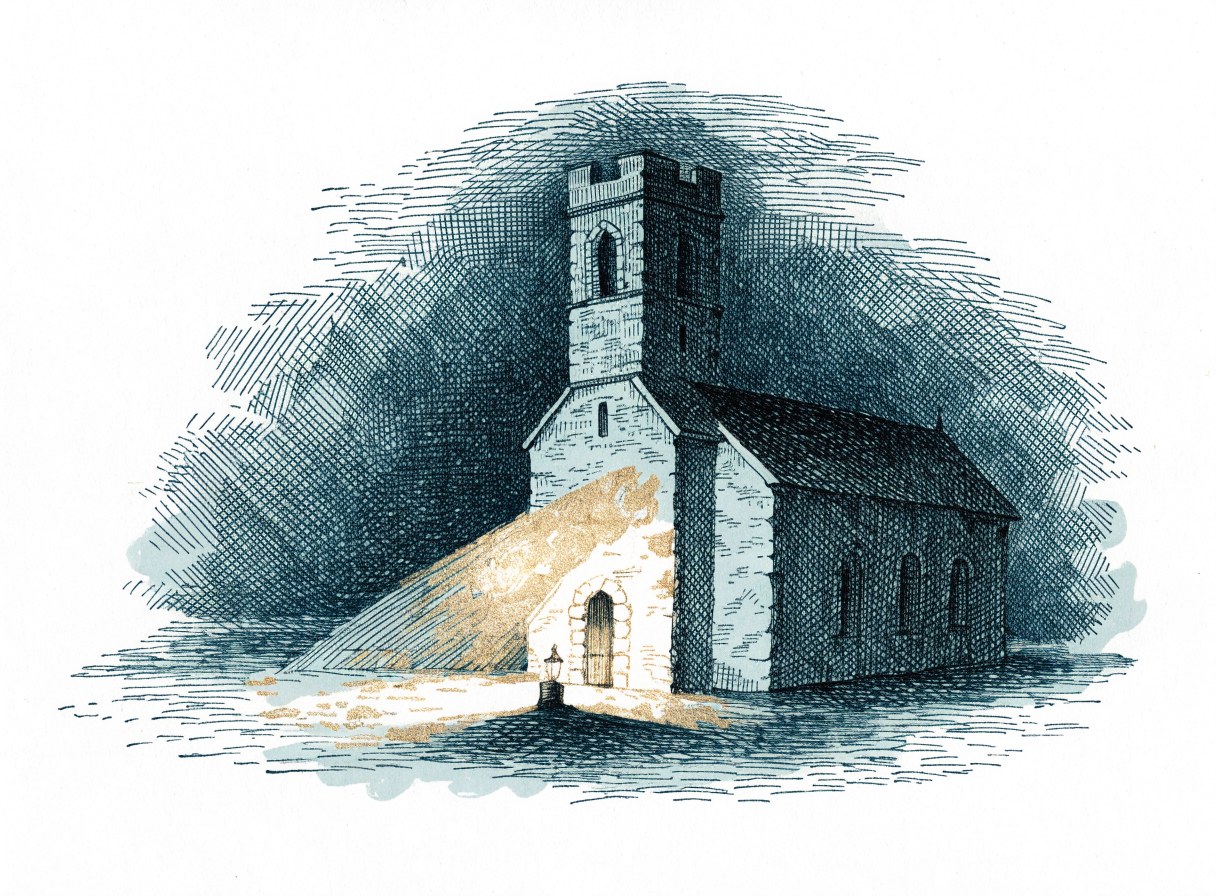
Drive past an old church at night and you will see the building. You will see the stone, the tower, the tall windows glowing against the dark. What you will almost never see is the lamp. It sits low in the grass, small and plain, aimed up at the wall. Nobody pulls over to admire the floodlight. That is how a floodlight is supposed to work. Its whole job is to make you look at something else.
J. I. Packer called this the Holy Spirit’s “floodlight ministry.” The Spirit, he wrote, is “the hidden floodlight shining on the Savior.” Jesus said it first: “He will glorify me, for he will take what is mine and declare it to you” (John 16:14). The Spirit’s delight is to make Christ seen.
But it also explains a problem. Because the Spirit points away from himself, we can go years without thinking about him at all. We pray to the Father. We sing about the Son. And the Spirit becomes a vague presence somewhere in the background of the service. Listen to how we talk. “Did you feel it tonight?” “It really moved in that room.” We would never call Jesus “it.” We do it to the Spirit all the time, and usually without noticing.
Even the King James Version says “it” here. It reads, “The Spirit itself beareth witness with our spirit” (Rom. 8:16), and “the Spirit itself maketh intercession for us” (Rom. 8:26). The translators were following Greek grammar, where the word for spirit, pneuma, is neuter. Modern translations rightly say “himself.” The ESV reads, “The Spirit himself bears witness with our spirit that we are children of God.” Something cannot bear witness that you belong to the family. Someone can.
This is an old problem. Nearly four hundred years ago the Puritan Thomas Goodwin wrote that there is “a general omission in the saints of God, in their not giving the Holy Ghost that glory that is due to his person,” so much so that “we have in our hearts almost lost this third person.” Charles Spurgeon put his finger on what we lose when we lose him: “I am afraid, dear friends, we are too much in the habit of talking of the love of Jesus, without thinking of the love of the Holy Spirit.”
The love of the Holy Spirit. Have you ever heard that phrase? Paul used it. Begging the Romans to pray for him, he wrote, “I appeal to you, brothers, by our Lord Jesus Christ and by the love of the Spirit” (Rom. 15:30). He set the love of the Spirit right beside the name of Jesus, as one more reason his friends could not say no. Some read Paul to mean the love the Spirit stirs up in us. Either way, that love has its source in him, and Owen did not hesitate to say the Spirit is “loving, careful, tender, concerned in our good.”
So this study has one aim: to look, for a while, at the One holding the light, to find out that he loves us, and to learn to love him back with the same love we give the Father and the Son. None of this moves the spotlight off Jesus. The Spirit would never want that. But you can love the lamp-bearer for the light.
The Word: Called Alongside
It is the night before the cross. Jesus has just told his disciples that he is leaving, and their hearts are breaking. His answer is a promise of someone. “He will give you another Helper.” Here is the word he used:

Jesus says the world cannot receive the Spirit, but “you know him.” That is how we speak of a friend. And he will be “with you forever.”
Spurgeon noticed something about comfort that explains why the Comforter had to be someone who loves us. When a stranger tries to comfort you, he said, the words run off you “like oil upon a slab of marble.” Only love can reach a grieving heart: “love is the only handkerchief which can wipe the mourner’s tears away.” So the Spirit is our Comforter for the simplest reason. “He has loved thee long, he has loved thee well, he loved thee ever, and he still shall love thee; surely he is the person to comfort thee, because he loves.”
Part One: Someone, Not Something
Before we can love the Spirit, we have to know that there is someone there to love. What makes someone a person rather than a thing? Charles Hodge, the great Princeton theologian, gave a simple answer: “Personality includes intelligence, will, and individual subsistence.” In plain words, a person can know, a person can choose, and a person really exists as someone. The Bible says all of that about the Holy Spirit, and more: he loves, and he can be grieved.
He knows. “The Spirit searches everything, even the depths of God. For who knows a person’s thoughts except the spirit of that person, which is in him? So also no one comprehends the thoughts of God except the Spirit of God” (1 Cor. 2:10–11). Paul’s point is about inside knowledge. Only you know your own thoughts from the inside. In the same way, only the Spirit of God knows God’s thoughts from the inside, because he is God. That is the knowledge of someone, not something.
He chooses. The Spirit hands out gifts “to each one individually as he wills” (1 Cor. 12:11). He says “I” and “me”: “Set apart for me Barnabas and Saul for the work to which I have called them” (Acts 13:2). He closes doors (Acts 16:6–7). He takes part in decisions: “it has seemed good to the Holy Spirit and to us” (Acts 15:28). John Calvin saw how much those last three words of 1 Corinthians 12:11 settle. If the Spirit were only a quality of God, Calvin wrote, “will and arbitrary disposal” (he means free choice) “would never be ascribed to him.” This does not mean the Spirit has a will of his own set against the Father and the Son. There is one God and one will. The Spirit wills as himself, freely and personally, in perfect agreement with the Father and the Son.
He loves, and he can be grieved. Paul appeals to us “by the love of the Spirit” (Rom. 15:30), and he warns, “do not grieve the Holy Spirit of God” (Eph. 4:30). John Owen pointed out that to talk of grieving a “virtue” (he means a power) “or an actual emanation of power, is to speak that which no man can understand the meaning or intention of.” We will come back to that word in Part Six, and to what it does and does not mean, because it turns out to be one of the tenderest words in the Bible.
“Isn’t the Spirit just God’s power?”
This is the most common way people turn him into an “it.” Some groups teach it openly. Jehovah’s Witnesses, for example, call the holy spirit God’s “active force.” Many Christians who would never say that out loud still think it. They picture the Spirit as spiritual electricity, something to plug into.
Scripture answers in a quiet way that is easy to miss. It speaks of the power of the Spirit. “Jesus returned in the power of the Spirit to Galilee” (Luke 4:14). “You will receive power when the Holy Spirit has come upon you” (Acts 1:8). The seventeenth-century theologian Francis Turretin pointed out what follows. If the Spirit has power, he cannot simply be power. Picture instead the One who has all the power there is, and who gives it as he wills.
Some argue from John’s masculine pronoun “he” (ekeinos, John 14:26; 15:26; 16:13–14), but there the pronoun most likely points back to the masculine word for “Helper,” so we do not lean on it. The case rests on what the Spirit knows, chooses, says, does, and suffers. (And when we say “he,” we are not saying the Spirit is male. God is spirit, without a body. We say “he” because the Spirit speaks as “I” and acts as someone, and Scripture teaches us to speak of him that way.)
Part Two: Equal in Glory, Worthy of Our Love
If the Spirit were a lesser being, a kind of high angel sent on God’s errands, we might owe him respect but not worship. The Bible says something far greater. The Holy Spirit is God himself, and so he is worthy of all the love we give the Father and the Son.
Lying to him is lying to God. Peter asked Ananias, “why has Satan filled your heart to lie to the Holy Spirit?” and then, one breath later, “You have not lied to man but to God” (Acts 5:3–4). For Peter, lying to the Spirit and lying to God were the same thing.
He has what only God has. He is everywhere: “Where shall I go from your Spirit? Or where shall I flee from your presence?” (Ps. 139:7). He is “the eternal Spirit” (Heb. 9:14). He was there at creation, hovering over the waters (Gen. 1:2). He breathed out the Scriptures (2 Tim. 3:16; 2 Pet. 1:21). He gives new birth (John 3:5–8). He will raise our bodies from the dead (Rom. 8:11). And when the New Testament quotes the LORD speaking in the Old Testament, it sometimes says the Holy Spirit said it (Acts 28:25, quoting Isaiah 6; Heb. 3:7–11, quoting Psalm 95). Calvin concluded: “the Spirit is the true Jehovah” (the LORD, God’s own name) “who dictated the prophecies.” He was never made or created. The church confesses that he proceeds eternally from the Father and the Son (WCF 2.3), and so he has always been God, just as the Son has.
He shares the one Name. Jesus sent us out “baptizing them in the name of the Father and of the Son and of the Holy Spirit” (Matt. 28:19). He does not say “names.” He says “the name,” singular, and then he says it belongs to three. You would never write “in the name of the Father and of the Son and of the archangel Michael.” You could not put any creature in that sentence.
People often try to explain the Trinity with water, ice, and steam, or with one man who is a father, a son, and a husband. They mean well, but each of those pictures describes one thing appearing in three ways. That is the old error called modalism, and it erases the Spirit as a distinct person all over again. The diagram above, called the Shield of the Trinity, has been used since the Middle Ages. It serves us better because it keeps us inside what the Bible says without pretending to explain the mystery. The Father is God, the Son is God, the Spirit is God. The Father is not the Son, the Son is not the Spirit, the Spirit is not the Father. And there is one God.
So love him as you love the Father and the Son
The Westminster Shorter Catechism says the three persons “are one God, the same in substance, equal in power and glory” (WSC 6). The Nicene Creed, which Christians East and West have confessed since AD 381, says that “with the Father and the Son together” the Spirit “is worshiped and glorified.” The Westminster Confession says worship is due “to God, the Father, Son, and Holy Ghost; and to him alone” (WCF 21.2). Equal in glory means equal in the love and worship we owe. That does not mean we take turns. We usually pray to the Father, through the Son, by the Spirit (Eph. 2:18), and worship given to one is given to all three.
Scripture never says “love the Holy Spirit” in those exact words. It does not need to. Jesus said the greatest commandment begins, “Hear, O Israel: The Lord our God, the Lord is one. And you shall love the Lord your God with all your heart and with all your soul and with all your mind and with all your strength” (Mark 12:29–30). The Lord is one, and the Lord is Father, Son, and Holy Spirit. To love God with all your heart is to love the Spirit with all your heart, because he is God.
John Owen wrote a whole book, Of Communion with God the Father, Son, and Holy Ghost, on how believers have real fellowship with each person of the Trinity, never apart from the others. He took his outline from Paul’s blessing in 2 Corinthians 13:14: the love of the Father, the grace of the Son, and the fellowship of the Spirit. With the Father, he said, our fellowship is chiefly in love: he chose us and planned our rescue. With the Son, it is chiefly in grace: he bled for us. With the Spirit, it is chiefly in comfort: he lives in us and brings that love and grace home. And Owen said we answer each one in kind.
Spurgeon pressed the same point. “Treat the Holy Spirit with the love and tender respect which are due to the Saviour.” Then he made it concrete: “If Jesus Christ were dwelling in your house you would not ignore him… Do not ignore the presence of the Holy Ghost in your soul.”
Loving the Spirit never pulls us away from Jesus. The Spirit’s joy is to make Christ beautiful to us, so the first way we love the Spirit is to delight in the Christ he shows us. And we can also turn and thank the One who has been holding the lamp.
Part Three: The Gift Who Is Everything
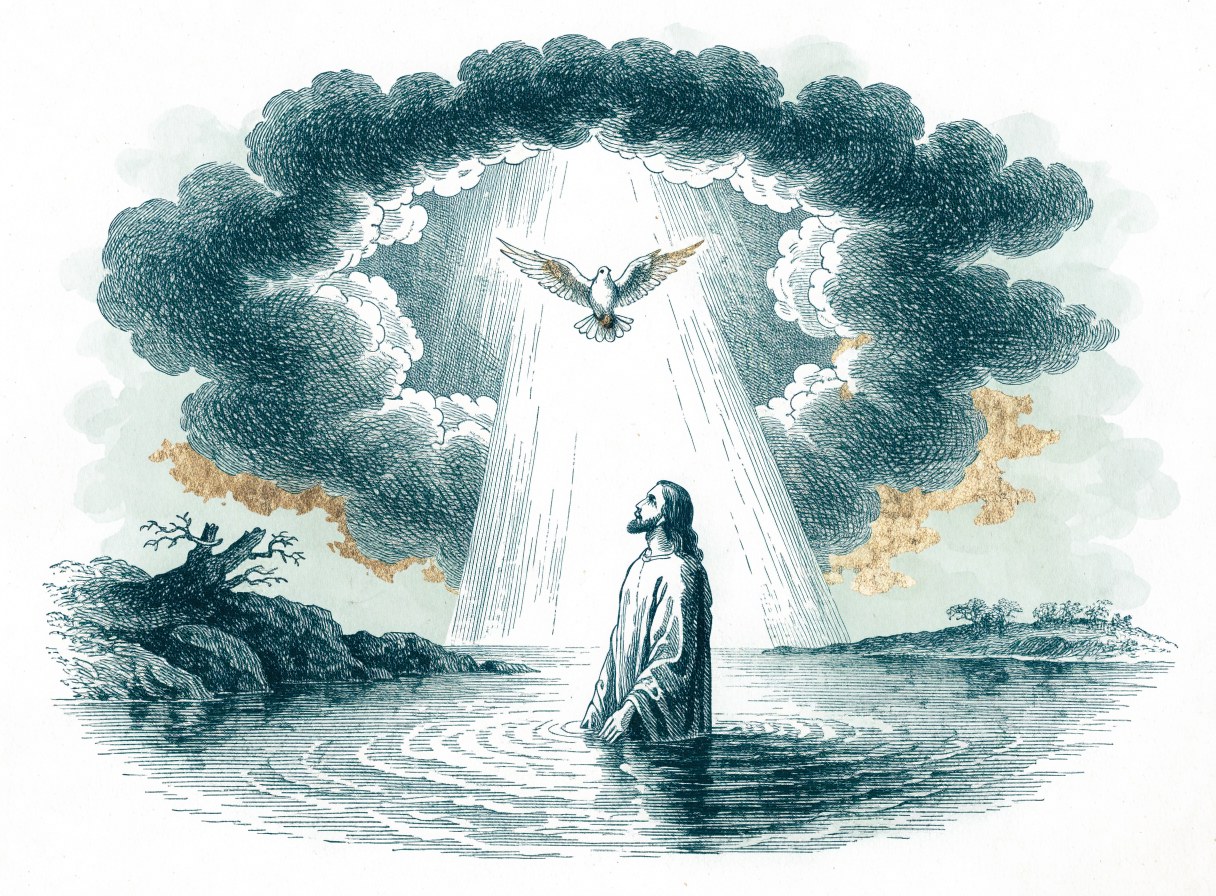
Jesus once told a story about a child asking his father for bread, and then he drew the lesson. Matthew records the lesson this way: “how much more will your Father who is in heaven give good things to those who ask him!” (Matt. 7:11). Luke records it this way: “how much more will the heavenly Father give the Holy Spirit to those who ask him!” (Luke 11:13).
Jonathan Edwards set those two verses side by side and saw something wonderful. Where Matthew says “good things,” Luke says “the Holy Spirit.” In Scripture, Edwards wrote, “the Holy Spirit and good things are spoken of… as the same; as if the Spirit of God communicated to the soul, comprised all good things.” The Spirit is “the sum of the blessings that Christ died to procure.”
Jesus did not die to buy you a pile of separate blessings for the Spirit to deliver like a courier. He died to give you God himself, and the Spirit is God giving himself to you. Edwards again: “The Holy Spirit, in his indwelling presence, his influences and fruits, is the sum of all grace, holiness, comfort, and joy.” So when you ask for the Spirit, you are asking for everything.
That is why the Spirit is so central to how salvation reaches us. Calvin opened the third book of his Institutes, his great summary of the faith, with a sobering sentence. As long as we are separated from Christ, “nothing which he suffered and did for the salvation of the human race is of the least benefit to us.” How does the cross reach you? Calvin answered: “the Holy Spirit is the bond by which Christ effectually binds us to himself.”
Paul shows the whole pattern in one long sentence at the start of Ephesians. In the Greek, verses 3 through 14 are a single sentence that moves through all three persons. The Father chose us “before the foundation of the world” (1:4). The Son redeemed us: “In him we have redemption through his blood” (1:7). And the Spirit is the seal: you “were sealed with the promised Holy Spirit, who is the guarantee of our inheritance” (1:13–14). Three times Paul stops to give the reason: “to the praise of his glorious grace” (1:6), “to the praise of his glory” (1:12, 14).
The word translated “guarantee” is a rich one.
And every believer has this gift. R. C. Sproul traced the four outpourings of the Spirit in Acts: on Jewish believers (Acts 2), on Samaritans (Acts 8), on God-fearing Gentiles at Cornelius’s house (Acts 10–11), and on disciples at Ephesus (Acts 19). In each one, everyone present received the Spirit. Peter concluded that God had given them “the same gift” (Acts 11:17). Paul says, “in one Spirit we were all baptized into one body” (1 Cor. 12:13). There are no second-class Christians. If you belong to Christ, the Spirit lives in you (Rom. 8:9). As John MacArthur put it, “the Trinity lives in every Christian.”
The Heidelberg Catechism asks, “What dost thou believe concerning the Holy Ghost?” Its answer moves from doctrine to the believer’s own heart: “First, that he is co-eternal God with the Father and the Son. Secondly, that he is also given unto me, makes me by a true faith partaker of Christ and all his benefits, comforts me, and shall abide with me forever” (Q&A 53). Look at the movement: from who he is, to what he does for me.
Part Four: He Pours Out the Father’s Love
Paul does not say God’s love has been explained to our minds, although it has. He says it has been poured into our hearts.

John Piper draws the line clearly: “God’s love poured into your heart is not the same as God’s love proven to your mind.” Both are precious. The cross proves God’s love (Rom. 5:8). The Spirit pours it in, so that what you know becomes what you feel and treasure. And Piper adds a word of hope: “we receive the Spirit at conversion once for all, but the outpourings of God’s love can come again and again.” Both are true. The love was poured in once and stays, and the Spirit keeps making us feel it afresh.
Jonathan Edwards pictured the difference this way. “There is a difference between having a rational judgment that honey is sweet, and having a sense of its sweetness.” You can read that honey is sweet in a book. Only a taste tells you what sweetness is. In the same way, he said, there is a difference “between believing that a person is beautiful, and having a sense of his beauty. The former may be obtained by hearsay, but the latter only by seeing the countenance.” The Spirit gives the taste. He shows you the face.
Owen described what the Spirit persuades a believer’s heart of: “that God in Jesus Christ loves him, delights in him, is well pleased with him, hath thoughts of tenderness and kindness towards him.” God has thoughts of tenderness and kindness toward you. The Spirit’s work is to make you believe it all the way down.
Edwards once described a woman, later identified as his own wife, Sarah, who in 1742 seemed to “swim in the rays of Christ’s love, like a little mote swimming in the beams of the sun that come in at a window.” She spoke of “a constant flowing and reflowing from heart to heart.” Edwards was a careful man, and he did not trust experiences for their own sake. What convinced him this was the Spirit’s work was its fruit: “abiding effects in the increase of sweetness, rest, and humility.” That is the test we will come back to. The Spirit’s love does not make us proud. It makes us small and glad.

Part Five: He Teaches Us to Say “Abba”
When God adopts you, he does not just change your legal status and leave you to feel like an orphan in a new house. He sends the Spirit of his Son into your heart, and the Spirit cries out the family word.
Spurgeon loved this verse. “As a mother teaches her child to speak,” he said, “so he puts this cry of ‘Abba, Father’ into our mouths.” And then: “There are times when we cannot cry at all, and then he cries in us.”

When you have no words
John Bunyan, who learned to pray in a prison cell, said it plainly: “The best prayers have often more groans than words.” And he spoke to the person who thinks their prayers are too poor to count: “Ah! sweet soul! it is not thy words that God so much regards… His eye is on the brokenness of thine heart.” Spurgeon pictured the Spirit’s hand closing over ours on a bow too strong for us to draw: “the Holy Ghost puts his mighty hand over ours, and covers our weakness so that we draw.”
Owen added an honest confession that many believers will recognize: “there is a secret alienation still working in us from all duties of immediate communion with him.” Something in us drags its feet when it is time to pray. The Spirit’s work is to overcome that drag. “The Holy Spirit gives the soul of a believer a delight in God as the object of prayer.”
The still small voice
The Spirit also tells us who we are. “The Spirit himself bears witness with our spirit that we are children of God” (Rom. 8:16). Tim Keller explained that paraklētos carries the idea of a defense attorney. Jesus pleads for us in heaven (1 John 2:1), and the Spirit argues our case in our own hearts, against our fears and our self-accusations. “He takes the gospel,” Keller said, “and pounds you until you start to relax.”
But how does that witness come? The Puritan Thomas Brooks said it usually comes quietly. “The Spirit of the Lord makes not a noise, but he comes in a still small voice” (the old translation of 1 Kings 19:12) “and makes a soft and secret report to the soul, that it is beloved.” Then Brooks added a word every anxious believer needs. Some Christians conclude they must not have the Spirit, because they have never felt that secret report. Brooks answered: “You do but gratify Satan and wrong your own souls, when you argue that certainly you have not the Spirit, because he is not a witnessing and a sealing Spirit to your souls.” Brooks means the felt sense of assurance. The seal itself, Paul says, is on every believer (Eph. 1:13), and the Westminster Confession agrees that a true believer “may wait long” before he enjoys full assurance (WCF 18.3). His silence is not his absence. If you love Christ, trust his Word, and want to be holy, the Spirit is already at work in you, whether or not you have heard the whisper yet.
Part Six: The Gentle Holy One
The Spirit’s name tells you his goal. He is the Holy Spirit, and he means to make you holy.
He fights sin with you
John Owen wrote a small book on this verse, Of the Mortification of Sin (“mortification” is his word for putting sin to death), that has helped Christians for more than three hundred years. His most famous line is a battle cry: “be killing sin or it will be killing you.” But notice who Owen says does the killing. “All other ways of mortification are vain, all helps leave us helpless; it must be done by the Spirit.” And notice how. The Spirit “works in us and with us, not against us or without us.” You fight, and he fights in your fighting. Owen even warned that sin-killing done in our own strength, for our own righteousness, “is the soul and substance of all false religion in the world.”
And remember who is given this command. Romans 8:13 comes right after Romans 8:1, “There is therefore now no condemnation for those who are in Christ Jesus.” You do not fight sin to be accepted. You fight it because you already are. Keller pictured the Spirit’s work as an acorn planted under a city sidewalk: over the years the oak heaves the concrete up. “The Holy Spirit is not a magic bullet. It’s a magic acorn. It’s not a quick fix. It’s a deep fix.”
He is gentle with the weak
The Puritan Richard Sibbes wrote a book called The Bruised Reed on the promise that the Messiah would not break a bruised reed or snuff out a smoldering wick (Isa. 42:3; Matt. 12:20). His summary of the gospel is a line Christians have quoted for nearly four hundred years: “there is more mercy in Christ than sin in us.” And he saw the same gentleness in the Spirit. “The Holy Ghost is content to dwell in smoky, offensive souls.” He comes into hearts that are not ready for him, and he makes them ready. “He that hath the heaven of heavens to dwell in will make a dungeon to be a temple, a prison to be a paradise.”
Sibbes said the Spirit does not drive us like cattle. He “dealeth with us by way of gentle and sweet motions and persuasions.” “The motions of the Spirit are sweet and mild, and lead us gently on.” And he does not give up: “so sweet is this Holy Spirit that after long patience, he overcomes many of these with his goodness.”
Grief is a love word
Spurgeon wrote, “He is a dove; do not cause him to mourn, because you have treated him harshly and ungratefully.” And then: “Anger begets anger; but grief begets pity, and pity is next akin to love.”
We need to be careful here. God is “without body, parts, or passions” (WCF 2.1). Nothing we do can stir him up or wear him down. When Scripture says the Spirit is grieved, it borrows our language to tell us something true: our sin is against his holiness and against his love. His love is real, and it is steady. He is not shaken by us.
Ephesians 4:30 sits in a passage about our words and the heart they come from. “Let no corrupting talk come out of your mouths” comes right before it (4:29). “Let all bitterness and wrath and anger and clamor and slander be put away from you, along with all malice” comes right after it (4:31). The Spirit is grieved in very ordinary places: a cutting remark, a grudge kept warm, a piece of gossip passed along. Sibbes put it simply: “He will not rest in a malicious heart who is the Spirit of love.”
The Spirit knew all this before he came. Owen wrote that “he knew we would grieve him, provoke him, quench his motions, defile his dwelling-place; and yet he would come to be our comforter.” And having come, “yet in his love and tenderness doth he continue to do us good.”
The same verse says you were “sealed for the day of redemption.” A seal in the ancient world was a mark of ownership and protection. It said, “This belongs to me, and no one touches it.” God has put his mark on you, and the mark is the Spirit himself (Eph. 1:13). He will not leave. But a grieved Spirit is a quiet Spirit, and a believer who goes on grieving him will lose the joy and comfort he loves to give (Ps. 51:12; WCF 17.3). So we obey because he has kept us, and because we love him too much to grieve him.

Two more warnings belong beside this one. “Do not quench the Spirit” (1 Thess. 5:19): to quench is to throw water on a fire. We quench him when we treat the Word as background noise, or push away the nudge to confess, to pray, to speak up, or to give. And Stephen charged his hearers, “you always resist the Holy Spirit” (Acts 7:51). Resistance is the settled no. If your heart has been stirred while reading this, and you have been pushing it down, that stirring is Someone calling.
Part Seven: Keel and Sails
Any honest teaching on the Holy Spirit has to face a question that has divided good Christians: what about the gifts? Do the Spirit’s gifts of tongues, prophecy, and healing continue today? And how do we stay open to the Spirit without being carried off by every claim made in his name?
John Piper, a Reformed pastor who has thought hard about this, put it this way. He wants his “keel deep and stable in the once-for-all biblical revelation of God,” and his “sails unfurled to every movement of God’s Spirit upon the deeps.” A ship with no sails goes nowhere. A ship with no keel goes over in the first strong wind. You need both.

The sails: stay open
Piper has said that, after weighing the arguments, he is “not fully persuaded” by the case that these gifts have ceased. He takes Paul’s command seriously: “Pursue love, and earnestly desire the spiritual gifts, especially that you may prophesy” (1 Cor. 14:1). He prays for the gift of prophecy before he preaches. He understands New Testament prophecy, influenced, as he says, by Wayne Grudem, as a gift that is real but fallible, always below Scripture, and always to be tested: “Do not despise prophecies, but test everything; hold fast what is good” (1 Thess. 5:20–21).
On tongues, Piper sees no biblical reason the gift would have been withdrawn. Paul himself said, “I thank God that I speak in tongues more than all of you” (1 Cor. 14:18), and that “the one who speaks in a tongue builds up himself” (14:4). Some believers pray in tongues privately, and an open Reformed view leaves room for that, though Paul’s main point in 14:4 is that the church is built up by words it can understand. Piper himself says, “I don’t believe that I have ever authentically spoken in tongues.” He still asks God for the gift, like a child, and without guilt that he has not received it.
The keel: stay steady
Scripture is final. The Westminster Confession says Scripture is complete: nothing is “to be added, whether by new revelations of the Spirit, or traditions of men” (WCF 1.6), and “those former ways of God’s revealing his will unto his people” have “now ceased” (WCF 1.1). Many careful historians think the Westminster writers meant to rule out every kind of new revelation. Open Reformed teachers read 1.1 as closing Scripture-level revelation only, and treat prophecy today as fallible and always tested. Cessationists answer that a word from God cannot be fallible. That is an honest disagreement among friends, and every side agrees the Bible alone is final.
Tongues are not the proof of the Spirit. “Do all speak with tongues?” Paul asks, expecting the answer no (1 Cor. 12:30). The Spirit hands out gifts “as he wills” (12:11). If you have never spoken in tongues, you have not missed the Spirit. Every believer has all of him (1 Cor. 12:13; Rom. 8:9). If you do pray in tongues, use the gift humbly, and in the church follow Paul’s rule: “in church I would rather speak five words with my mind in order to instruct others, than ten thousand words in a tongue” (1 Cor. 14:19).
Test what you experience. “Beloved, do not believe every spirit, but test the spirits to see whether they are from God” (1 John 4:1). Jonathan Edwards lived through the Great Awakening, with all its tears and outcries, and he wrote the classic guide to telling a true work of the Spirit from a false one. He looked past the outward signs to the fruit.
Edwards’ wisdom cuts both ways. Tears, trembling, and loud emotion do not prove the Spirit is at work. But they do not prove he is absent either. “That there are some counterfeits,” Edwards wrote, “is no argument that nothing is true.” And he warned against the opposite danger: “Holy affections are not heat without light.” So don’t ask how intense it was. Ask where it pointed. Alistair Begg, drawing on the English pastor David Watson, asks three questions of any experience: Is there new love for Jesus? New hunger for his Word? New desire to tell others? Without those, Watson said, such experiences “are either meaningless or counterfeit.”
Be gracious across the table. Piper himself names Calvin, Owen, Edwards, and Spurgeon among those who believed the miraculous gifts had ceased, and he speaks of them with deep respect. Their reasons came from Scripture: they believed the sign gifts confirmed the apostles while the New Testament was being written (2 Cor. 12:12; Heb. 2:3–4), and that once that foundation was laid (Eph. 2:20), those gifts had done their work. John MacArthur has warned against chasing feelings and calling them the Spirit, and that warning has protected many from real error. MacArthur has said, “I’ve never felt the presence of God… But I do know this: He’s here.” Whatever you conclude about the gifts, that last sentence is true for every believer. Keep your keel, open your sails, and love the brothers who set their sails a little differently.
The Turn: The Fellowship of the Holy Spirit
Go back to that upper room one more time. The disciples were afraid of being left alone. Jesus told them about the Helper, and then he said this: “I will not leave you as orphans; I will come to you” (John 14:18). How would Jesus come to them, if he was going to the Father? By his Spirit. Through the Spirit, Christ himself is with his people, every day, to the end of the age.
Loving the Spirit only pulls you closer to Jesus. You cannot see his face without the light, and you cannot see Christ as he really is without the Spirit. “No one can say ‘Jesus is Lord’ except in the Holy Spirit” (1 Cor. 12:3). If you have ever looked at Jesus and seen beauty, that was the Spirit’s doing. If you have ever whispered “Father” and meant it, that was the Spirit too.
Paul ended one of his letters with a blessing that the church has spoken over itself for two thousand years: “The grace of the Lord Jesus Christ and the love of God and the fellowship of the Holy Spirit be with you all” (2 Cor. 13:14). Grace from the Son. Love from the Father. And from the Spirit, fellowship.
The Spirit does not wait for you to climb up to God. He comes down. He gives you new birth so you can believe, pours the Father’s love into your heart, and seals you so you cannot be lost. He has loved you long, and he has loved you well.
Every person who trusts Christ has the Spirit (Rom. 8:9). If you are not sure he lives in you, do not go looking for an experience. Come to Christ. Turn from your sin and trust him, who died for sinners and rose again. Everyone who believes is given the Spirit (Eph. 1:13). And the moment you want Christ at all, the Spirit is already at work in you. Jesus has promised, “whoever comes to me I will never cast out” (John 6:37).
He is not an it. He never was. He is the Lord, the Giver of Life, who searches the depths of God and still makes his home in ordinary people like us. He has been holding the light this whole time, and he has loved you the whole time he held it. It is right to turn and love him back.
Living It: Seven Practices
Seven Words at a Glance
| Word | Where | What it teaches us about the Spirit |
|---|---|---|
| παράκλητος (paraklētos) | John 14:16 | One called alongside. “Another” Helper just like Jesus, a person who stays. |
| ἀρραβών (arrabōn) | Eph. 1:14 | Down payment. The Spirit now is the first piece of heaven itself. |
| ἐκχέω (ekcheō) | Rom. 5:5 | Poured out. He floods the heart with the Father’s love, and it stays. |
| Ἀββά (Abba) | Gal. 4:6 | Father. He puts Jesus’ own family word in our mouths. |
| ἀλάλητος (alalētos) | Rom. 8:26 | Wordless. He prays for us when our words run out. |
| λυπέω (lypeō) | Eph. 4:30 | Grieve. Grief belongs to love: only a person who cares can be grieved. |
| κοινωνία (koinōnia) | 2 Cor. 13:14 | Fellowship. The shared life the Spirit gives, with God, with himself, and with his people. |
For Discussion
- When you pray or think about God, which person of the Trinity do you think about least? Why do you think that is?
- Spurgeon said we talk about the love of Jesus “without thinking of the love of the Holy Spirit.” Had you ever thought of the Spirit as someone who loves you? What changes if he does?
- Read Matthew 7:11 and Luke 11:13 side by side. What does it mean that the Spirit is “everything” Christ bought for us?
- Edwards distinguished knowing honey is sweet from tasting it. Where in your faith do you know something is true but have not yet “tasted” it? How could you ask the Spirit for that?
- Thomas Brooks warned believers not to conclude they lack the Spirit just because they have not felt his witness. Why is that a comfort to those who struggle with assurance?
- Why is “grieve” such a tender word to use in Ephesians 4:30? What are the ordinary ways we grieve him?
- What does it look like to keep a deep keel and open sails? Which one do you tend to neglect?
- What is one way you will express love to the Holy Spirit this week?
Sources & For Further Study
- Text: Genesis 1:2; 38:17–20; 1 Kings 19:12; Psalm 51:12; 95:7–11; 139:7; Isaiah 6:9–10; 42:3; Matthew 7:11; 12:20; 28:19; Mark 12:29–30; 14:36; Luke 3:22; 4:14; 11:13; John 3:5–8; 6:37; 14:16–18, 26; 15:26; 16:7, 13–14, 20; Acts 1:8; 2:17; 5:3–4; 7:51; 8; 10–11; 13:2; 15:28; 16:6–7; 19; 28:25; Romans 5:5, 8; 8:1, 9, 11, 13, 15–16, 26–27; 15:30; 1 Corinthians 2:10–11; 12:3, 11, 13, 30; 14:1, 4, 18–19; 2 Corinthians 1:22; 5:5; 12:12; 13:14; Galatians 4:6; Ephesians 1:3–14; 2:18, 20; 4:29–31; 1 Thessalonians 4:13; 5:19–21; 2 Timothy 3:16; Titus 3:6; Hebrews 2:3–4; 3:7–11; 9:14; 2 Peter 1:21; 1 John 2:1; 4:1. English quotations follow the ESV, except the KJV wording of Romans 8:16 and 8:26 in the introduction and of 1 Kings 19:12 as quoted by Brooks.
- Greek: BDAG on παράκλητος, ἀρραβών, ἐκχέω, Ἀββά, στεναγμός, ἀλάλητος, λυπέω, κοινωνία. On John’s masculine pronoun: Daniel B. Wallace, “Greek Grammar and the Personality of the Holy Spirit,” Bulletin for Biblical Research 13 (2003). On Abba: James Barr, “’Abbā Isn’t ‘Daddy’,” Journal of Theological Studies 39 (1988).
- Creeds and confessions: Nicene-Constantinopolitan Creed (381); Westminster Confession of Faith 1.1, 1.6, 2.1, 2.3, 17.3, 18.3, 21.2; Westminster Shorter Catechism 6; Heidelberg Catechism Q&A 53 (Schaff translation).
- Reformers and Puritans: John Calvin, Institutes 1.13.14–15 and 3.1.1 (Beveridge translation); John Owen, Of Communion with God (1657), Part 3, chs. 3, 6, 7 (Works, ed. Goold, vol. 2), Of the Mortification of Sin in Believers (1656), chs. 1–3 (vol. 6), The Work of the Holy Spirit in Prayer (1682), chs. 2, 6 (vol. 4), and Pneumatologia (1674), Book 1, ch. 3 (vol. 3); Thomas Goodwin, The Work of the Holy Ghost in Our Salvation, Book 1, ch. 1 (Works, ed. Nichol, vol. 6); Richard Sibbes, The Bruised Reed (1630), The Excellency of the Gospel above the Law, and A Fountain Sealed (1637) (Works, ed. Grosart, vols. 1, 4, and 5); Thomas Brooks, Heaven on Earth (1654) (Works, ed. Grosart, vol. 2); John Bunyan, I Will Pray with the Spirit (1662); Francis Turretin, Institutes of Elenctic Theology, Topic 3, Q. 30.
- Edwards and Spurgeon: Jonathan Edwards, “God Glorified in Man’s Dependence” (1731), “A Divine and Supernatural Light” (1734), The Distinguishing Marks of a Work of the Spirit of God (1741), Some Thoughts Concerning the Present Revival (1742), Religious Affections (1746), An Humble Attempt (1747). Charles Spurgeon, sermons “The Comforter” (No. 5, 1855), “Grieving the Holy Spirit” (No. 278, 1859), “The Paraclete” (No. 1074, 1872), “Adoption: The Spirit and the Cry” (No. 1435, 1878), “The Holy Spirit’s Intercession” (No. 1532, 1880).
- Later voices: Abraham Kuyper, The Work of the Holy Spirit (1888); Charles Hodge, Systematic Theology, vol. 1, ch. 8; J. I. Packer, Keep in Step with the Spirit; John Piper, “Are Signs and Wonders for Today?” (1990), “Are Prophecy and Tongues Alive Today?” (2013), “How to Experience the Outpouring of God’s Love” (2016), and “Should I Pray to the Father, the Son, or the Spirit?” (2014), desiringgod.org; Wayne Grudem, The Gift of Prophecy in the New Testament and Today; sermons by R. C. Sproul (“Undervaluing Pentecost”), Alistair Begg (“The Holy Spirit”), John MacArthur (“The Promise of the Holy Spirit,” Parts 1–2), and Timothy Keller (“Who Is the Spirit?” and “Our Power: Spirit-Filled Living”).
- For further reading: R. C. Sproul, The Mystery of the Holy Spirit (the best place to start); Sinclair Ferguson, The Holy Spirit; John Owen, Communion with the Triune God (ed. Kapic and Taylor, a modern edition); Richard Sibbes, The Bruised Reed.
Want this whole study as a beautifully formatted, printable PDF, ready for your small group? It’s free when you join the weekly list.