

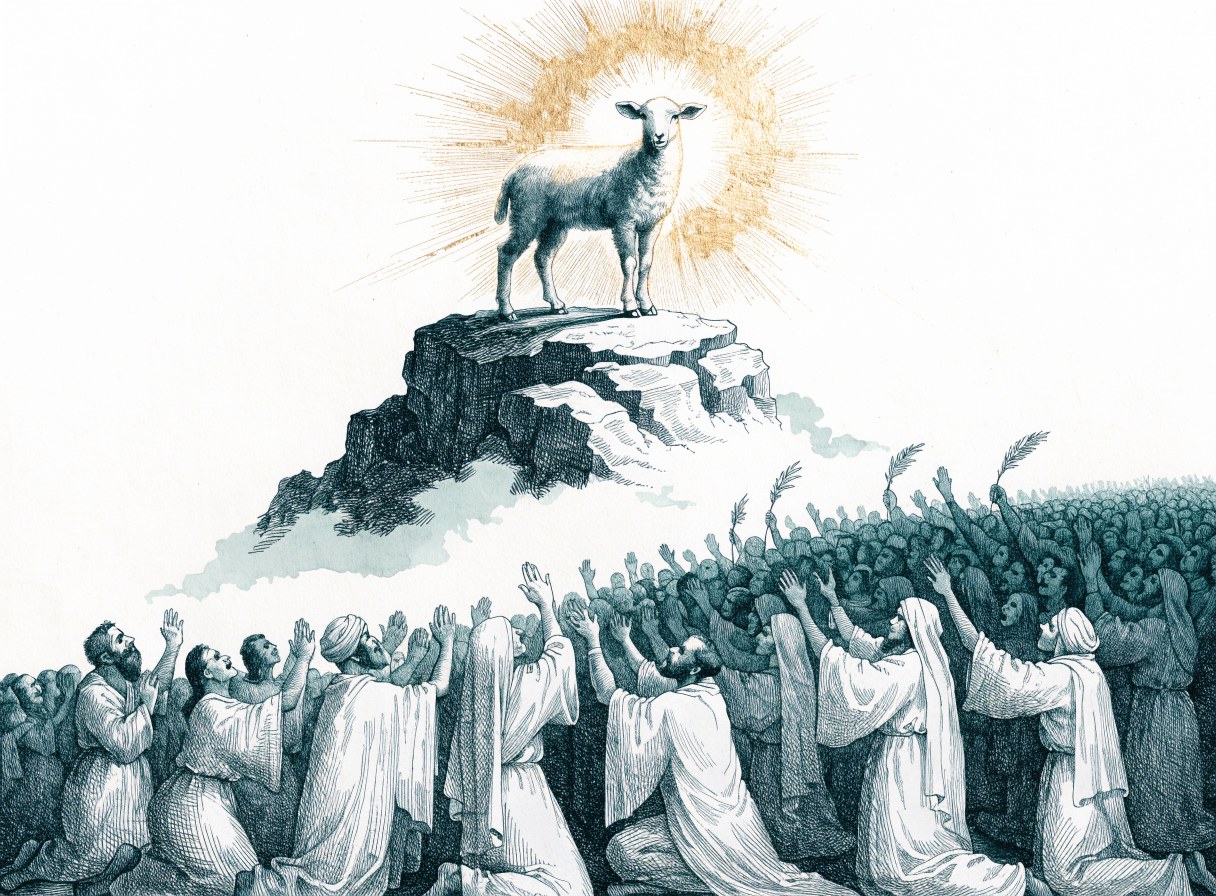
“Fear not, I am the first and the last, and the living one. I died, and behold I am alive forevermore” Revelation 1:17–18
Introduction: How the Story Ends
Fifty weeks ago we started on the road to Emmaus, where the risen Jesus walked with two discouraged disciples and, “beginning with Moses and all the Prophets, he interpreted to them in all the Scriptures the things concerning himself” (Luke 24:27). We have followed that story from a garden to a cross to an empty tomb to a church spreading across the world. Now we come to the last book of the Bible, and to the end of the story.
Many people are afraid of Revelation, or fascinated by it for the wrong reasons. It is full of strange images: beasts, dragons, trumpets, bowls, a woman clothed with the sun. Christians who love the Bible have read its details in different ways for two thousand years. But its main message is not hard to see, and it was written to comfort suffering Christians. Jesus wins, evil is judged, and God comes to live with his people forever.
Revelation was written by the apostle John, an old man exiled on the island of Patmos “on account of the word of God and the testimony of Jesus” (1:9). Most scholars date it around AD 95, late in the reign of the emperor Domitian, though some place it in the late 60s under Nero. Either way, the cities of the region honored the emperor as a god, and Christians who would not join in paid a price. Small churches in what is now western Turkey were wondering who was really in charge of the world. Revelation pulls back the curtain and shows them.
The Word: Revelation
Part One: The King Among His Churches
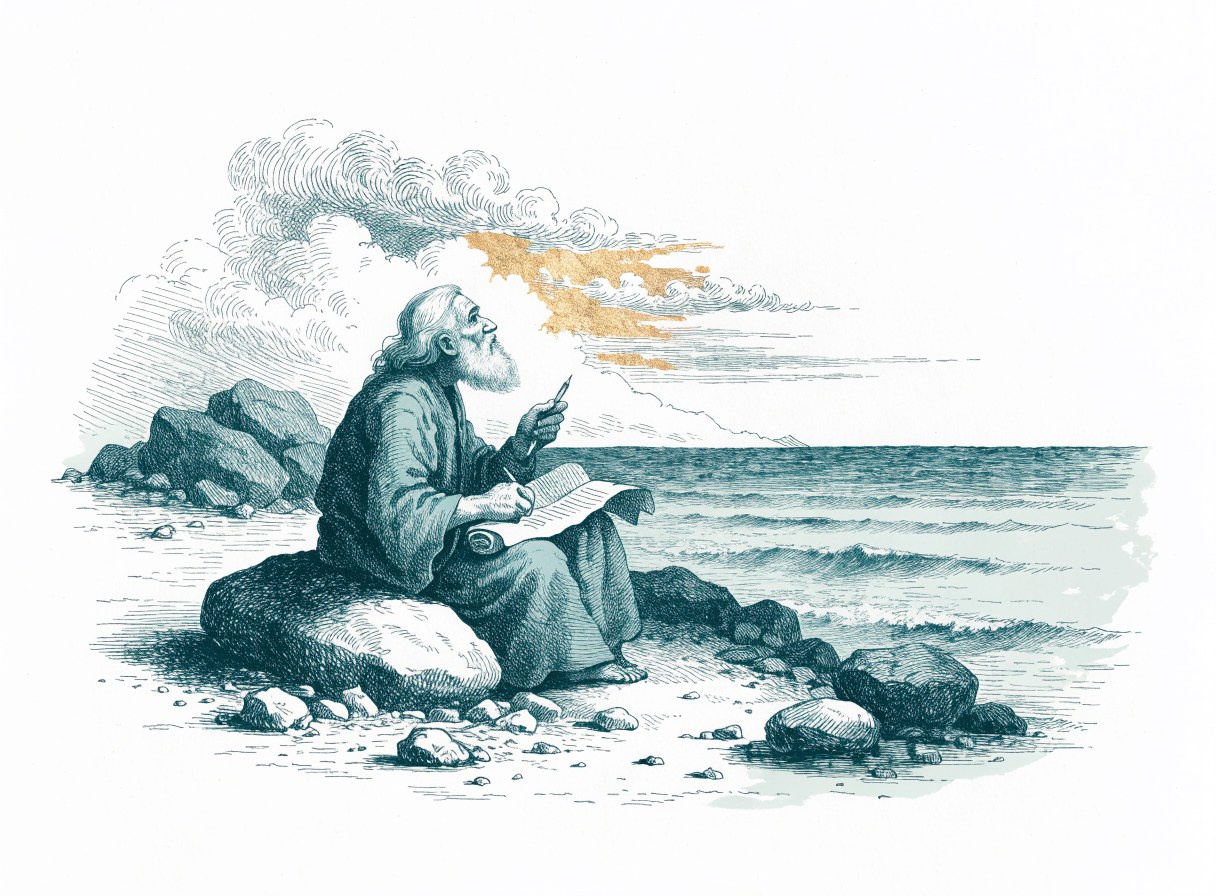
John was “in the Spirit on the Lord’s day” when he heard a voice behind him and turned. He saw the risen Jesus in blazing glory, his eyes “like a flame of fire” and his face “like the sun shining in full strength.” John fell at his feet as though dead. “But he laid his right hand on me, saying, ‘Fear not, I am the first and the last, and the living one. I died, and behold I am alive forevermore, and I have the keys of Death and Hades’” (1:10–18).
That is the first thing a suffering church needed to hear. The One who holds the keys of death is the same Jesus who laid his hand on John. Then Jesus spoke to seven real churches (chapters 2–3). Some he praised for faithfulness under pressure. Others he rebuked. To Ephesus he said, “I have this against you, that you have abandoned the love you had at first” (2:4), and Laodicea was lukewarm. To all of them he promised a reward for the one who conquers. And to lukewarm Laodicea he said words that still hold for anyone who has shut him out: “Behold, I stand at the door and knock. If anyone hears my voice and opens the door, I will come in to him and eat with him, and he with me” (3:20).
Part Two: The Throne and the Lamb
Then John saw a door standing open in heaven, and he was shown the throne room of the universe. Around the throne, heavenly beings cried day and night, “Holy, holy, holy, is the Lord God Almighty, who was and is and is to come!” (4:8). Whatever was happening on earth, the throne of heaven was not empty.
In the right hand of the One on the throne was a scroll sealed with seven seals, the scroll of God’s plan for history. A mighty angel asked, “Who is worthy to open the scroll and break its seals?” No one in heaven or on earth was found worthy, and John “began to weep loudly.” Then an elder said, “Weep no more; behold, the Lion of the tribe of Judah, the Root of David, has conquered.” John looked for a Lion, and he saw “a Lamb standing, as though it had been slain” (5:2–6).
That is the center of Revelation and the center of the Bible. The Lion conquers as the Lamb. He wins by being slain. The living creatures and the elders fall down before him and sing: “Worthy are you to take the scroll and to open its seals, for you were slain, and by your blood you ransomed people for God from every tribe and language and people and nation” (5:9). Then myriads of angels join in, “Worthy is the Lamb who was slain” (5:12), and at last every creature in heaven and on earth and under the earth and in the sea answers with praise (5:13).
Later John saw the result: “a great multitude that no one could number, from every nation, from all tribes and peoples and languages, standing before the throne and before the Lamb, clothed in white robes.” Who are they? “They have washed their robes and made them white in the blood of the Lamb” (7:9, 14). The promise to Abraham, that in him all the families of the earth would be blessed, is fulfilled at last.
The Turn: The Throne Is Not Empty
Before John saw beasts or battles, he was shown two things: the risen Jesus standing among his churches, and a throne in heaven that was not empty. Everything else in the book stands on those two sights.
At the center of that throne stands a Lamb who was slain. The One who went lowest has been raised highest: “Therefore God has highly exalted him and bestowed on him the name that is above every name, so that at the name of Jesus every knee should bow, in heaven and on earth and under the earth” (Phil. 2:9–10). Whatever is shaking your world, the throne is not empty. Join the song now. Next week we see the end of the battle, the last judgment, and the new heaven and the new earth.
Living It: Three Practices for This Week
Before Week 52: Read Revelation 19:11–16, 20:11–15, and 21:1–22:5. Week 52 ends the story.
For Discussion
- What did you think Revelation was about before this week? What surprised you?
- Why did John need to see the risen Jesus before he saw anything else?
- The Lion conquers as the Lamb. What does that tell us about how God wins?
- Jesus told the lukewarm church in Laodicea, “Behold, I stand at the door and knock.” What would it look like to open the door to him this week?
Sources & For Further Study
- On Revelation: Dennis E. Johnson, Triumph of the Lamb; Vern S. Poythress, The Returning King; G. K. Beale, Revelation: A Shorter Commentary.
Leading a small group? This week comes as a beautifully formatted, printable PDF, along with a 2-page Small Group Guide: a discussion page for your group and leader notes with a session plan and answer key. Both are free when you join the weekly list.